Parts We Carry
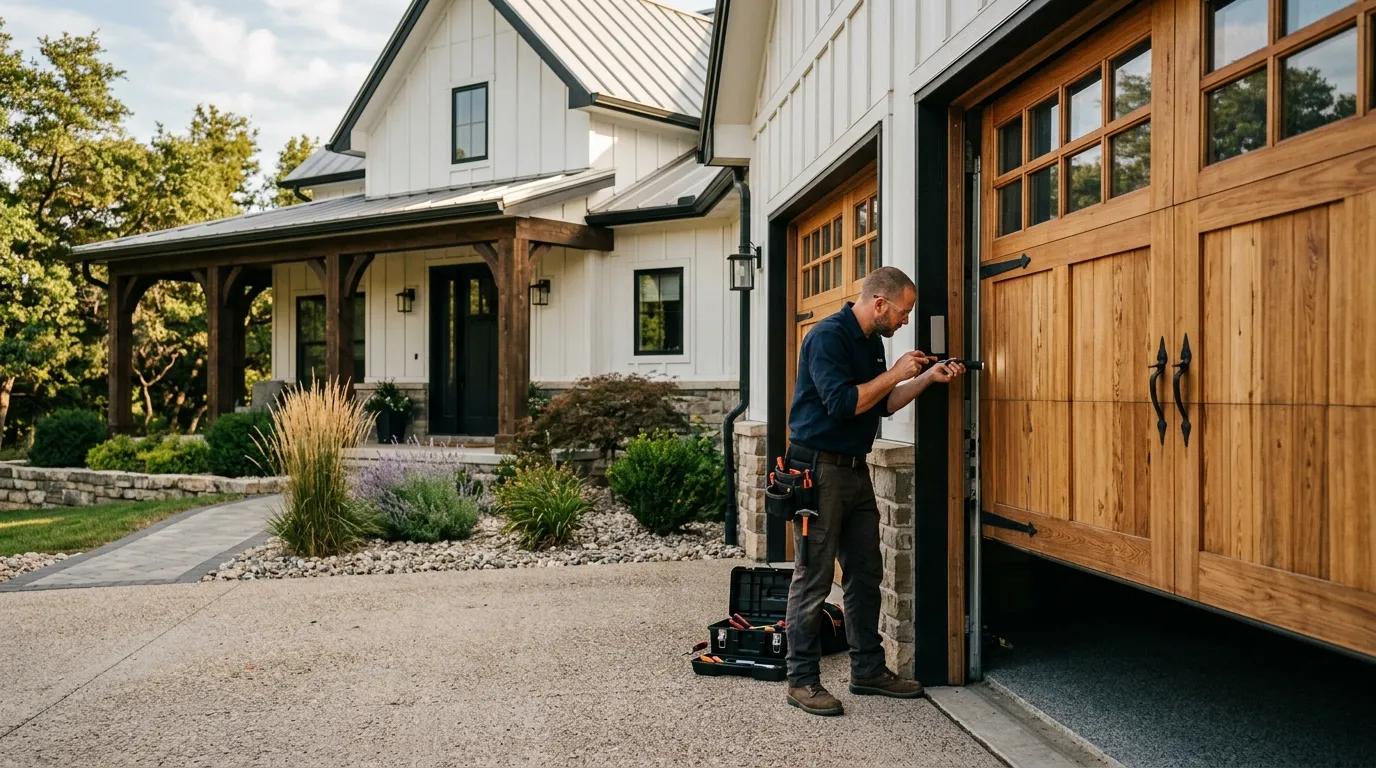
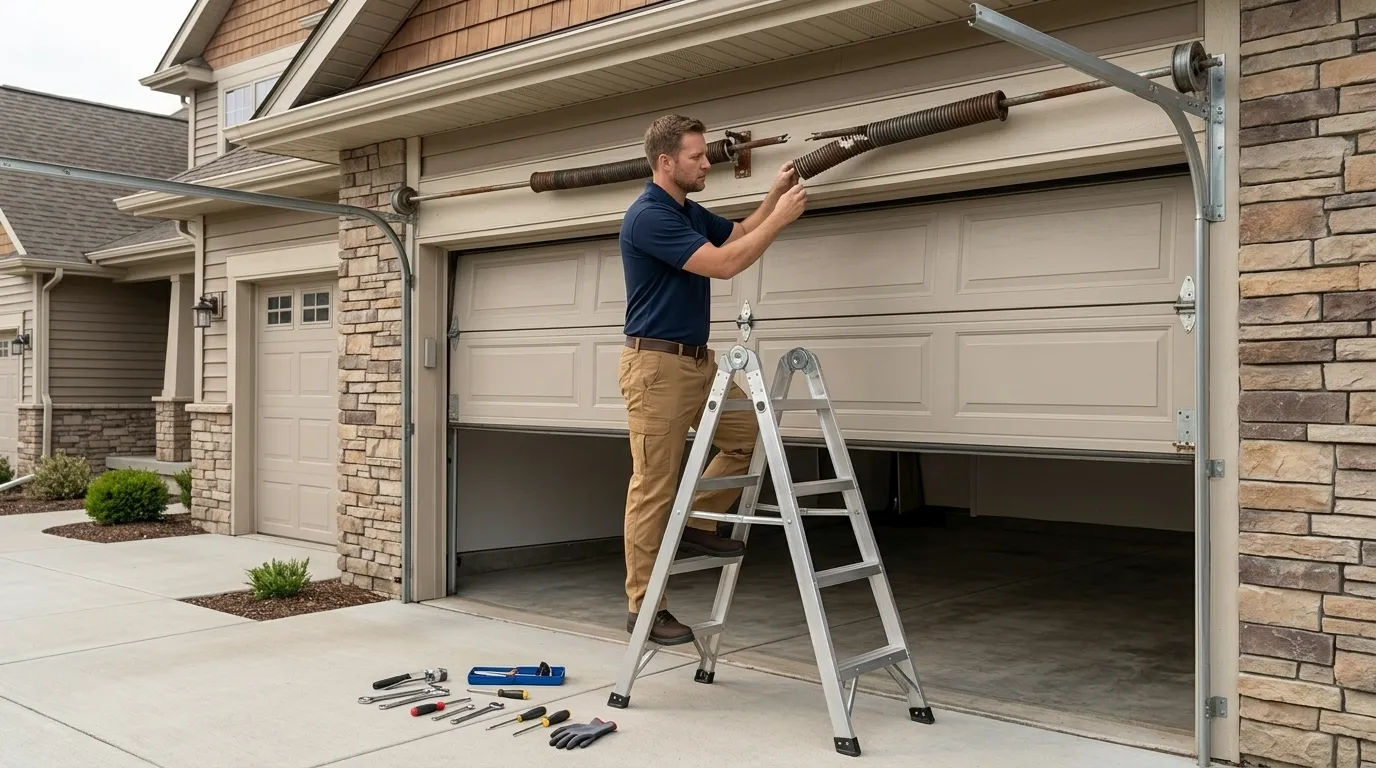
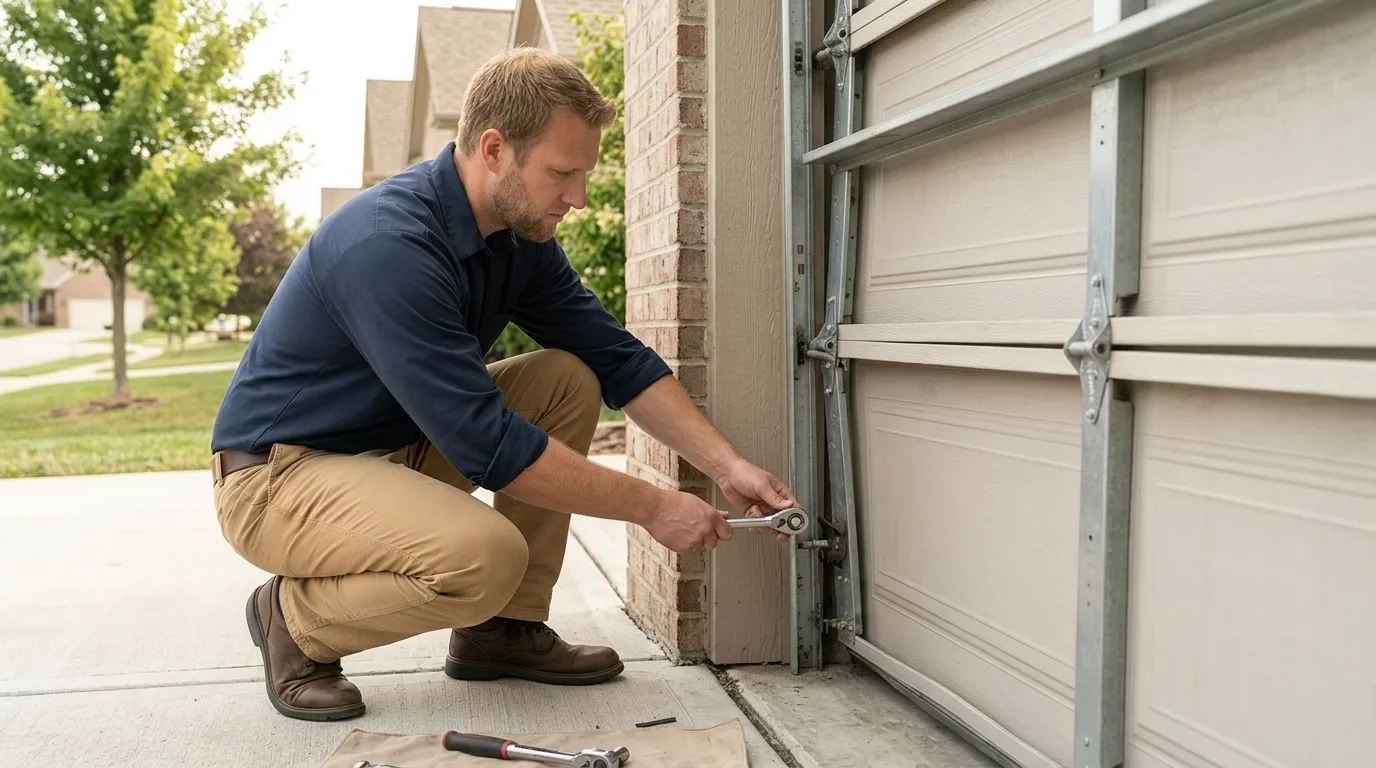
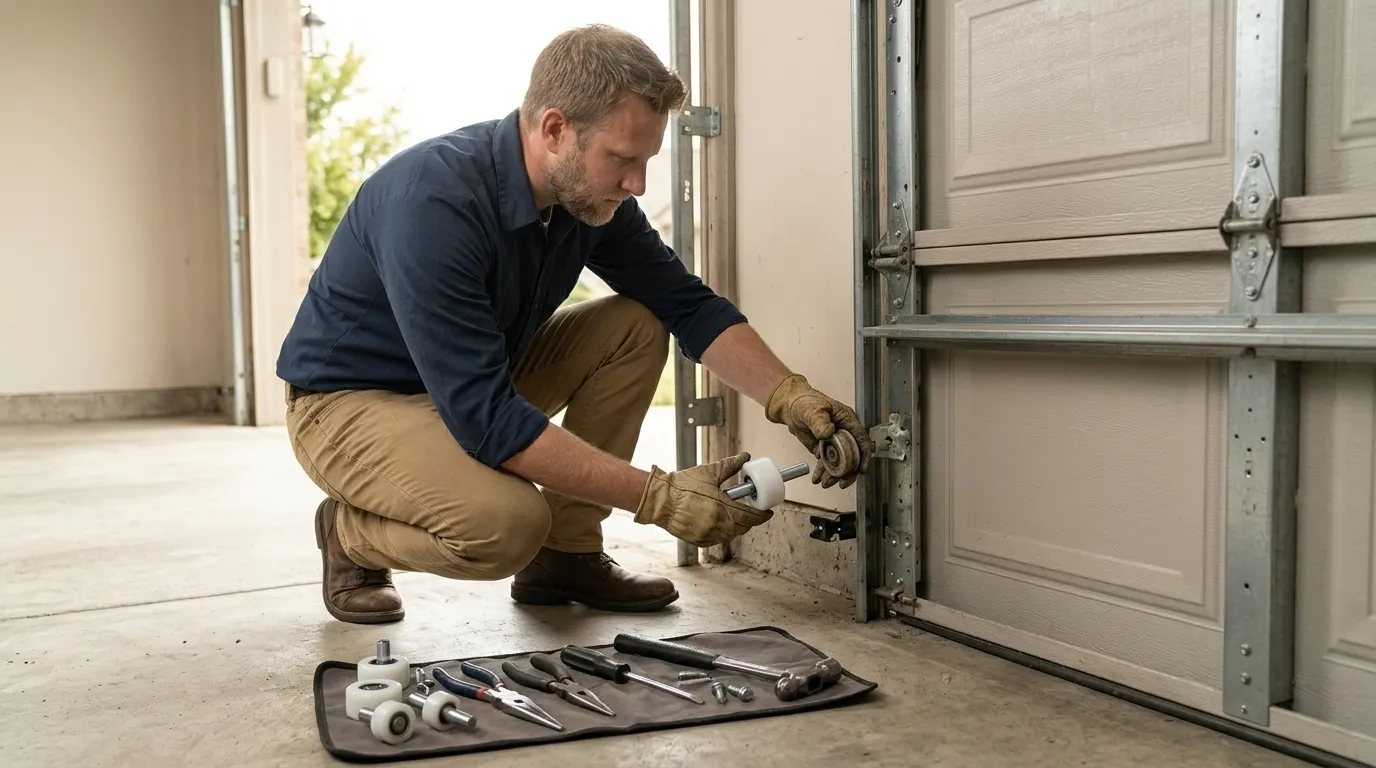
An off-track door is almost never one broken piece. We carry the roller and hinge sets that let go first, the track sections themselves in both standard and low-headroom profiles, end bearing plates, lift cables, and the nylon or steel rollers that wear down and start binding in the rail. We stock cable drums and the fasteners that hold vertical track to the jamb, since a loose lag bolt is often what let the door walk off in the first place.
We don't stock every OEM part for every opener or door brand on the shelf of the truck - some specialty hardware for less common brands has to be ordered, and we'll tell you that up front rather than promise a same-visit fix we can't back. For the common track, roller, and hinge combinations found on the doors installed across this area, we carry what we need to put the door back on the rail and running true in one visit.
We replace worn parts with matching gauge hardware, not whatever's cheapest, because a mismatched roller on old track is exactly how a door comes off again in six months.
The Cost of This Job
We're not going to put a number here that we can't back up. What a door costs to get back on track depends on how far it's derailed, whether the track itself is bent or just knocked loose, and whether the rollers and hinges around the failure point are original hardware from the 1980s-90s build boom that shaped so much of this area's housing, or already-replaced parts.
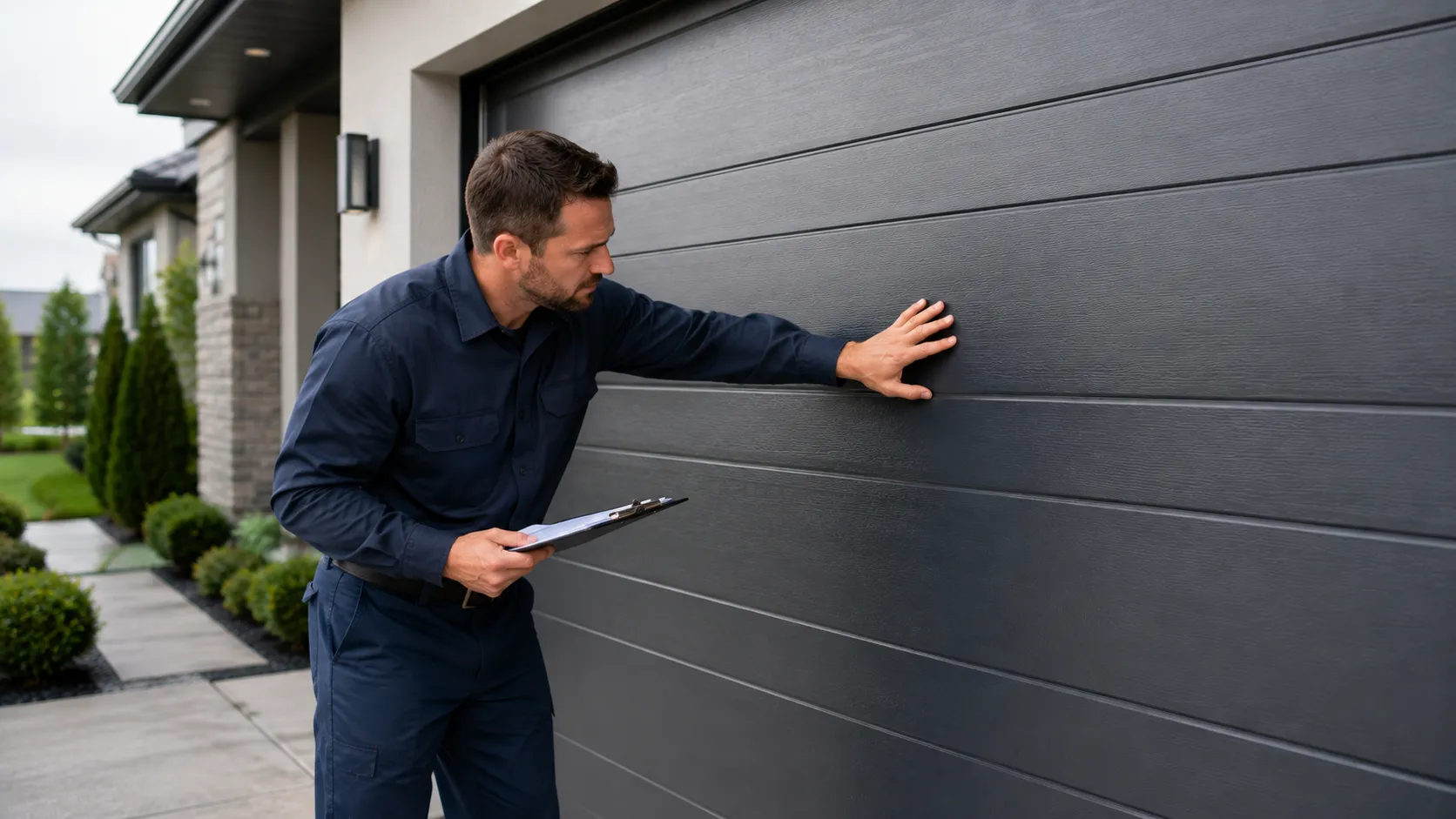
A door that slipped one roller out of the rail is a different job than one where the track pulled away from the jamb and bent. We look at it in person before we quote, because a phone estimate on this kind of failure is a guess, and we'd rather give you a real number than a low one that grows once the truck's in the driveway.
The honest limitation here: if the track is badly bent or the opening has shifted with the house, sometimes replacing the section is cheaper long-term than trying to straighten and re-hang it. We'll tell you when that's the case instead of billing for a patch that won't hold.
How It Shows Up
It rarely happens all at once. Usually a homeowner notices the door running a little rough for a few weeks - a scrape on one side, a gap opening up between the roller and the track - before it finally jumps clean off the rail on one side and stops moving.
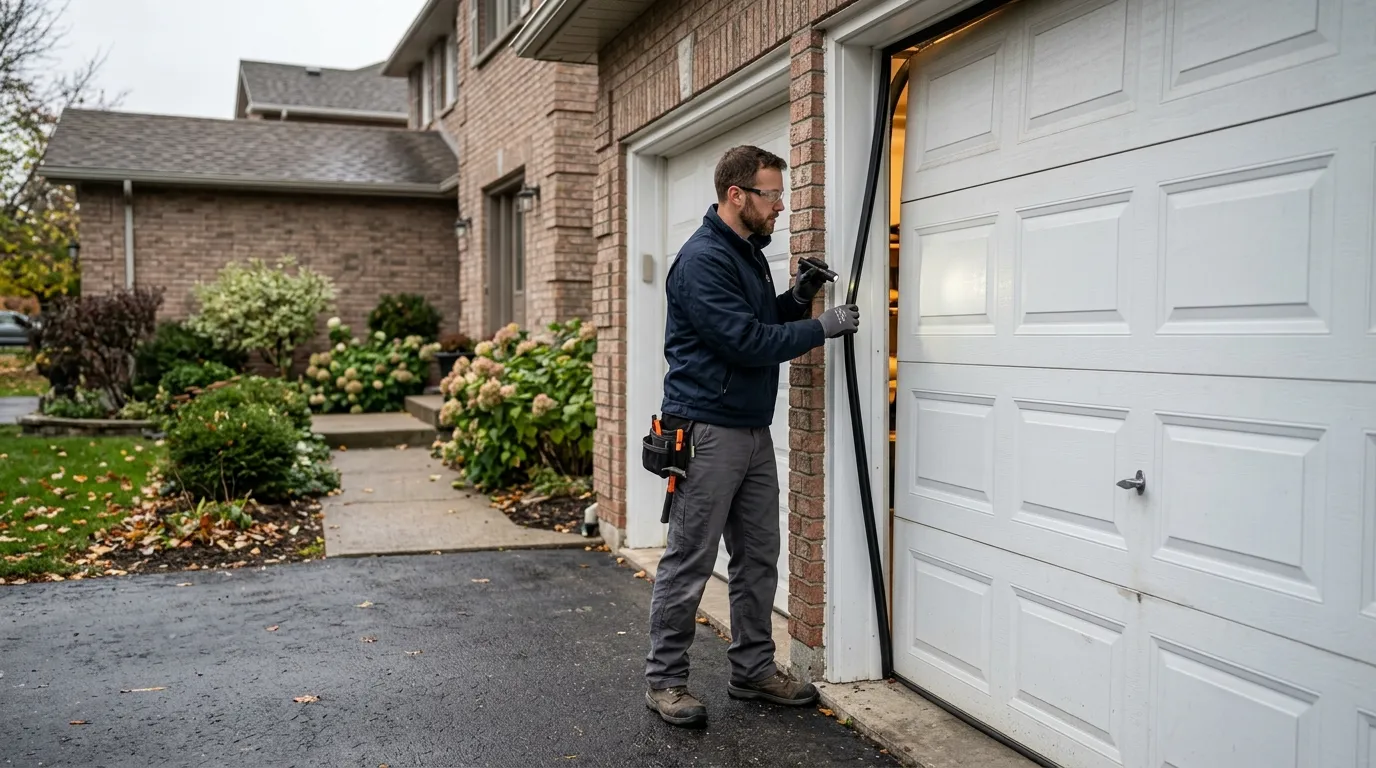
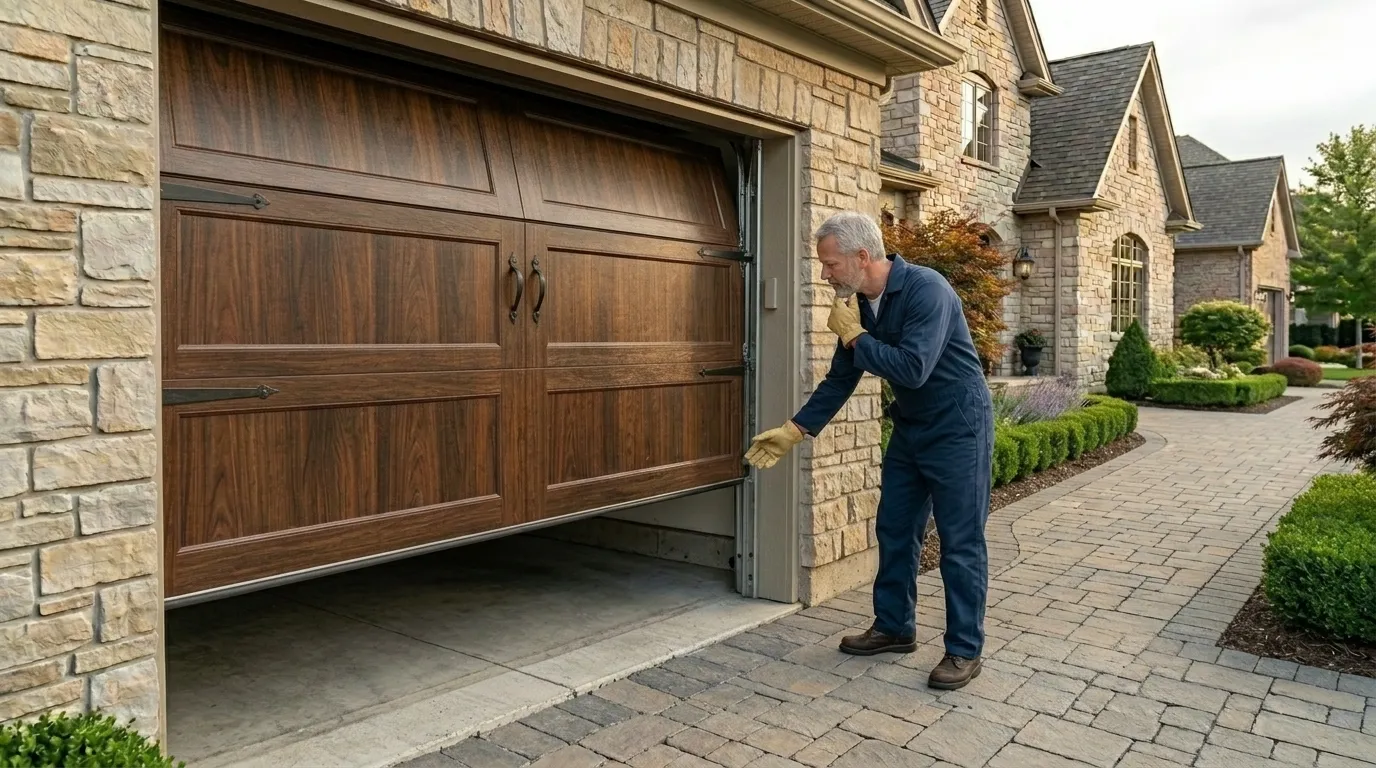
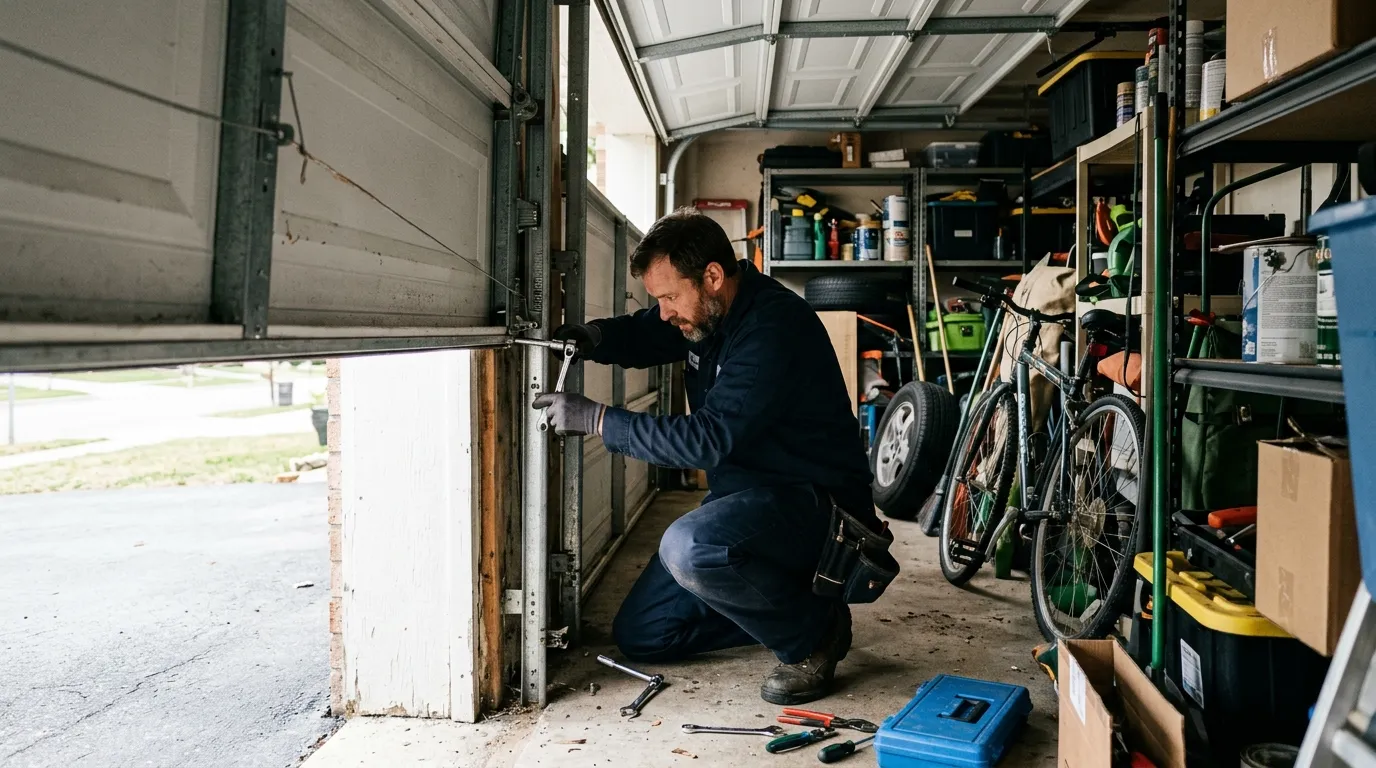
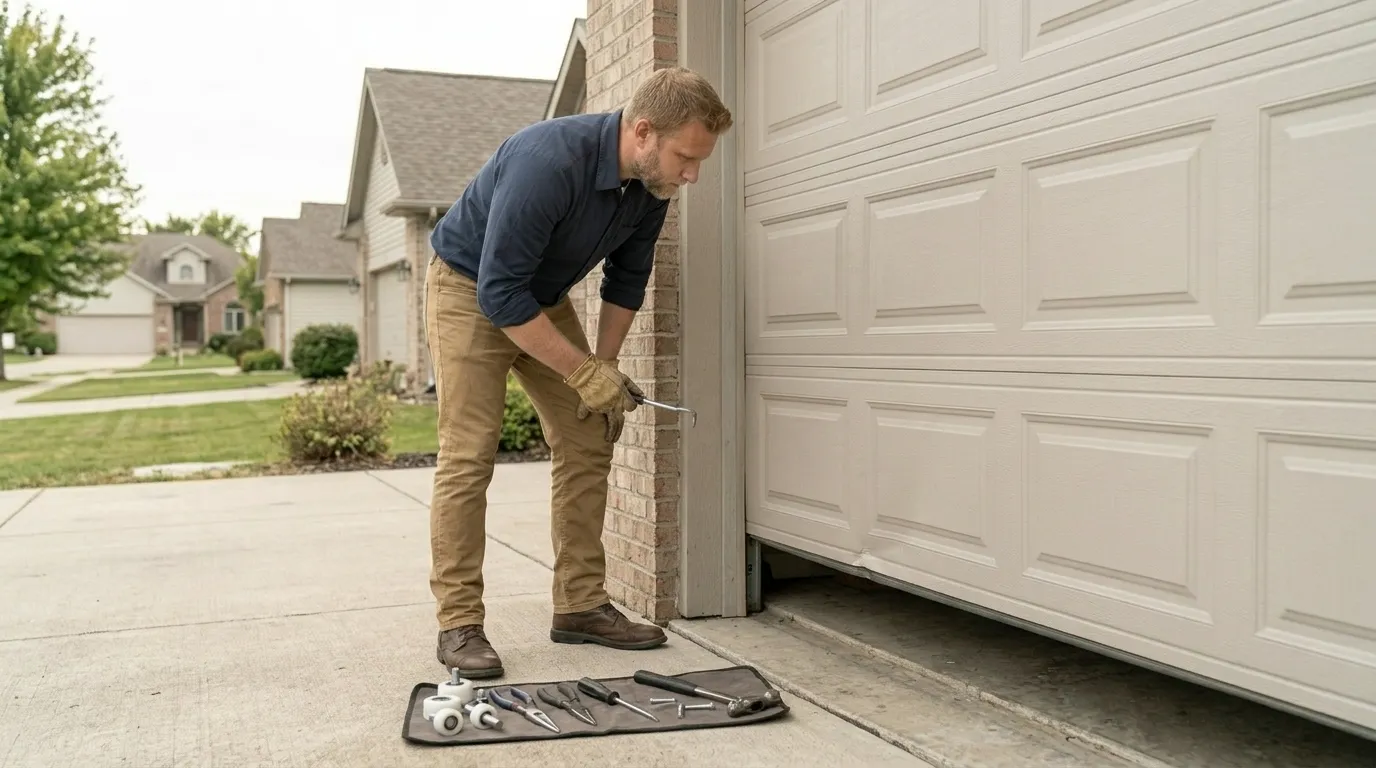
On the older steel track common in houses from this area's main building years, the tell is a visible gap between the track and the roller near the bottom, or a panel that looks slightly twisted compared to the rest of the door. Sometimes it's the opener straining and reversing because the door's binding against a track that's no longer square to the opening.
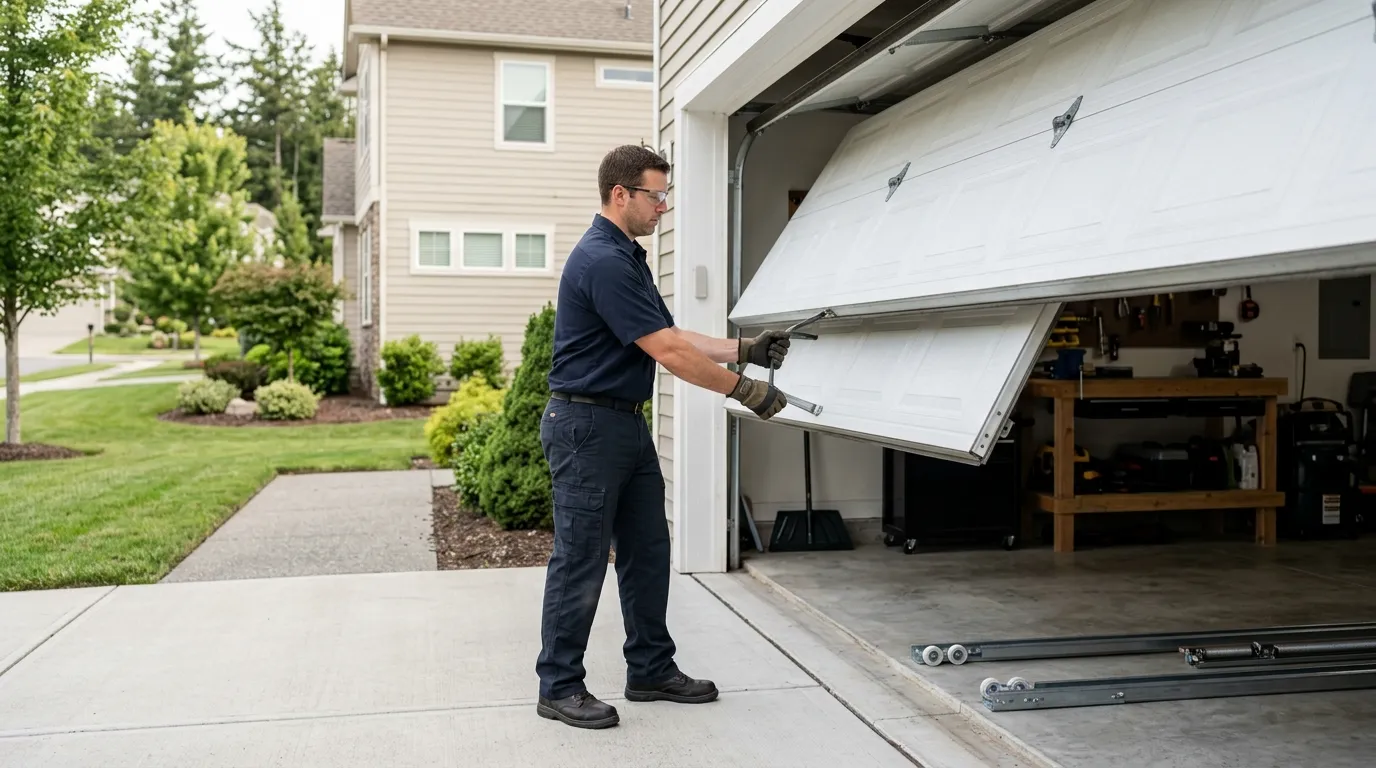
A door that's come off the track on one side only will often still look mostly closed, just tilted. Don't force the opener again once you see that; running the motor against a jammed track is how a cable snaps or a panel cracks on top of the original problem. Pull the release cord, leave the door where it sits, and call it in before the fix turns into two fixes.