Can You Do This Yourself
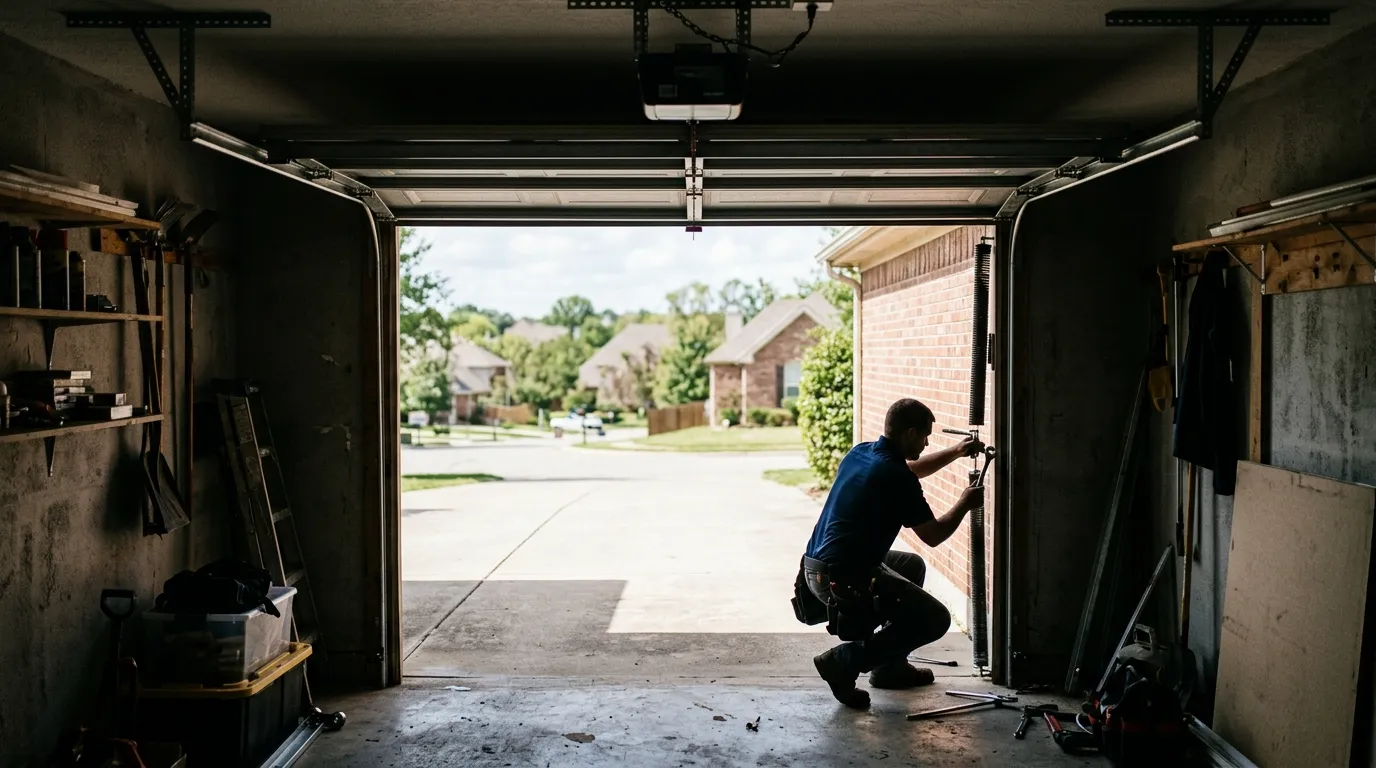
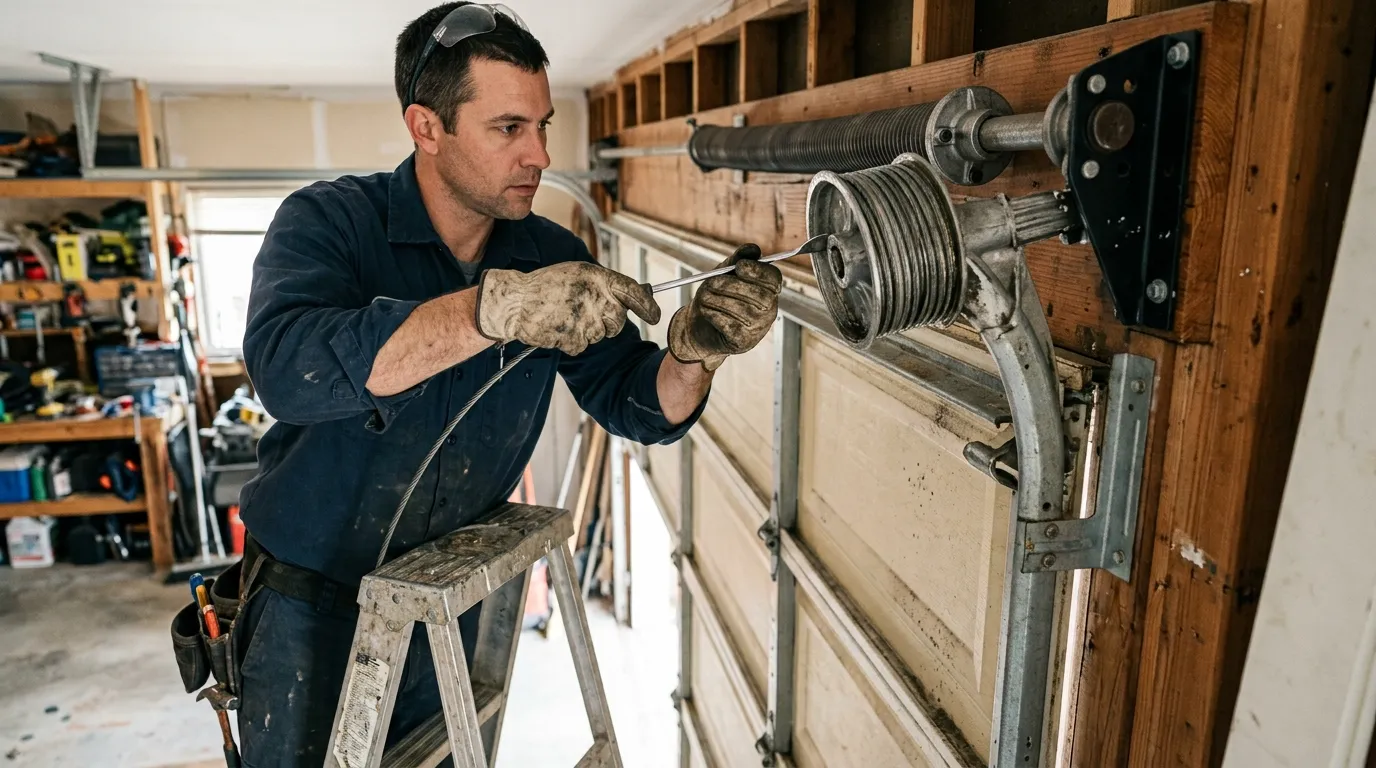
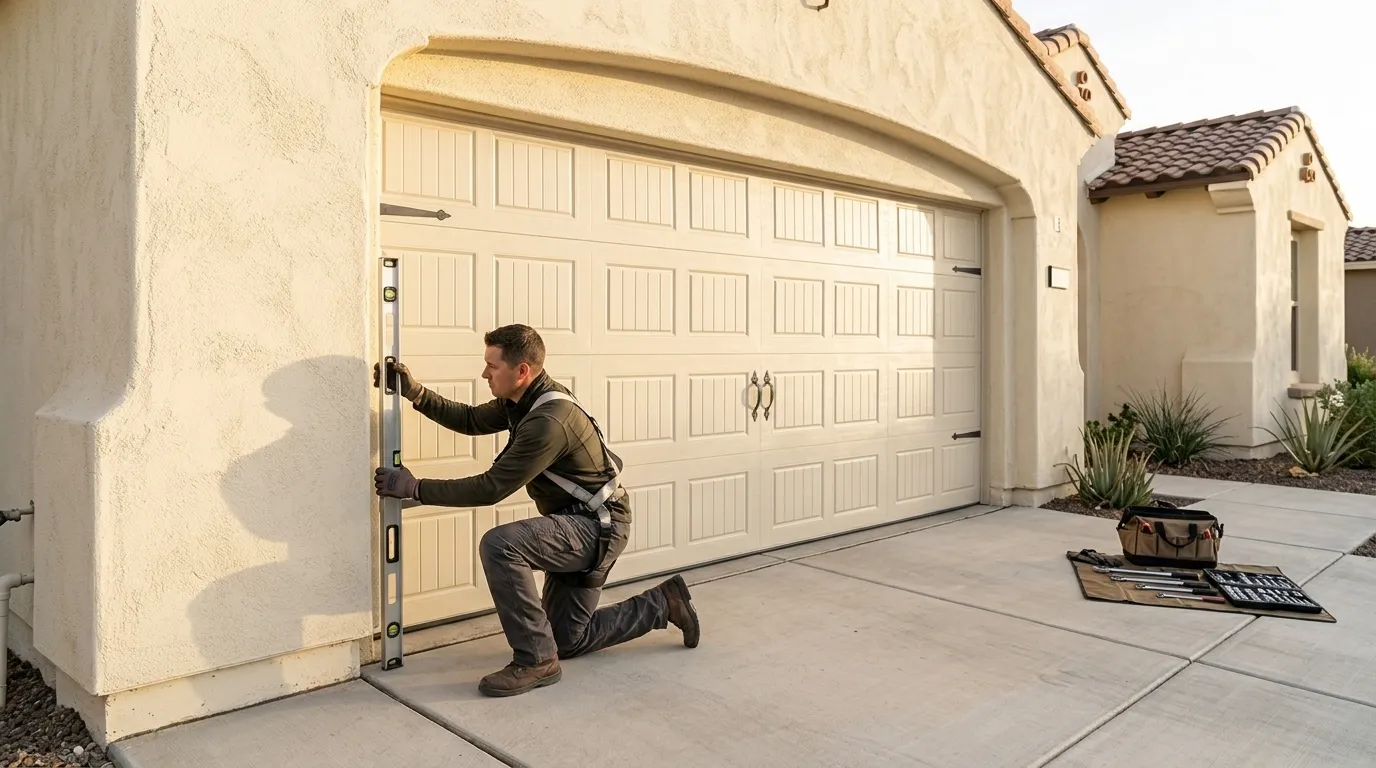
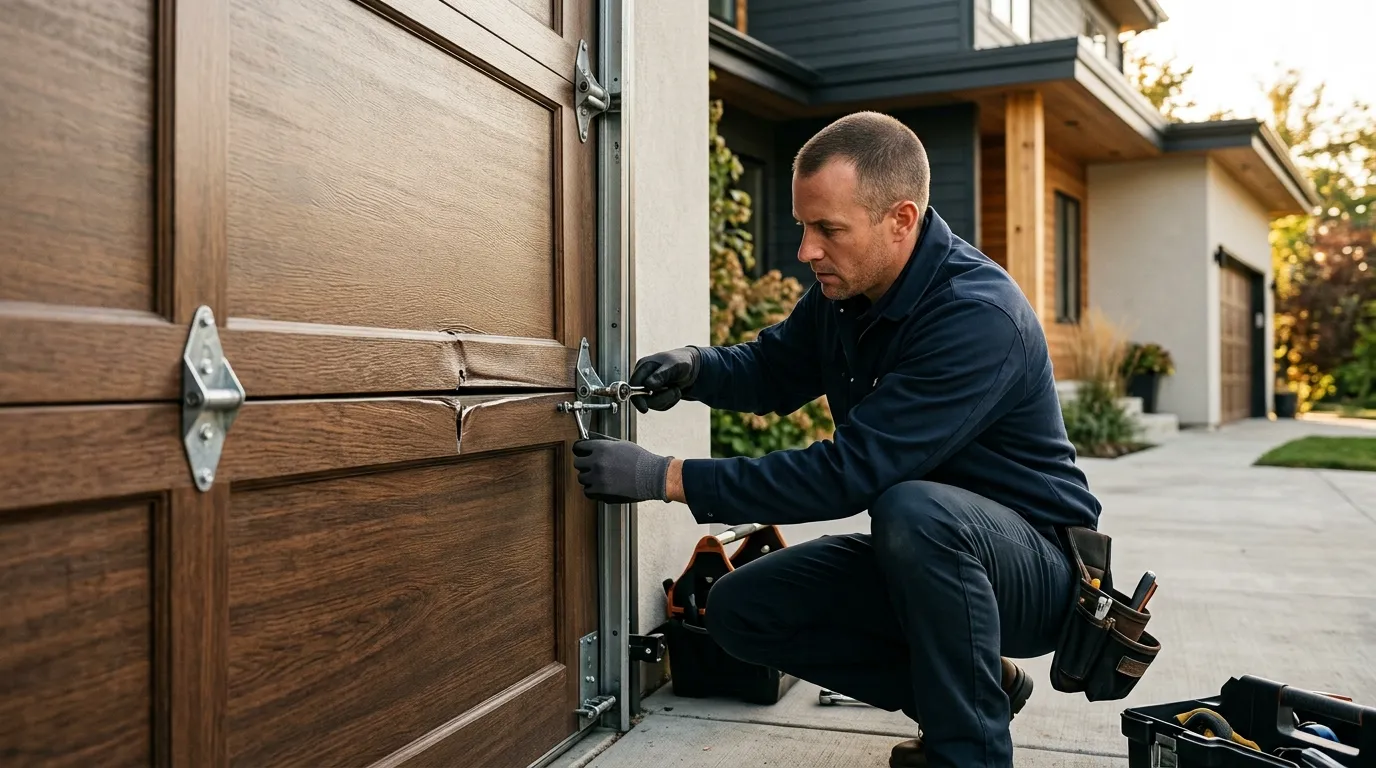
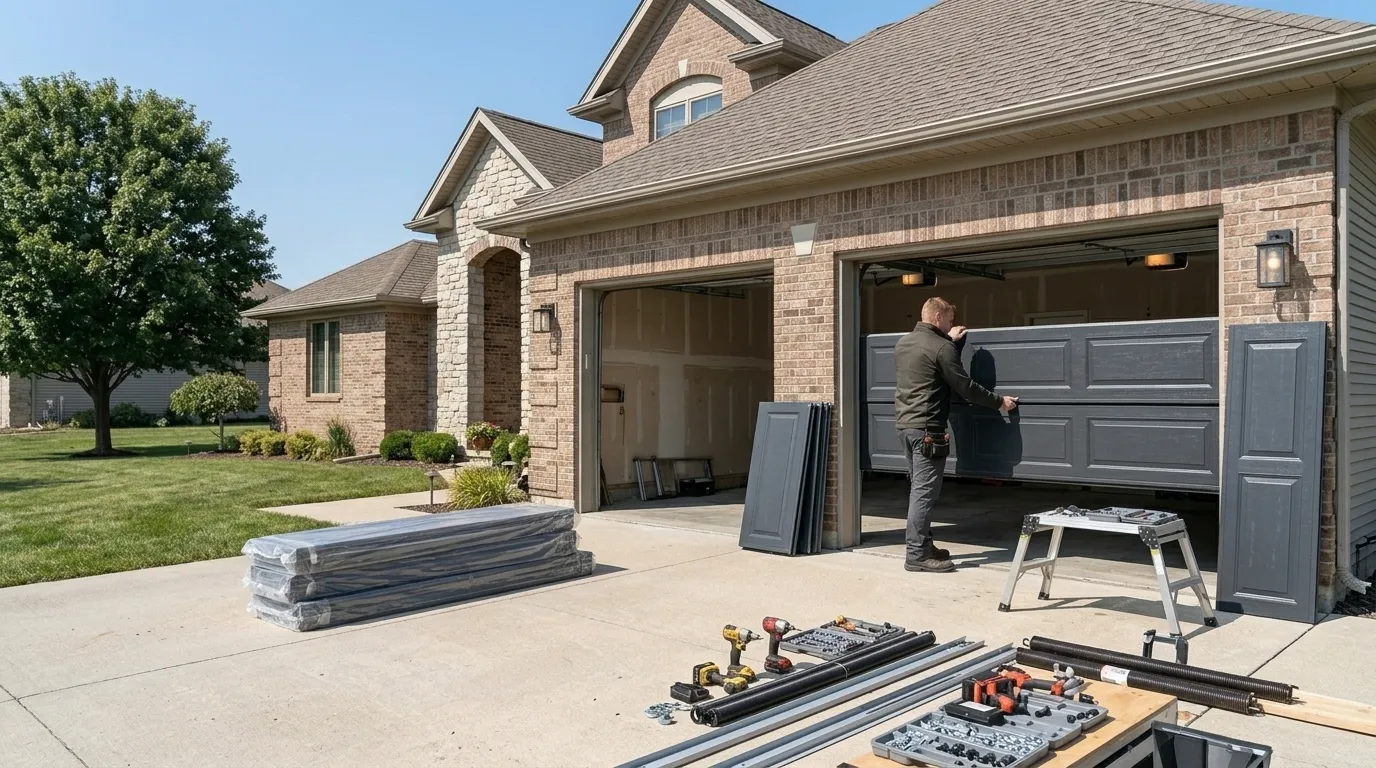
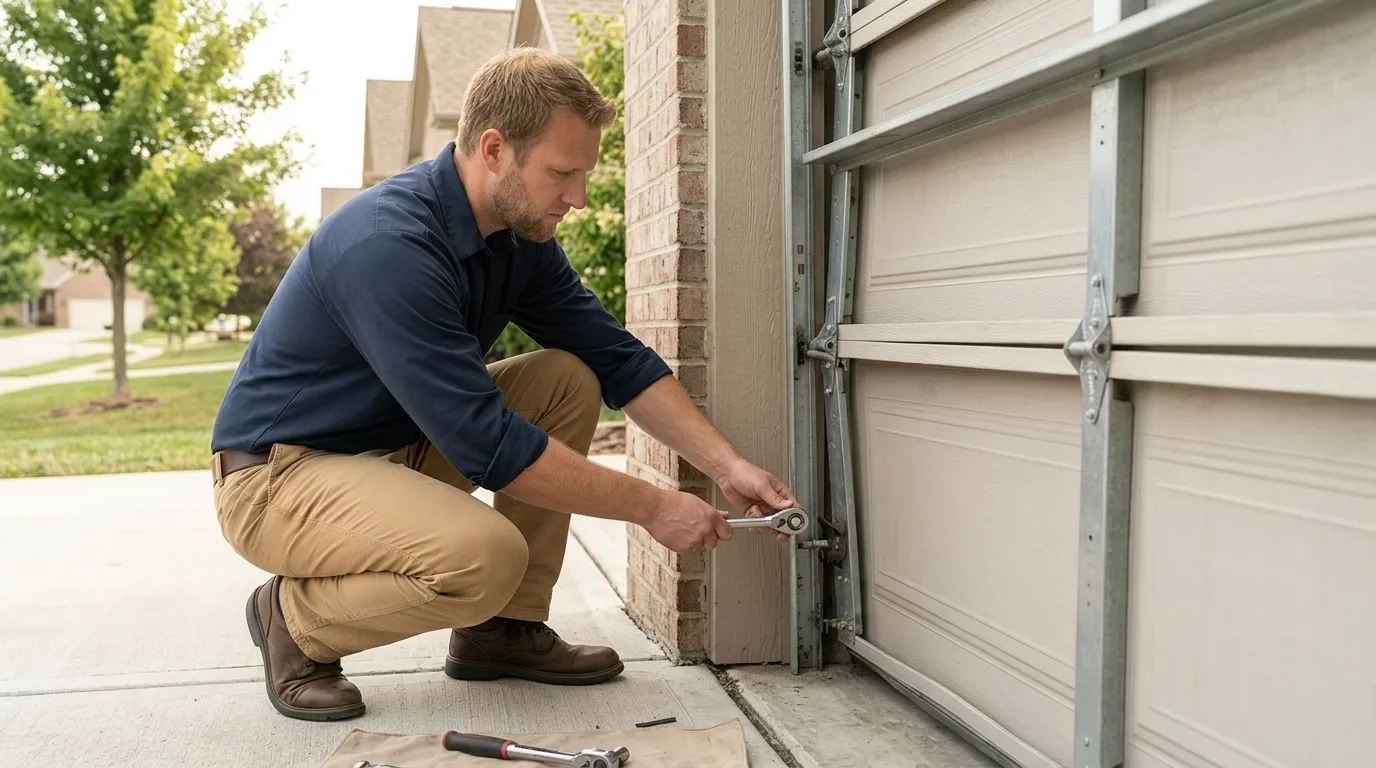
If your Waterloo house went up around 1965, the door hanging on it now might be the second one it's ever had, or it might still be the first. A lot of that year's hardware was built to last, and a lot of homeowners never had a reason to touch it until a spring let go or a track bent. You can safely handle simple things yourself: replacing worn rollers on an up-and-over door, tightening loose hinge bolts, lubricating hinges and rollers with the right product, or swapping a broken remote battery. What you should not touch is anything under torsion - a wound spring holds enough stored force to break a bone or worse, and on a door this age the anchor bracket and center cone may be original equipment that wasn't rated for today's heavier insulated panels if the door's ever been swapped out. Same goes for the bottom bracket on a door under cable tension. If a panel is dented but the door still runs true, that's a cosmetic call you can leave alone or fix on your own schedule. If the door won't open, won't stay open, or the spring has visibly separated, that's a call, not a project.
Parts We Carry
On a house built around 1965, the torsion spring is very likely not original - springs fatigue and get replaced over the decades - but the track, the drums, and sometimes the hinges can be. We carry standard torsion springs sized to older single and double doors, extension spring sets for the small share of homes that still run that older lift style, steel rollers to replace the original ones people never think to swap until they're grinding, and center and end bearing plates sized for tracks from that era. We stock openers too, since a lot of 1960s-era garages in this area never had one installed until decades later and the unit now hanging there is itself getting old. What we don't stock on the truck is anything custom-milled - if a door frame is out of square from decades of settling, that's a measure-and-order job, not a same-visit fix.
Why It Happens Here
Waterloo's housing sits older than most of the towns we cover out of Sun Prairie - the area-wide median build year runs 1986, but Waterloo's own stock centers closer to 1965. That gap matters for garage doors specifically: hardware from the mid-60s used lighter-gauge track and smaller torsion springs than anything sold today, sized for wood or thin steel doors that weighed a fraction of a modern insulated panel. Fifty-some winters of a severe cold climate cycling that steel through freeze and thaw is what eventually cracks a spring or seizes a roller that's never been lubricated. With about 1,560 households in Waterloo, it's a small enough town that we're not running a crew based there - we drive the 12 miles from Sun Prairie when a call comes in. Median household income here runs $78,103, noticeably below the $98,943 median across the wider service area, which is part of why we'll always tell you when a repair beats a full replacement instead of defaulting to the bigger job.
Time on the Job
Because we're driving in from Sun Prairie rather than working out of a Waterloo location, we don't quote a fixed arrival window for the town - that's a Sun Prairie-based promise we're not going to make up for a 12-mile trip. Once on site, most spring and cable repairs on a standard-size door finish in under two hours. Opener installs run longer, especially on older garages where we're also updating the safety sensor height to current code. If parts need ordering - a discontinued panel style, an unusual track width - we'll tell you the wait up front rather than guess at it.