Can You Do This Yourself
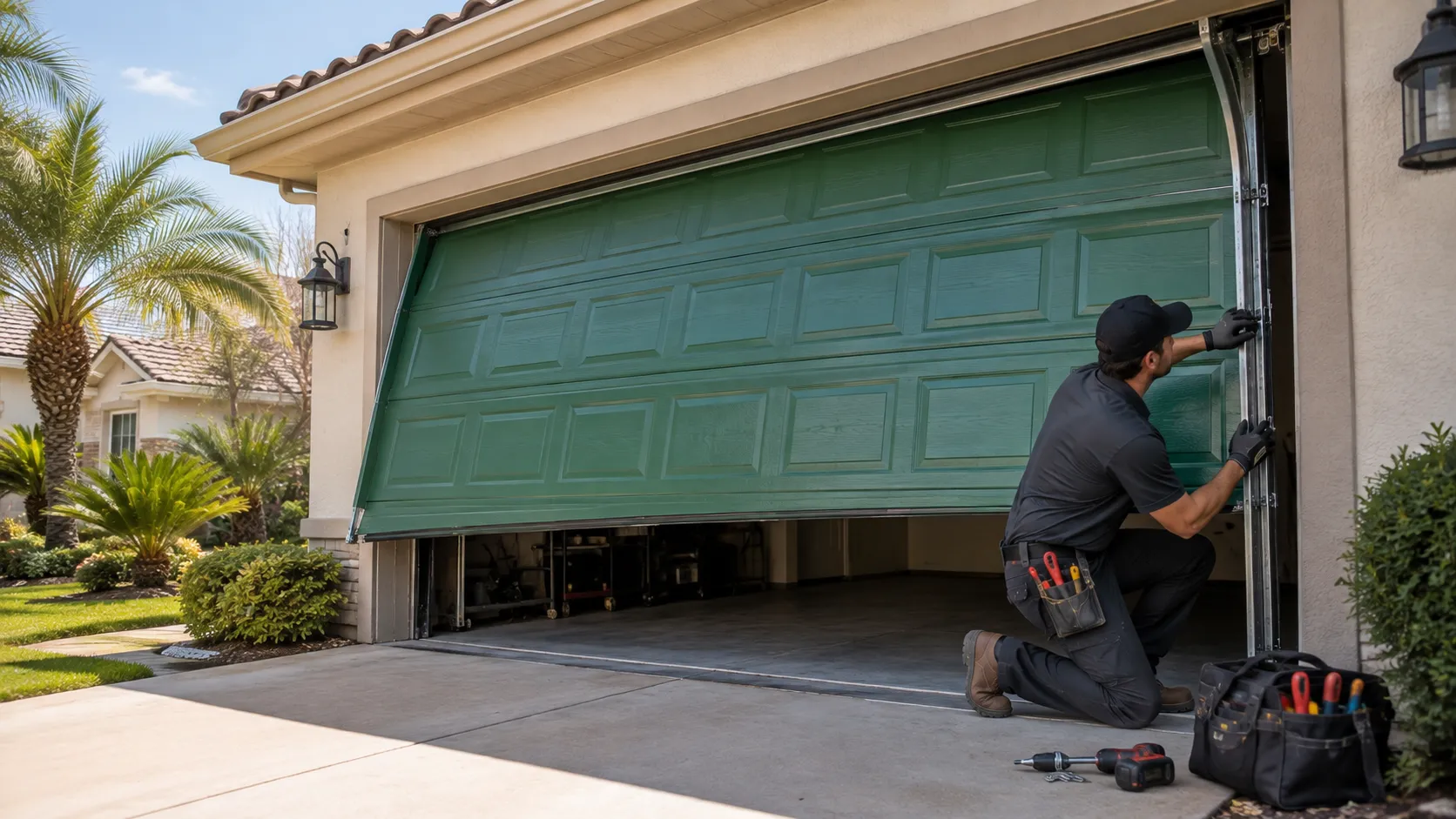
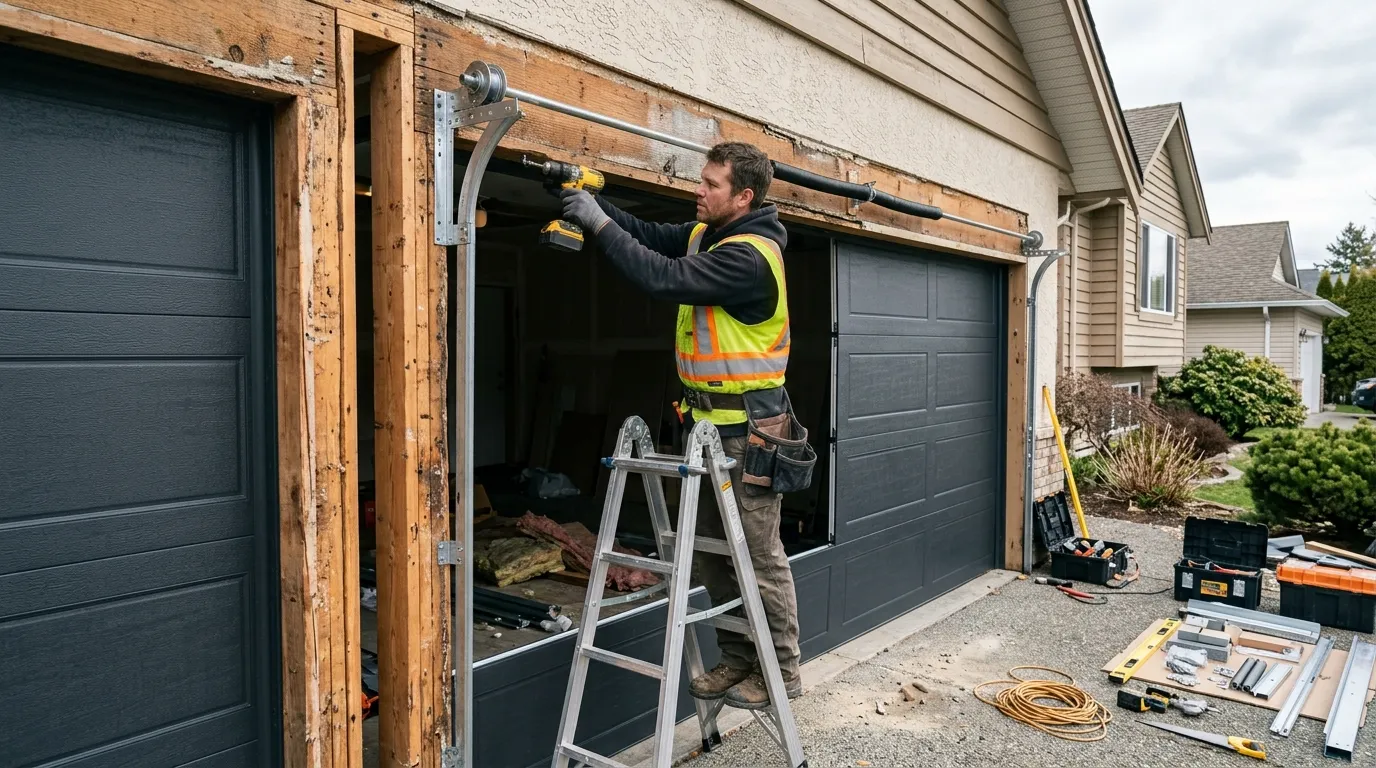
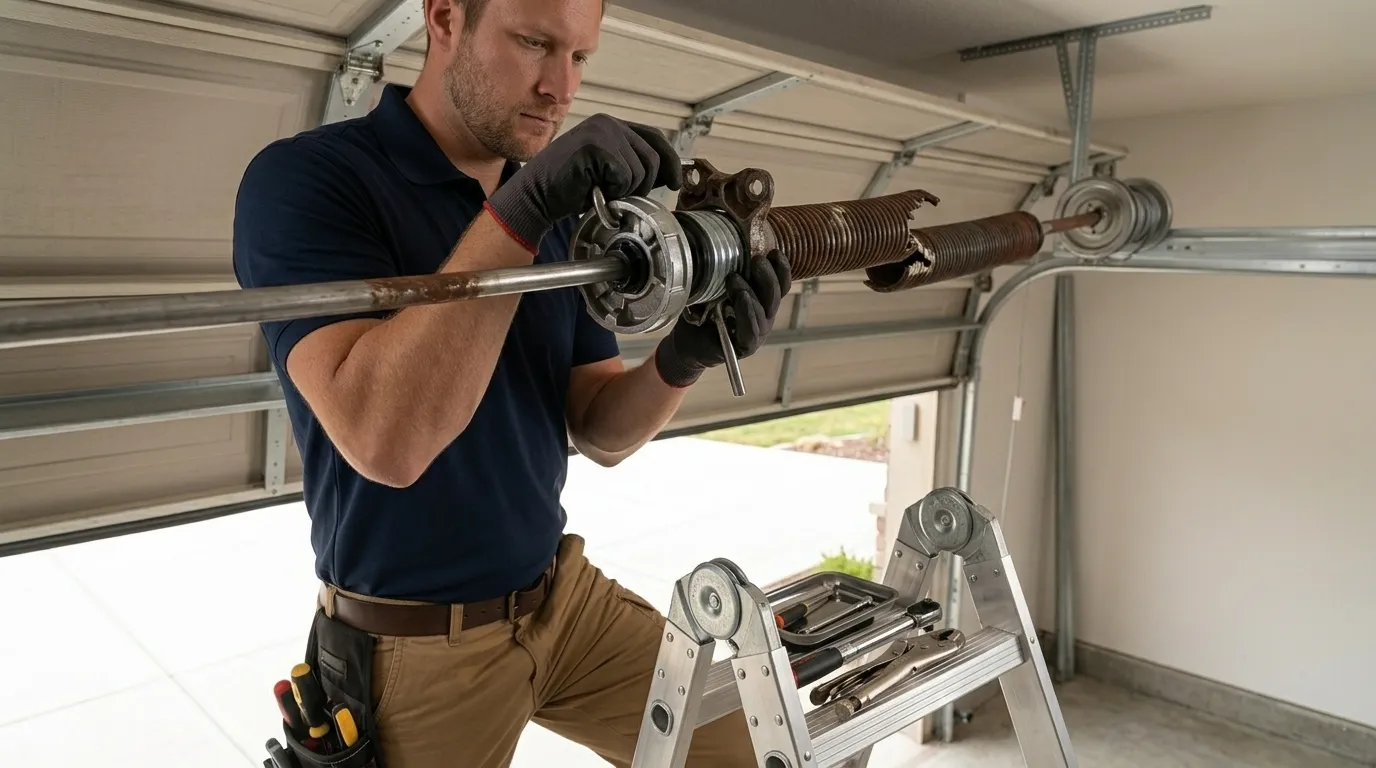
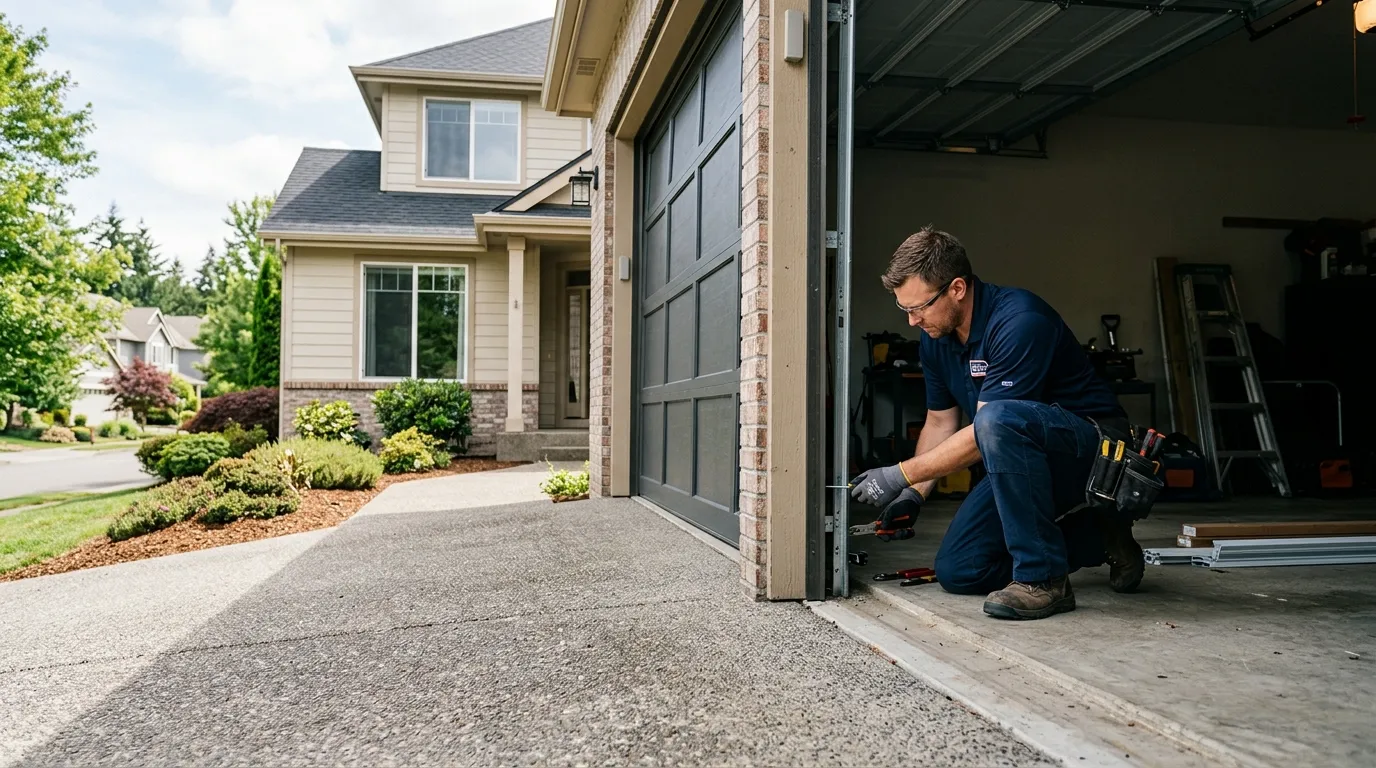
Most houses in Waterloo went up around 1965, which means the garage opening you're standing in front of was framed for a single-layer wood door about half the weight of today's insulated steel sectional. Swapping panels on a door that age, or handling the torsion spring that's been wound for forty-plus years, is not a first DIY project - old springs lose their rating unevenly and let go without much warning. Where a homeowner can help: removing trim, clearing the opening, and deciding on style and window layout ahead of time so the install crew isn't waiting on decisions. Where it isn't worth the risk: disconnecting a wound spring, resetting cable drums, or squaring a jamb that's shifted with the house over sixty years. We won't talk anyone out of doing their own demo work, but the actual hang-and-tension part of a new door install is where the saved afternoon turns into a trip to urgent care. If you've already pulled the old door and drums, we can start from there - it just needs to be the safe part, not the spring.
Parts We Carry
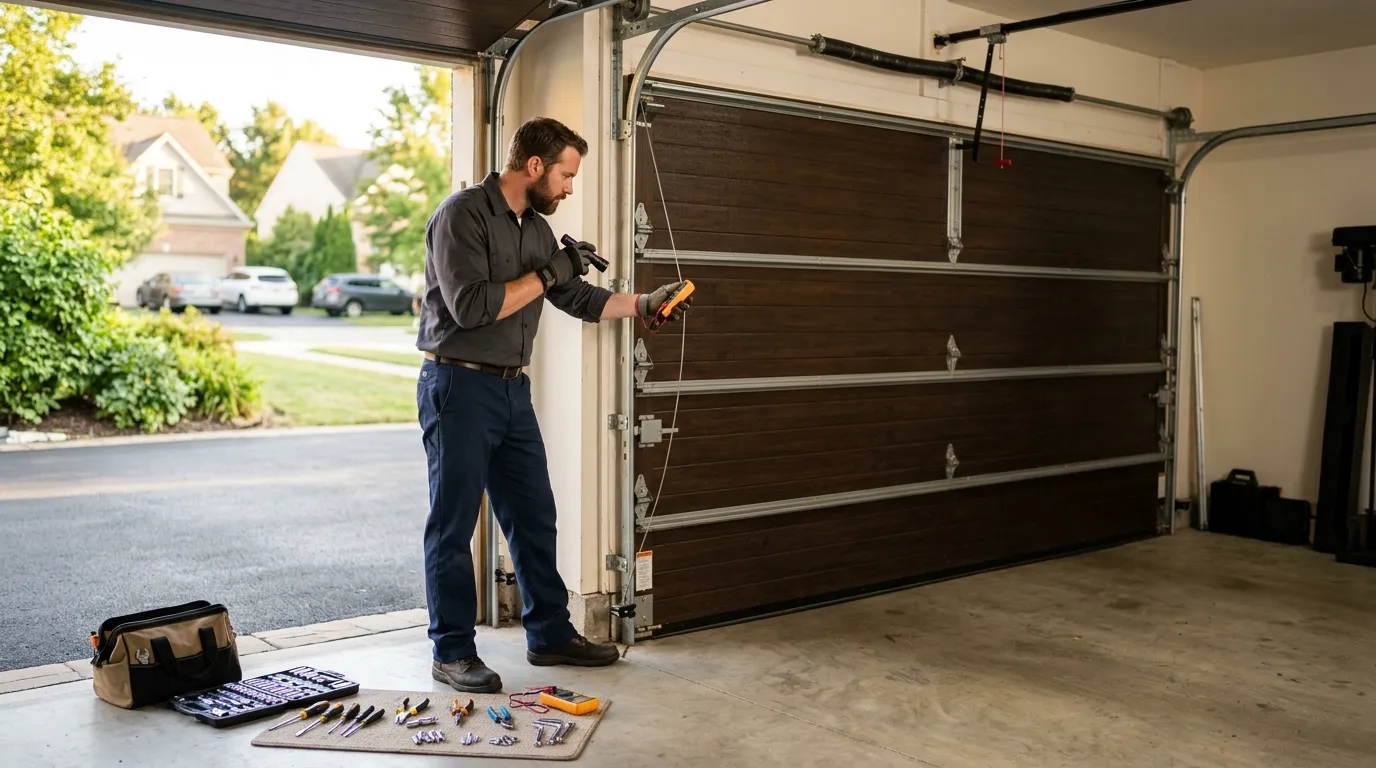
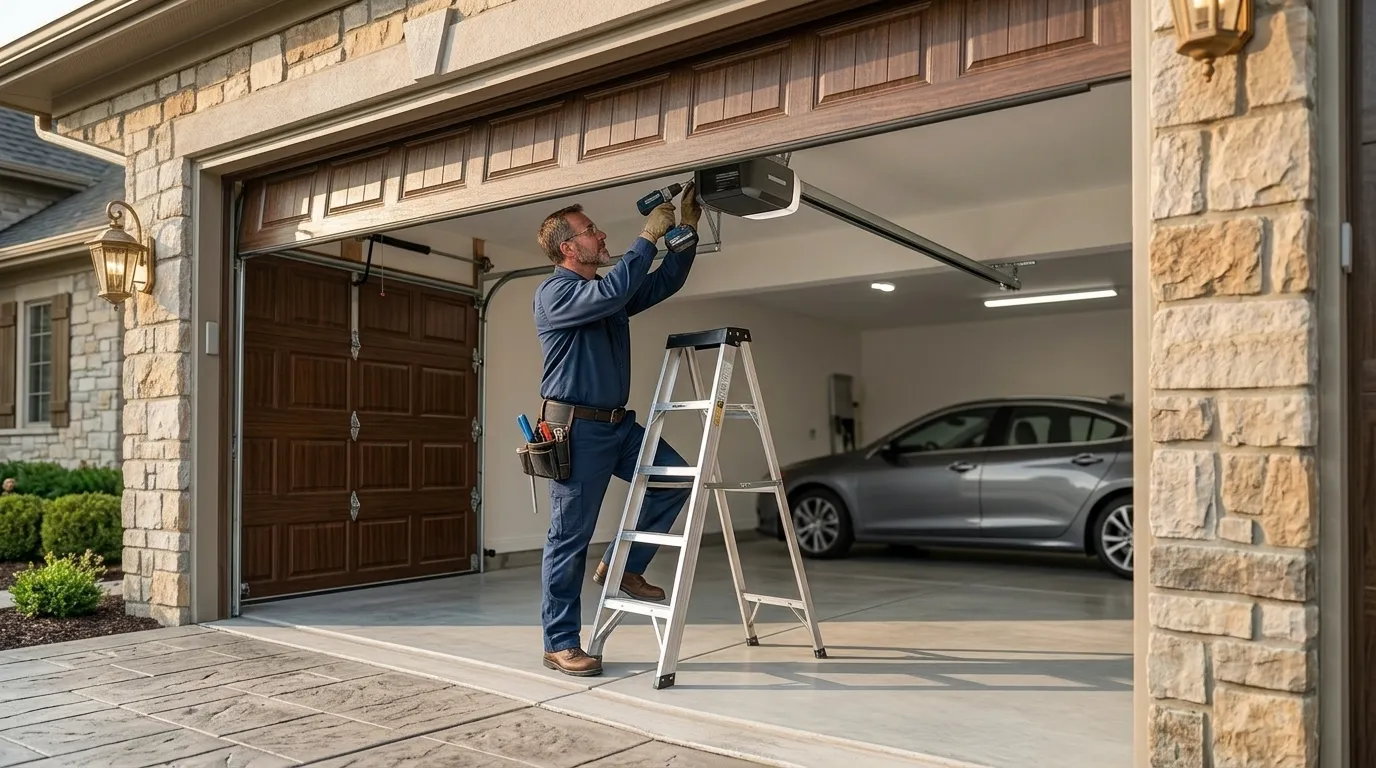
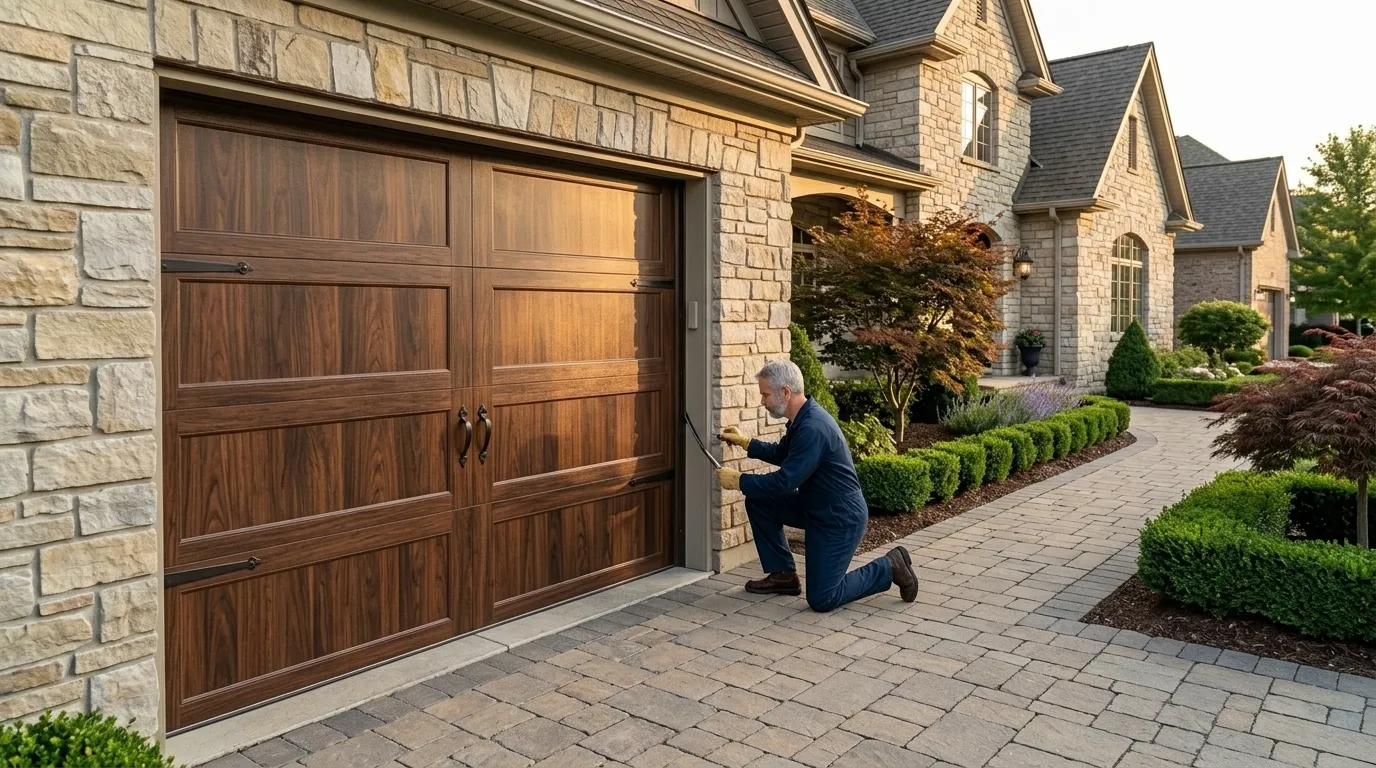
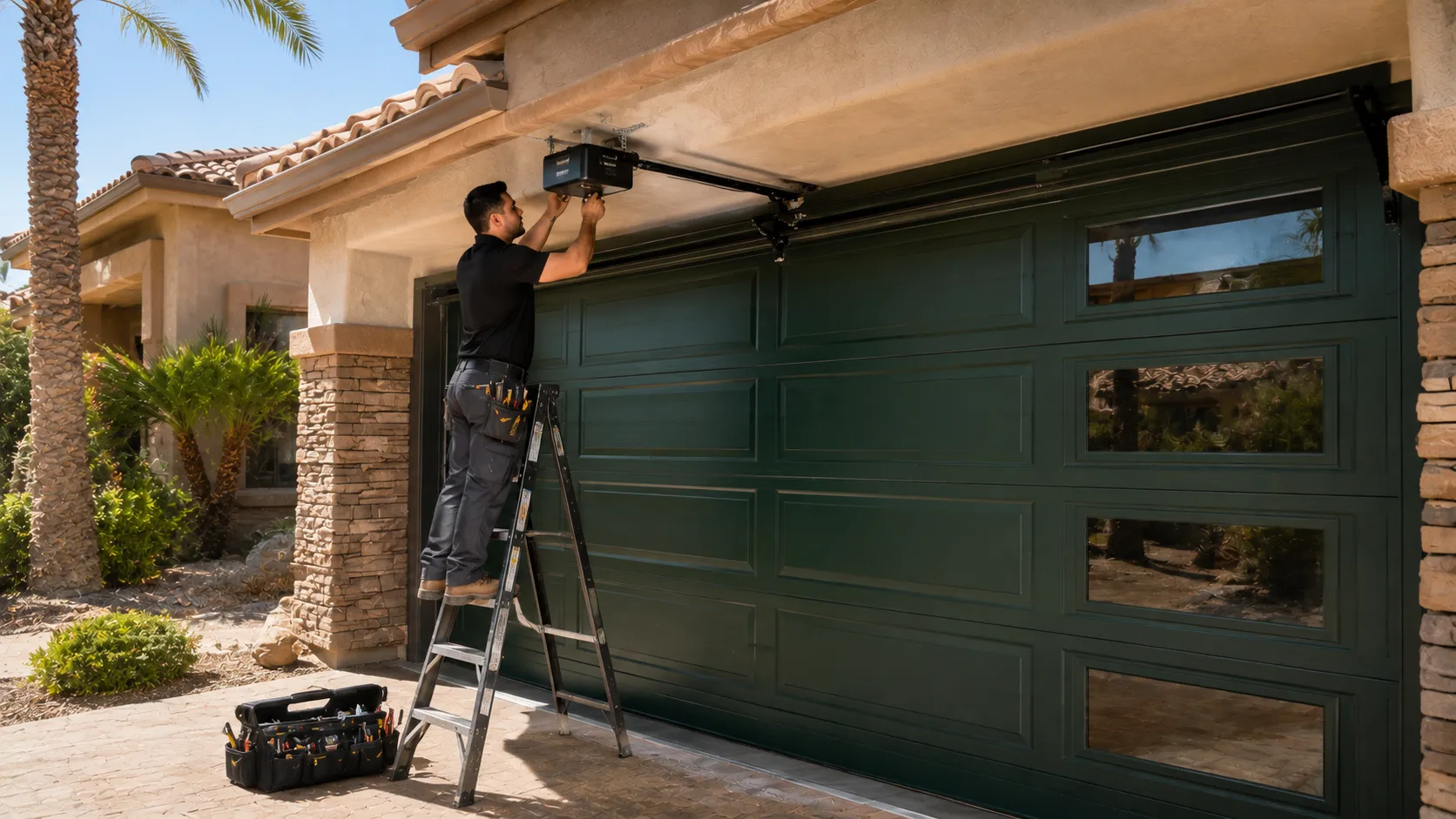
For a house built in the mid-1960s, the opening is usually narrower than what you'd find in newer subdivisions, so we bring insulated steel sections sized to fit rather than assuming a standard 16-foot double. Given the cold-climate rating this area falls under, we stock doors with foam-core insulation and a full perimeter weatherstrip, not just a bottom seal - a single-seal door on an unheated garage here loses that fight by January. Torsion springs get matched to the actual door weight, not the old spring's wind count, since a heavier steel door on the original hardware is how openers burn out early. Track, rollers, and a properly rated opener come off the same truck. What we don't carry: custom wood carriage-style doors built to order, or anything needing a manufacturer lead time longer than a couple of weeks - those get quoted separately once we know the size.
Why It Happens Here
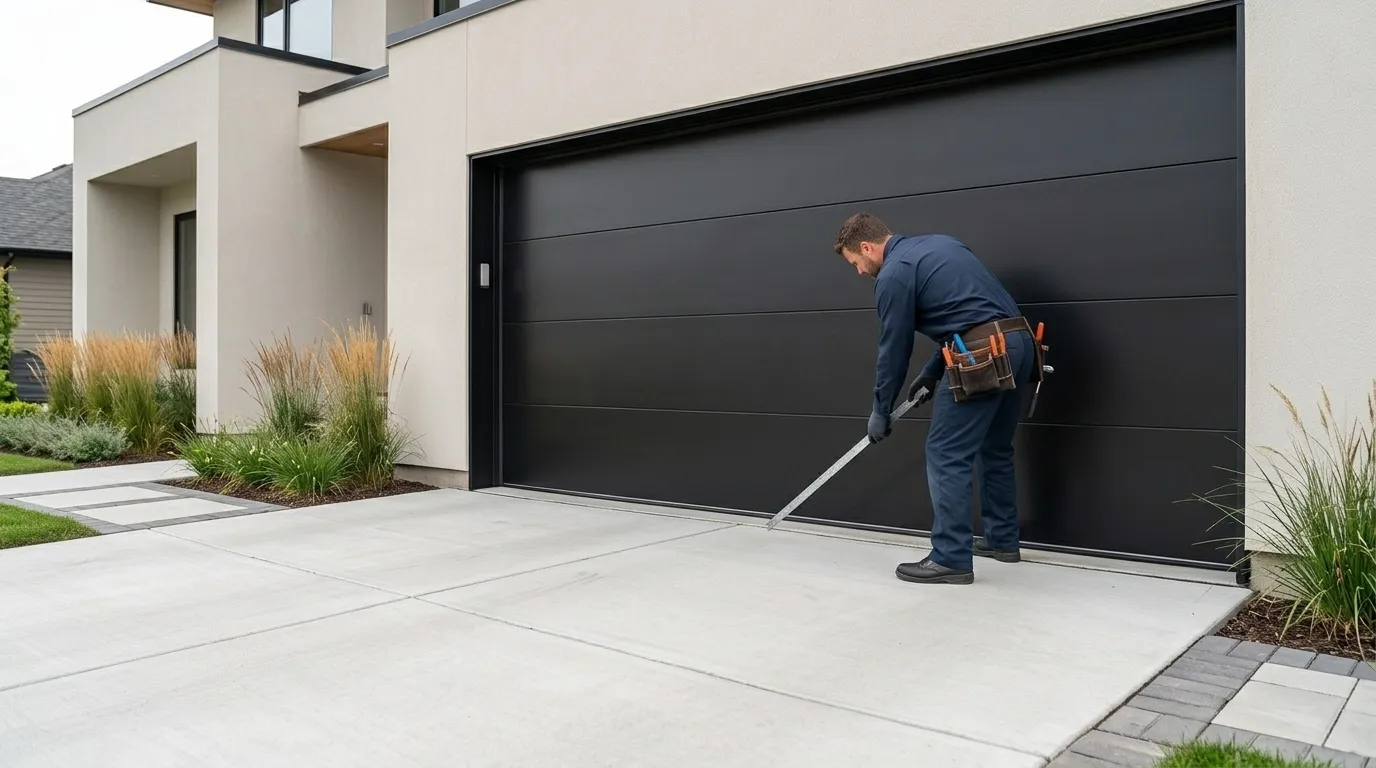
A house built around 1965 was framed for a door style nobody sells new anymore, and that gap between the old opening and a modern insulated steel section is the reason most Waterloo installs involve some framing adjustment, not just a swap. The header height was often set for a lighter, thinner door, so a new insulated section needs either a slightly different track angle or a header shim to clear. Cold-climate severity in this region means an underinsulated or unsealed door isn't just a comfort problem - moisture that gets trapped between an old wood door and a new frame freezes and expands, which is part of why we don't reuse original jamb material without checking it first. With roughly 1,560 households in town, Waterloo doesn't have the tract-built repetition you'd get in a newer subdivision where every opening is identical; each house here tends to need its own measurement rather than a stock size pulled off a chart.
Time on the Job
We run this job out of Sun Prairie, and Waterloo is a 12-mile drive, which mostly affects how we schedule the day rather than the work itself - once the truck's there, the install runs the same as anywhere else. At $78,103 median household income locally, we see more homeowners asking for the mid-tier insulated steel door over the premium wood-composite line, which is a reasonable call on a door that's going to sit in a cold garage nine months a year regardless of finish. A standard double-door install runs a full day; a single takes less. Winter jobs add time for weatherstrip fitting since cold makes the seal material stiffer to seat properly. We don't stage a second crew here the way we might on a job inside Sun Prairie itself, so if a part turns up wrong on-site, that becomes a second trip rather than a same-day fix.