Time on the Job
Cottage Grove sits six miles from our shop in Sun Prairie, close enough that a spring call here doesn't turn into a half-day trip once we've got the right coil on the truck. That's the part that matters more than distance alone: knowing what's likely waiting on the other side of the door before we knock. Most houses in Cottage Grove went up after 2001, which puts this town on the newer end of what we see across the wider service area, where the typical build year runs closer to 1986. Newer construction usually means factory-installed torsion hardware on steel brackets rather than the older extension-spring setups bolted to wood jambs we still run into in the older pockets nearby. That changes what we bring off the truck and how long the job takes once we're standing in front of the door. A straightforward torsion swap on a door this age is usually a same-visit fix. It's the doors with add-on openers, mismatched cable drums, or a second spring that was never rated to match the first that turn a twenty-minute job into an hour.
The Complications
Cottage Grove counts about 3,298 households, a small enough footprint that the housing stock here is fairly uniform compared to older, patchwork areas closer to the lake towns. That uniformity actually helps on a spring call - a torsion spring built for a door from this era is a known quantity, not a guessing game. The complication we do run into is winter. This region sits in a cold-climate band with real seasonal swings, and steel springs lose tension and get brittle with temperature cycling over years, whether the door is ten years old or thirty. A spring that's been holding on through several winters can look fine right up until it isn't. The other wrinkle: newer doors sometimes have openers with force settings dialed in tight from installation, and once a spring loses even a little tension, the opener starts fighting the door on every cycle. That wears the opener's gears faster than a bad spring alone would. We check both, not just the coil, because replacing the spring and leaving a strained opener behind just moves the failure a few months down the road.
Can You Do This Yourself
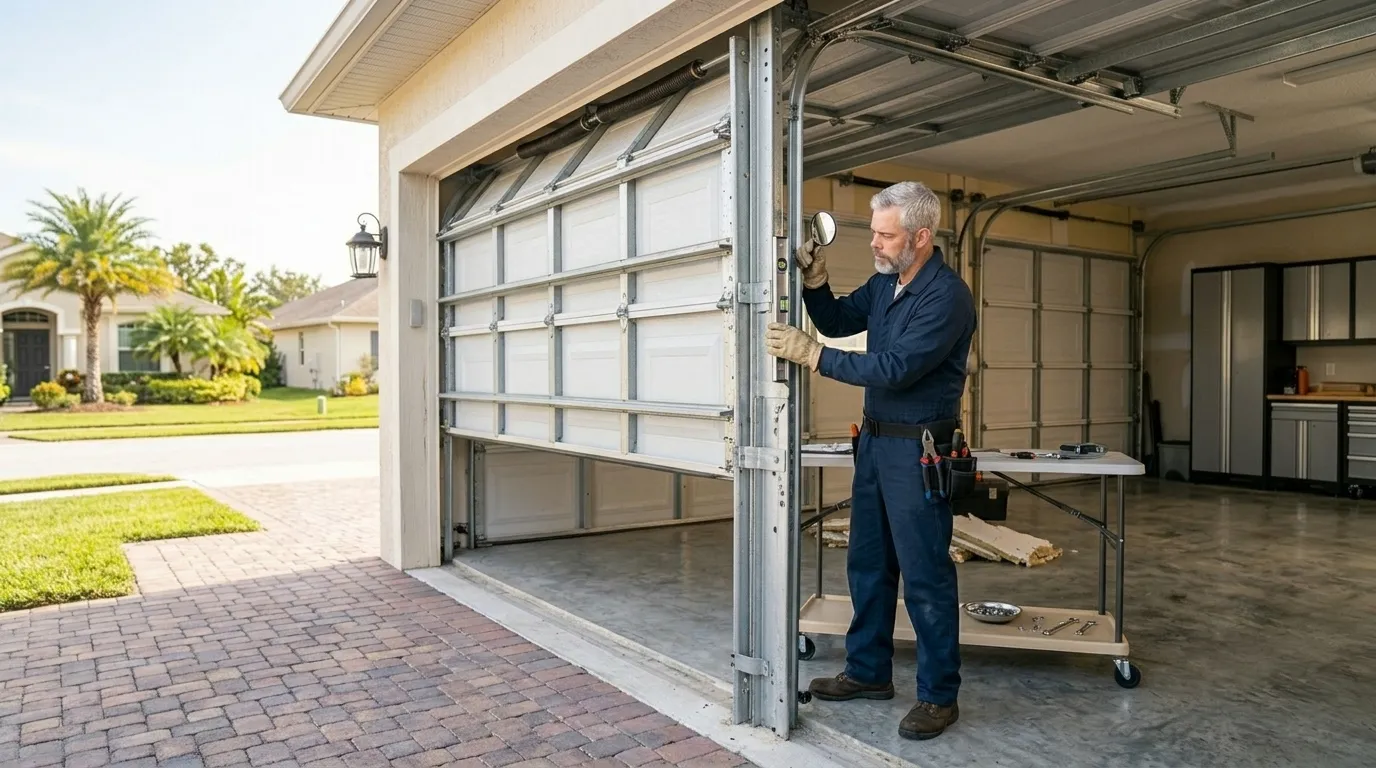
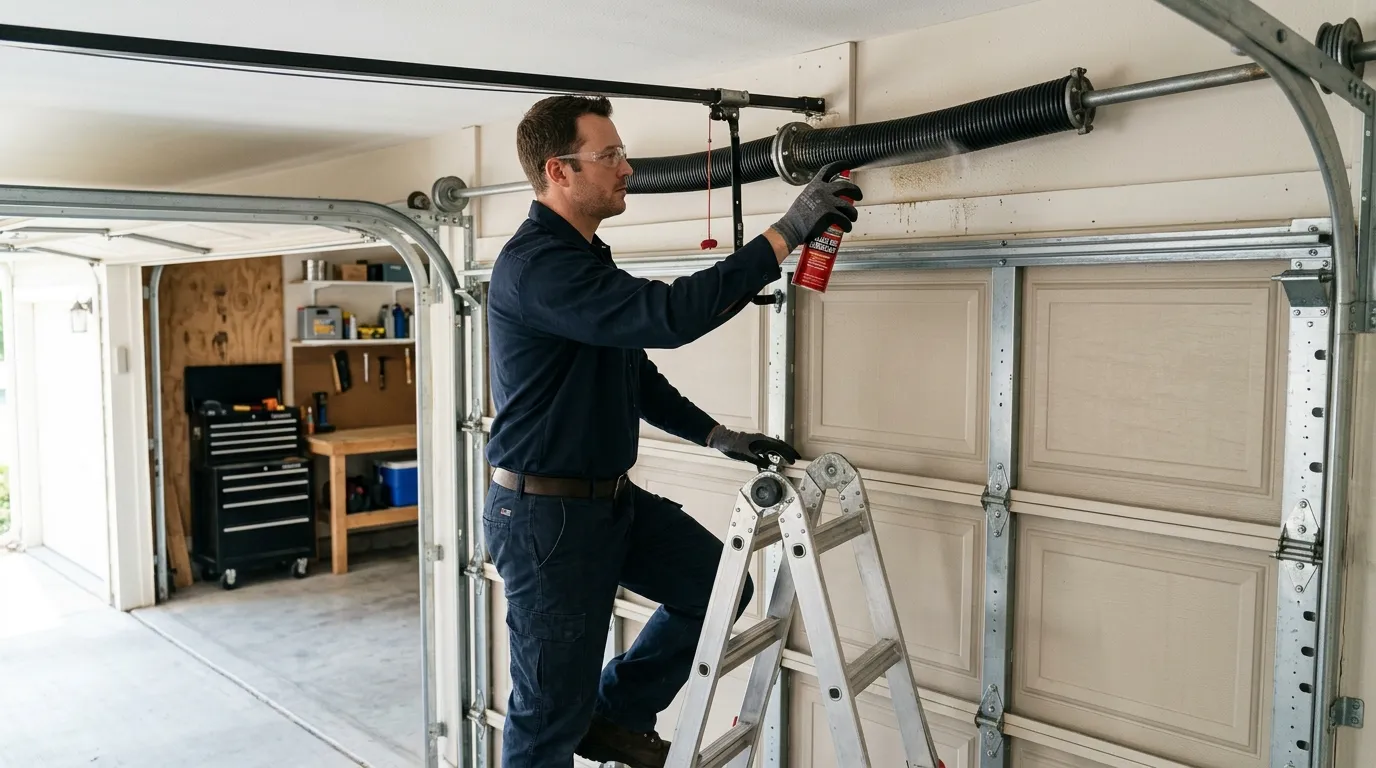
I won't talk anyone through doing this themselves, and that's the honest limitation on this page. Torsion springs are wound under several hundred pounds of tension, and the winding bars and clamps needed to release that tension safely aren't things most homeowners have lying around, nor should they need to buy them for a job they'll do once. Extension springs are a little more forgiving to look at but still store enough force to do real damage if a cable slips. What you can safely do yourself: check whether the door is a torsion spring (one thick spring mounted horizontally above the door) or extension springs (thinner springs along the upper tracks, with a pulley and cable), and note whether one spring is stretched noticeably longer than the other - that tells us on the phone which parts to bring instead of guessing on-site.