The Cost of This Job
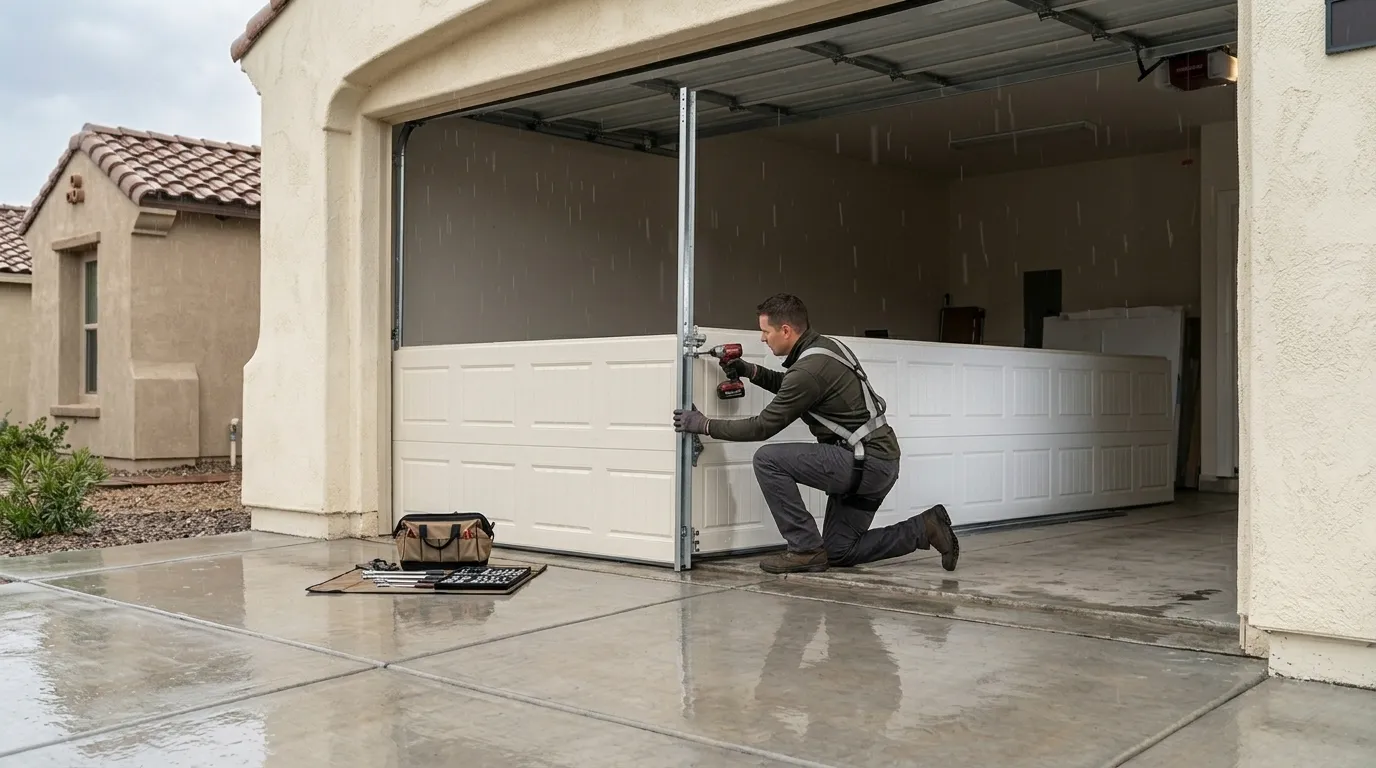
A cable job on a DeForest garage door almost always starts the same way: one side of the door hangs low, or it won't move at all, and there's a thin braided cable dangling loose by the bottom bracket. Most houses in this area went up around 1992, right in the middle of the 1959-2001 build range that covers the wider Sun Prairie service area. That era of construction favored a standard torsion setup with galvanized aircraft cable running through a bottom fixture, and after three decades those cables are due for wear whether or not anything else on the door has been touched.
What you pay depends on whether it's one cable or a pair, whether the drum or bottom bracket got chewed up when the cable let go, and whether the door came down hard enough to bend a track. A clean single-cable swap is a different job than a pair replaced after a hard drop bent the roller track. We quote it after a look at the door, not over the phone, because guessing on hardware condition is how a job goes long.
Why It Happens Here
Wisconsin's cold band is severe, and that matters more for cables than most homeowners expect. Cable strands don't like sitting stiff and under tension in single-digit temperatures for weeks at a stretch, then flexing hard on a warmer day when the door gets used more. That freeze-thaw cycling is what turns a fraying strand into a snapped cable, usually on the coldest morning of the stretch, when the door gets asked to move and the weak strand finally gives.
Houses built in the early 1990s around DeForest also tend to run torsion springs sized for the original door weight, which means the cable is carrying load through hardware that's aged evenly with the rest of the system. When one cable goes, the other one is usually not far behind, even if it still looks fine. That's not a sales line, it's just how the fatigue timeline works on a matched pair installed the same day thirty-some years ago.
Can You Do This Yourself
A garage door under spring tension is not a safe DIY cable swap. The cable is one of the few things standing between a loaded torsion spring and a door that drops fast. If you're comfortable, you can check for early warning signs yourself: fraying strands near the drum, a door that sits crooked when closed, or a cable that looks slack on one side compared to the other.
What you shouldn't do is loosen anything at the bottom bracket or try to rewind a drum with the spring still wound. That's the job that puts people in the ER, not the garage. If you see fraying, stop using the opener and call before it lets go on its own schedule.
How It Shows Up
The most common call we get from this area is a door that stopped halfway, hanging at an angle, with one corner lower than the other. Sometimes it's a loud bang first, the sound of a cable snapping under tension, followed by the door dropping a few inches before the safety cable or track catches it. Other times it's quieter: a slow list to one side over a few weeks as a cable stretches and frays before it finally lets go.
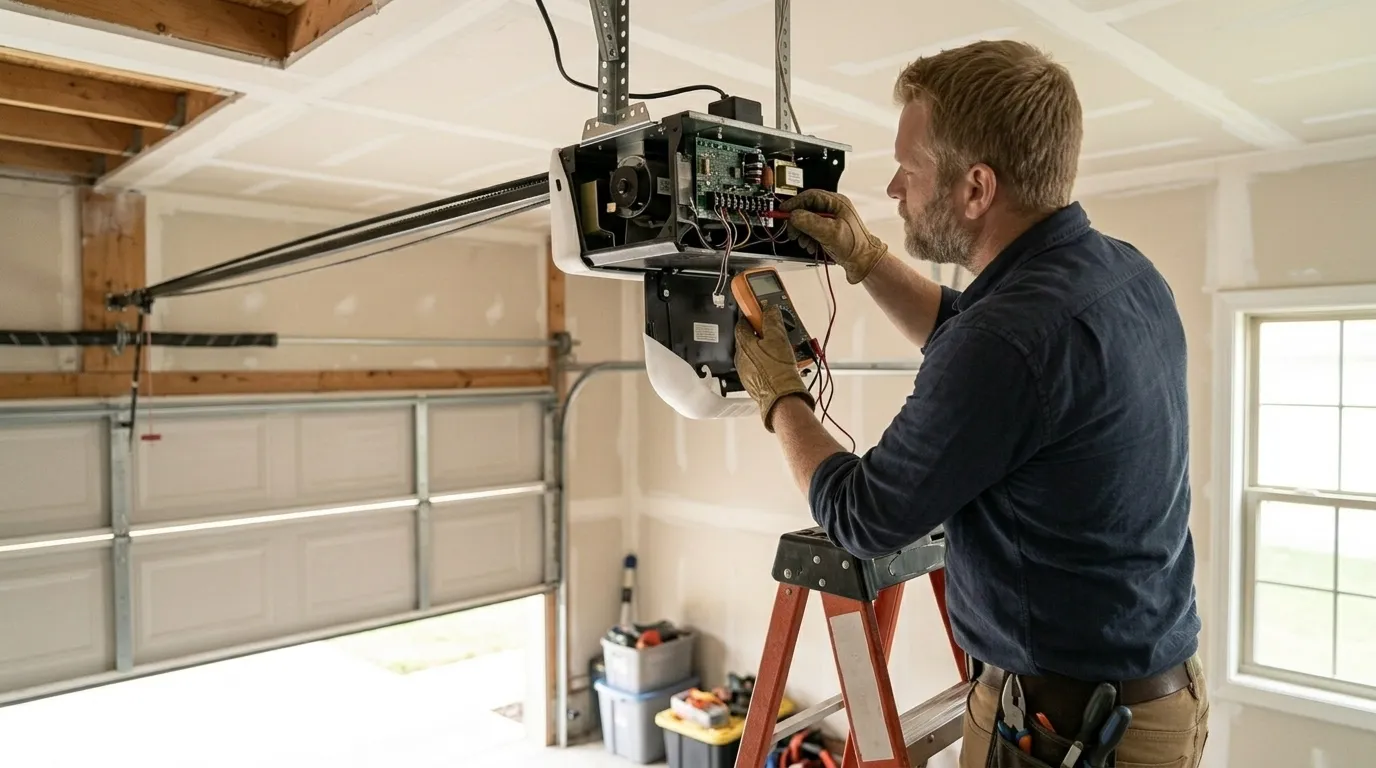
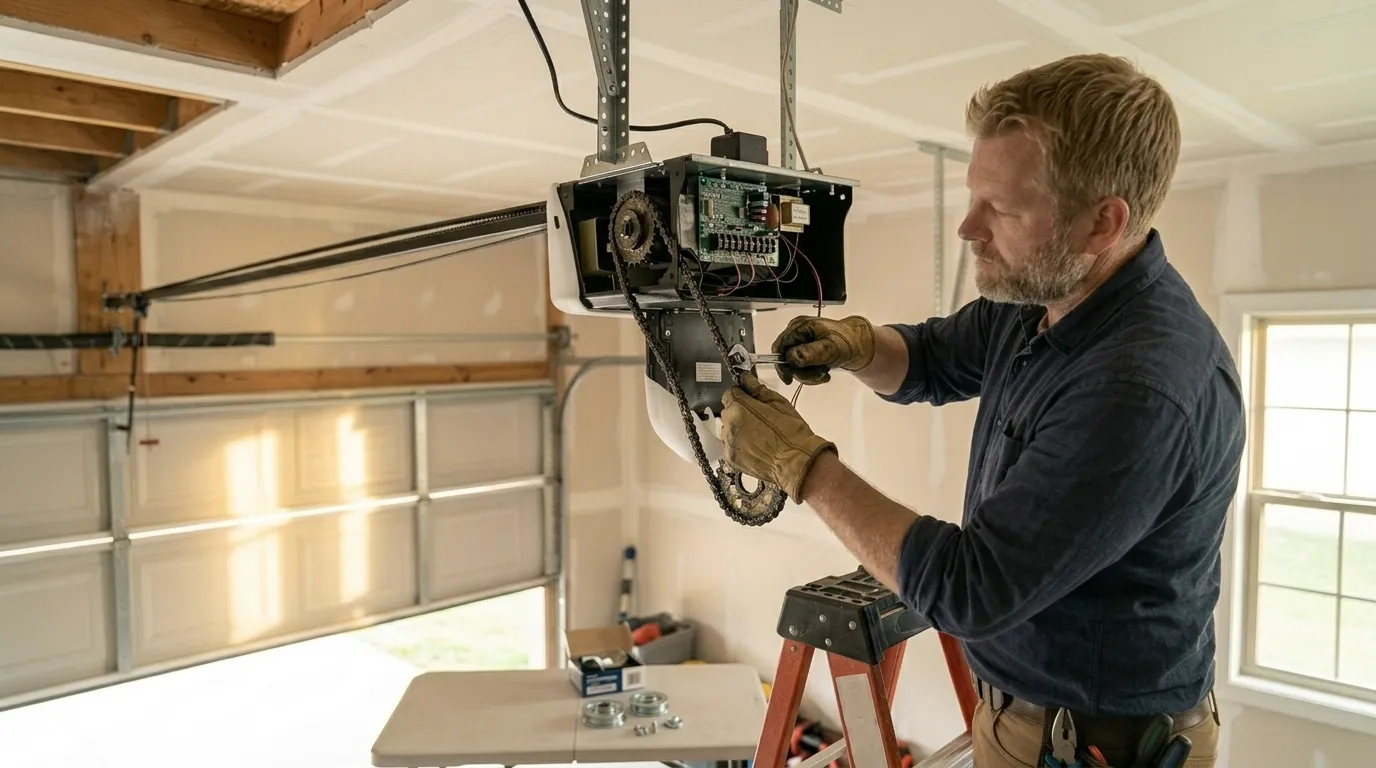
A door that won't budge at all, with the opener straining or clicking, is also often a cable problem rather than an opener problem, especially on a door this age. We check the cable and drum before we ever touch the opener logic board.