Can You Do This Yourself
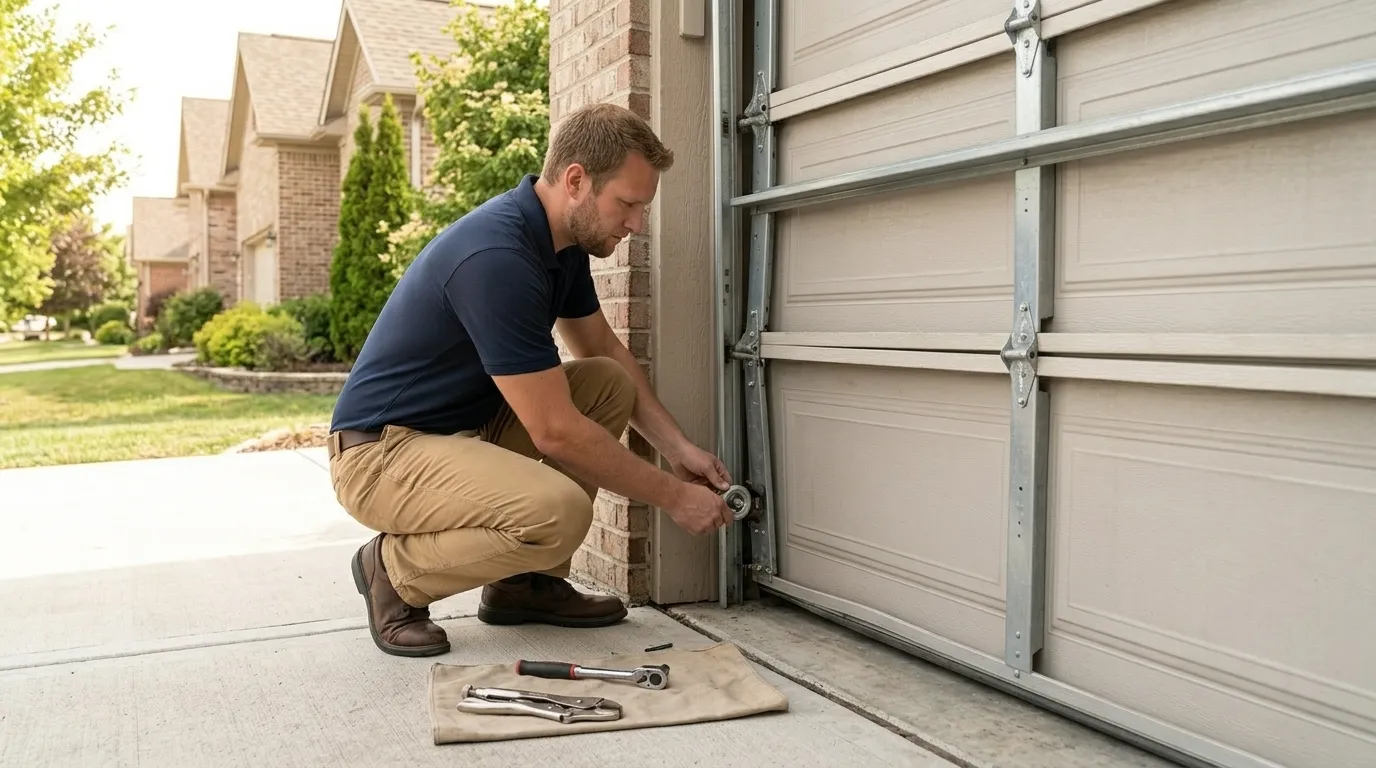
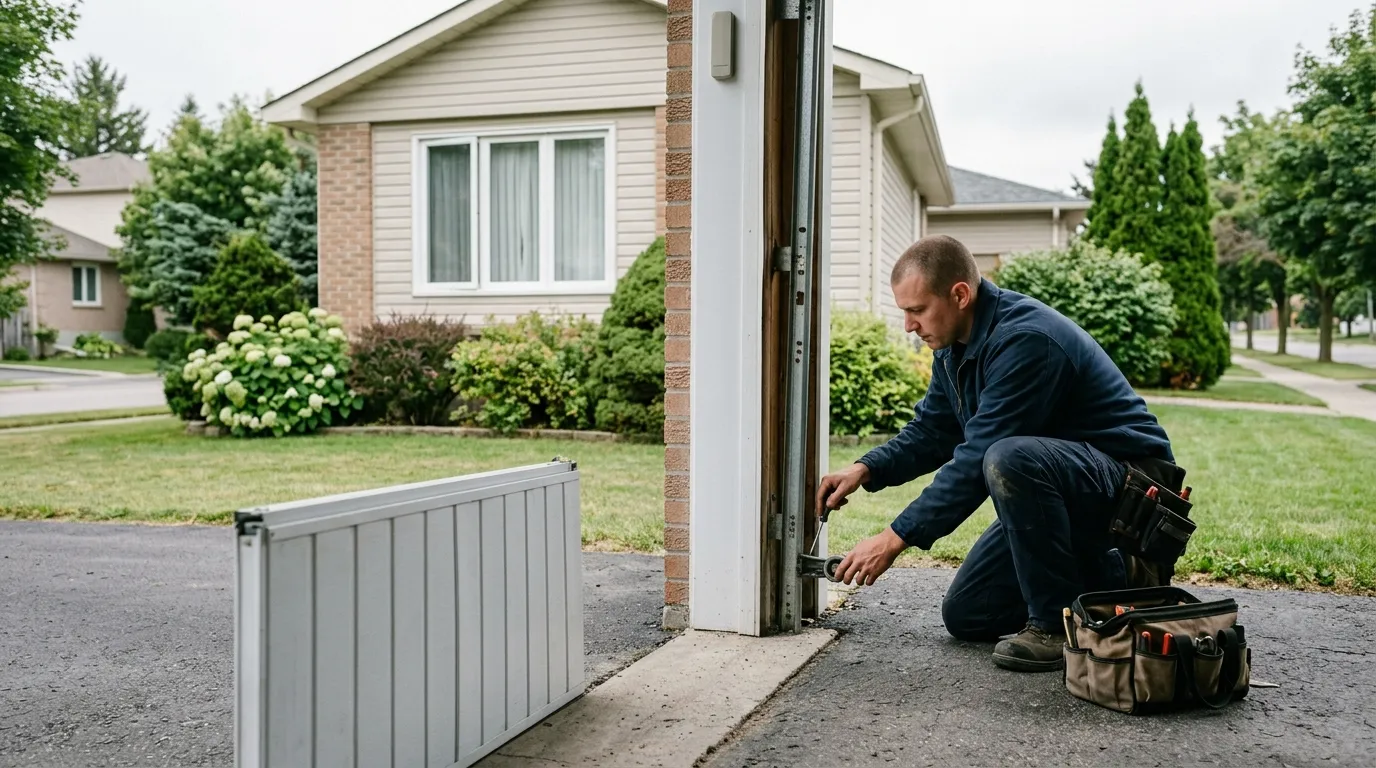
A fair number of doors around Columbus are original to houses built near 1959, which is a couple decades earlier than the 1986 median we see across the rest of the area we cover from Sun Prairie. That gap matters if you're thinking about tackling a repair yourself. Older torsion setups often use spring winding cones and drum sizes that don't match anything sold at a home center today, and a spring under tension is not a place to guess. Swapping a broken extension cable or adjusting travel limits on a newer opener is reasonable weekend work. Rebuilding a torsion system on a door that's been in place since the Eisenhower era, with hardware that's been repainted over three times, is a different job. If your door came with the house and you don't know the spring wind direction or the wire gauge, that's the line where a call beats a trip to the hardware store. We're not going to tell you every job needs a truck - plenty of roller and hinge fixes don't - but spring work on a door this old usually does.
How It Shows Up
On houses from the 1959 era, the failure usually starts as noise before it becomes a stuck door: a grinding pop from the spring, a track that's pulled slightly out of parallel from decades of settling, or a cable starting to fray where it wraps the drum. Because this part of the service area sits in the same severe-cold climate band as the rest of the region, the cold makes old lubricant seize and old rubber seals crack a season or two before they would in a milder climate. You'll notice it as a door that opens fine at noon and groans or stalls at 6am. On newer builds elsewhere in the area, the symptom is more often an opener sensor or a circuit board. Here, with older hardware, it's more often mechanical - springs, drums, and the brackets holding them - because that's what's actually installed.
The Complications
Columbus is about 15 miles out from Sun Prairie, and that distance is part of the planning on our end, not a reason for you to expect a certain arrival window - we don't have a stated response time for this leg of the service area and won't invent one. The bigger complication is usually the hardware itself. On a door dating to 1959, you sometimes find a mix of original and replaced parts from different decades, which means a spring or bracket that looks standard on the outside can be an odd size underneath. We also run into finish mismatches - a door panel replaced once already, on rails that were never updated to match. None of that is unusual for housing this age, but it does mean a phone quote based on guesswork is less reliable here than on a newer build. We'd rather look at it in person than promise a part that turns out to be the wrong one.
Parts We Carry
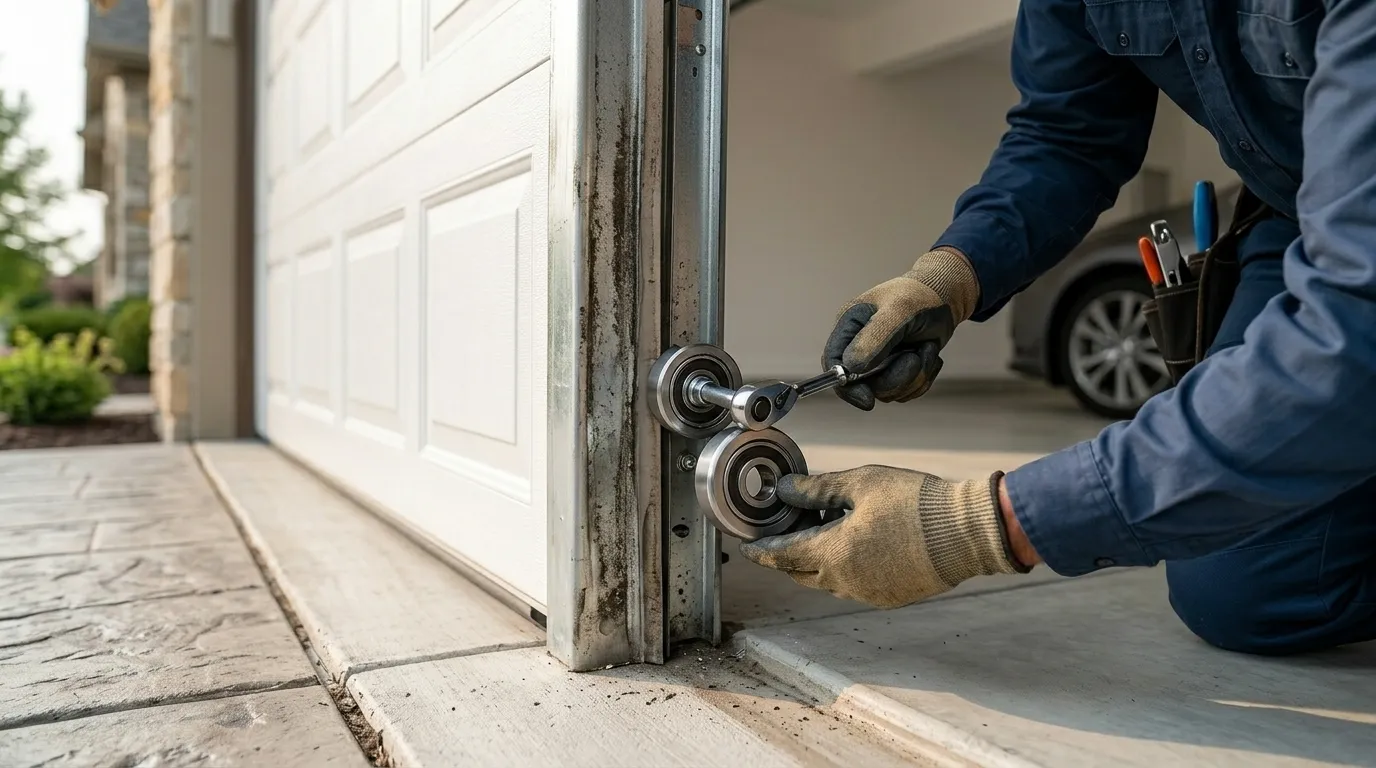
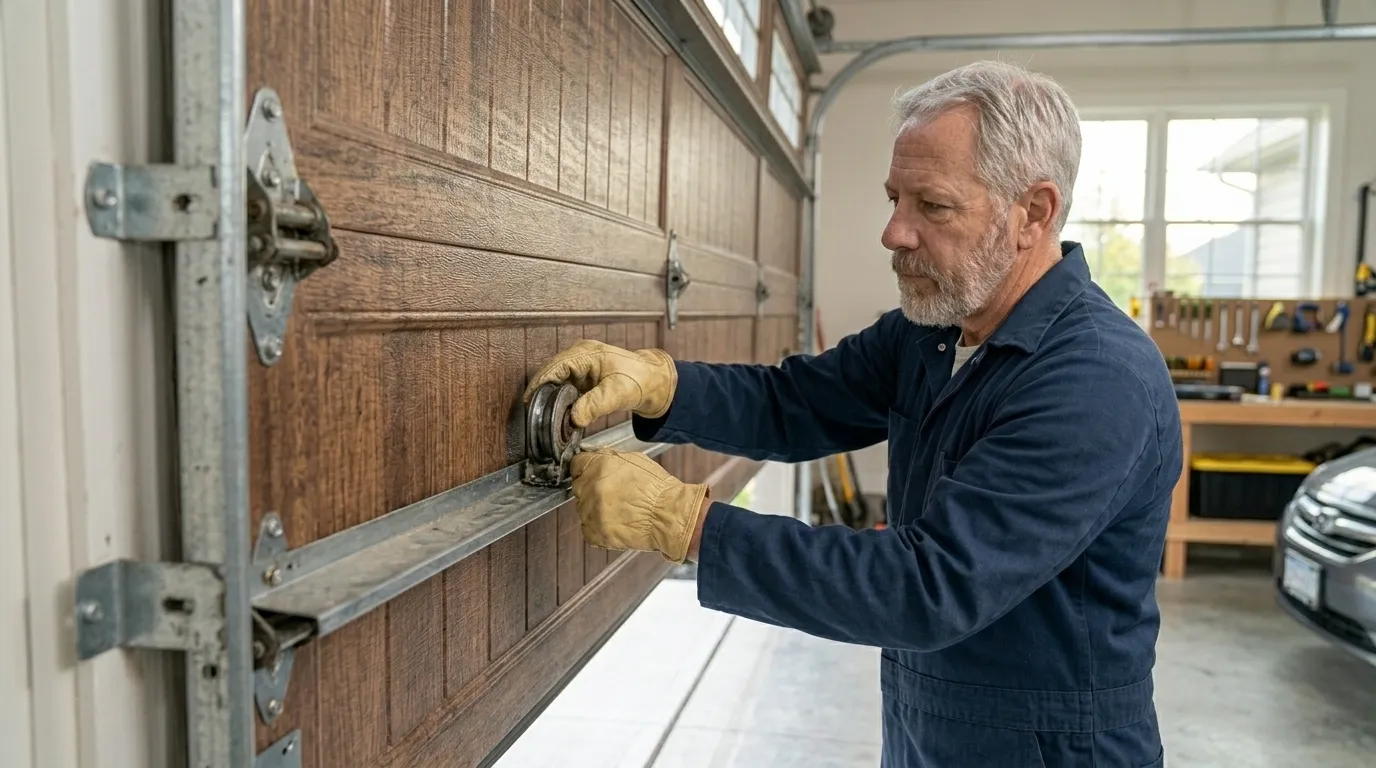
Because a good share of Columbus's stock traces to 1959, and because this isn't a market with enough households - about 2,434 of them - to justify a dedicated local parts depot, we carry what an older torsion door needs on the truck rather than special-ordering after the first visit. That means standard torsion springs across common drum sizes, galvanized cables rated for the severe cold this region sees, and steel rollers built for track that's seen sixty-plus winters of temperature swing. We also carry weatherstrip and bottom seal stock sized for older track profiles, since the cold here is hard on rubber. What we don't stock on the truck is anything proprietary to a specific newer opener brand's electronics - if the fault turns out to be a control board rather than the door mechanics, that's a part we order in.