Can You Do This Yourself
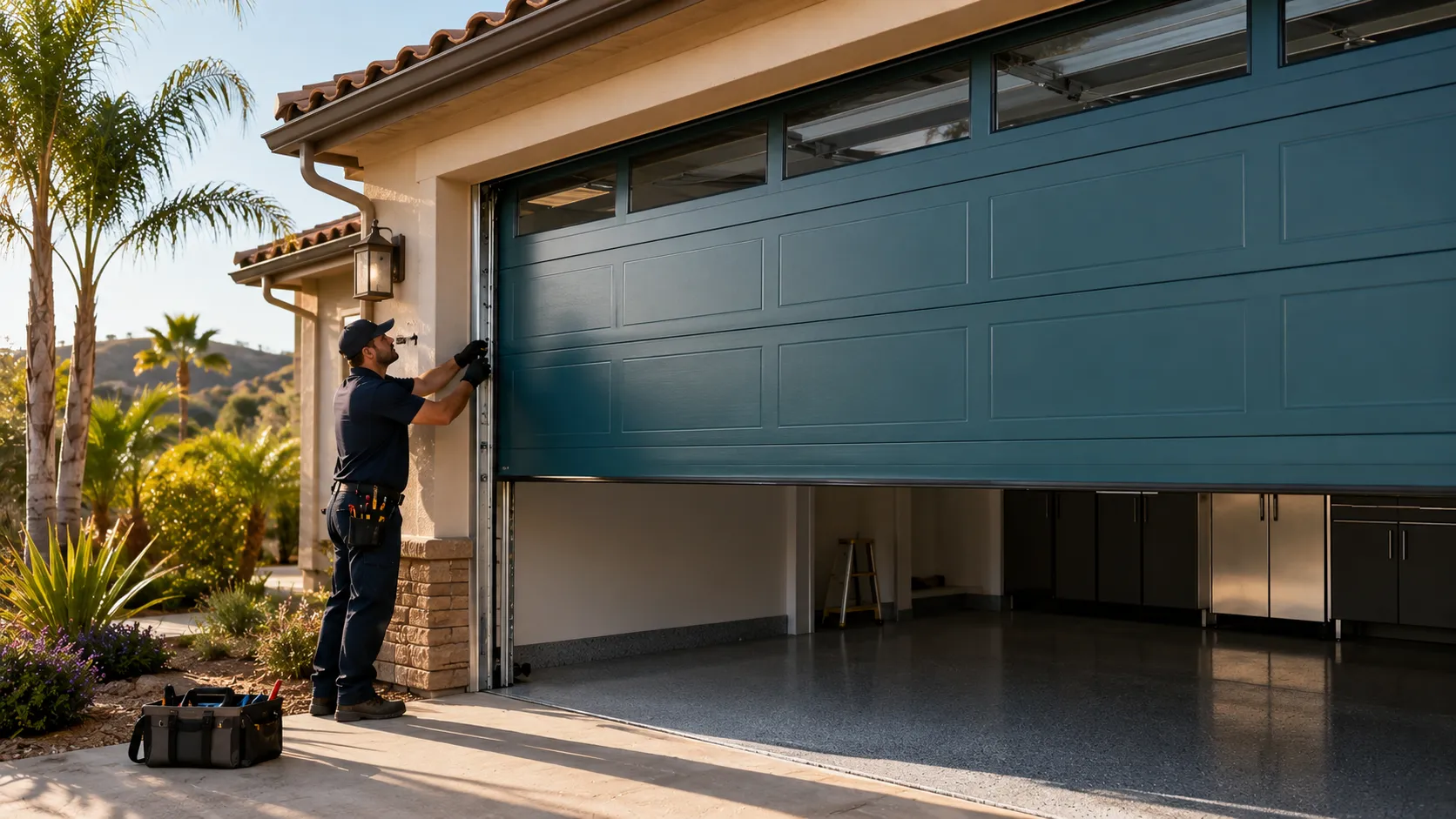
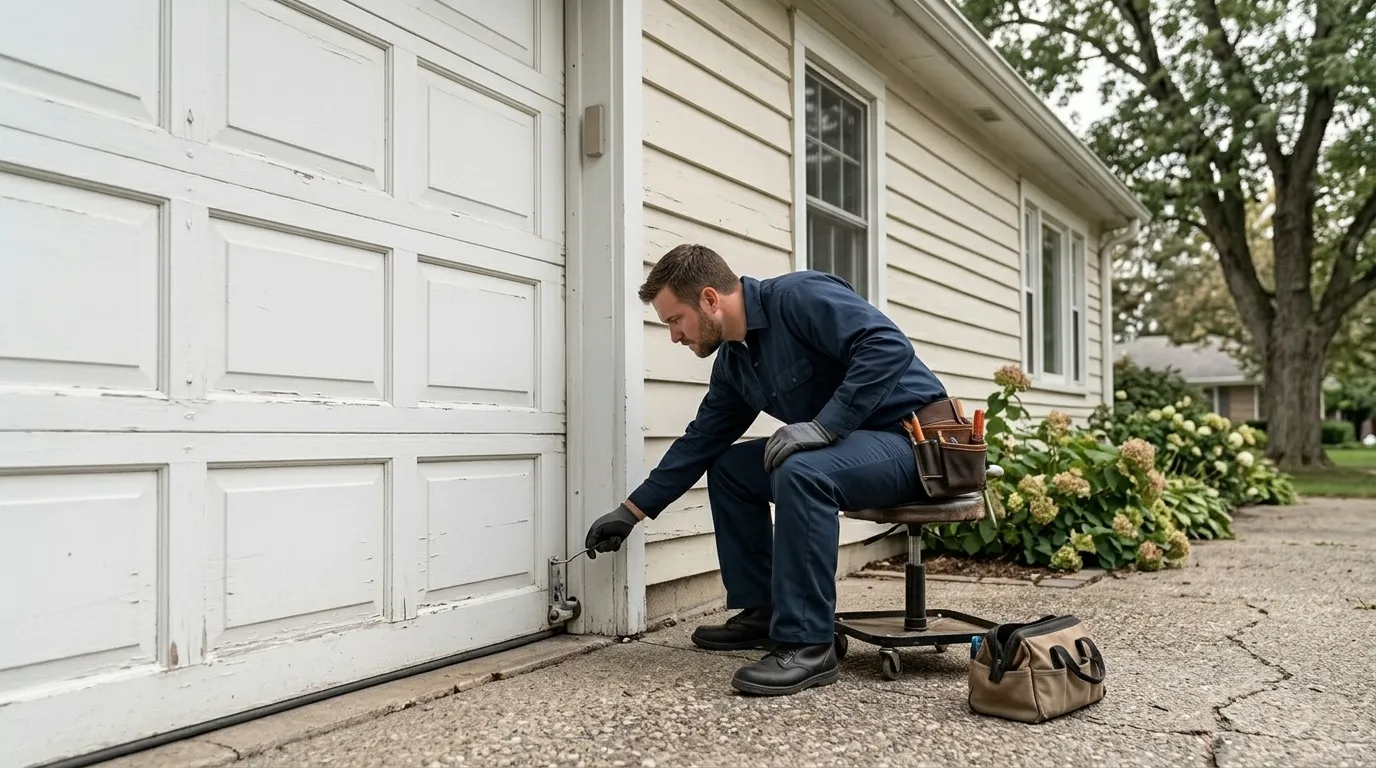
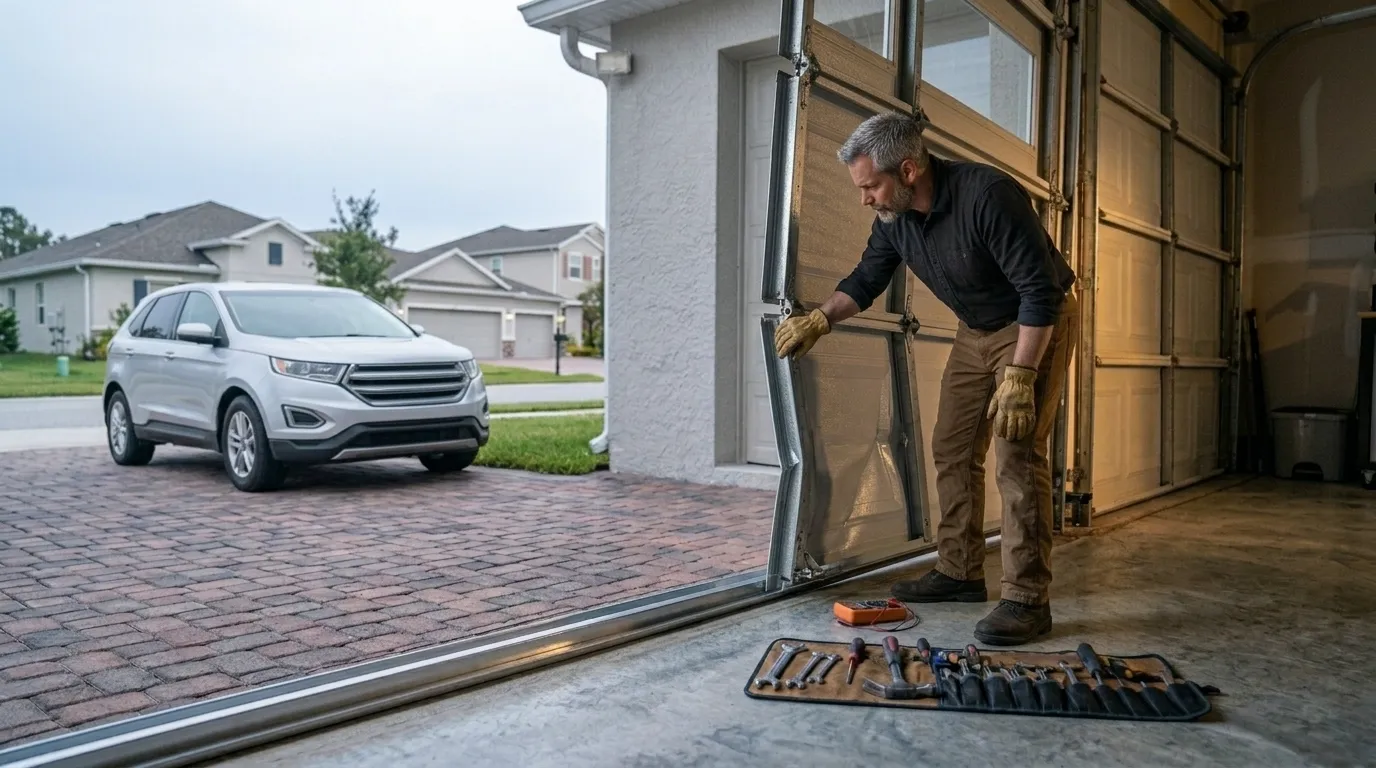
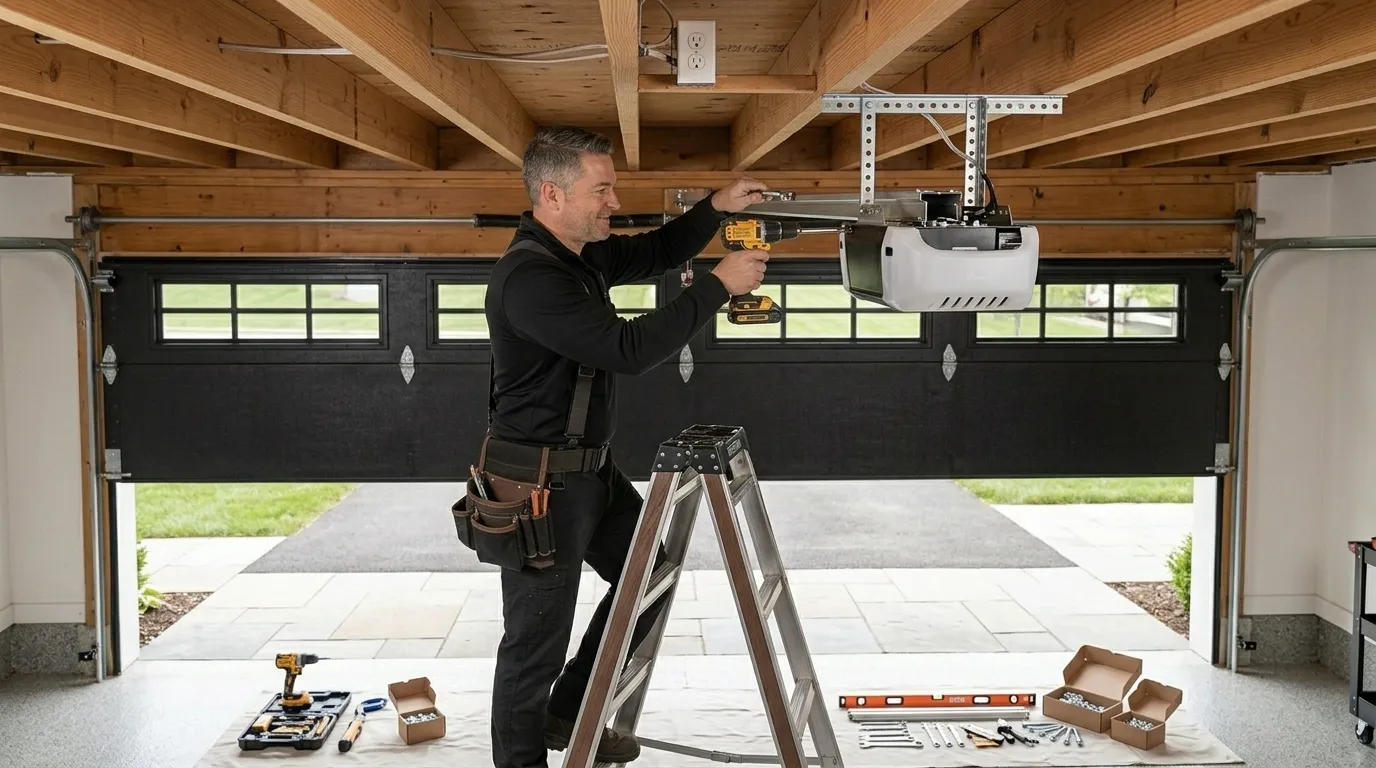
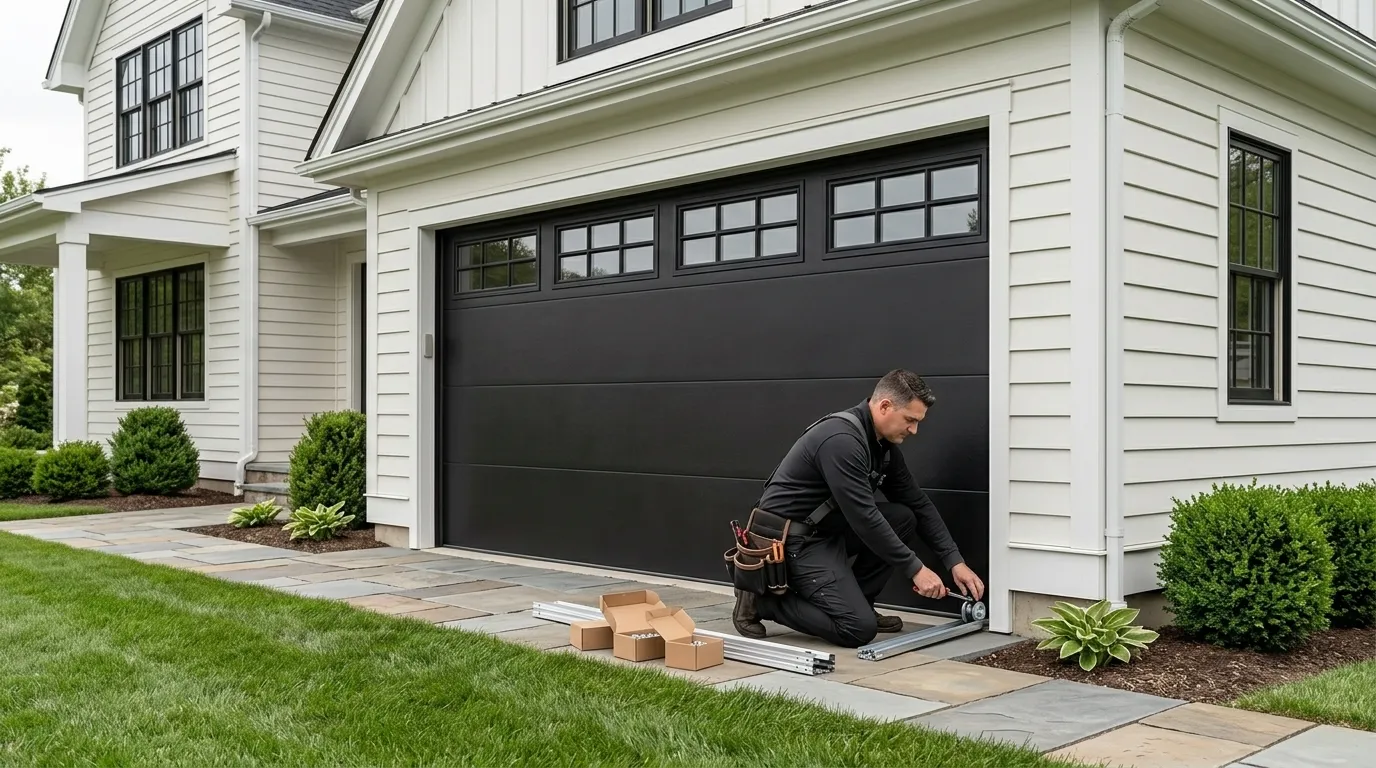
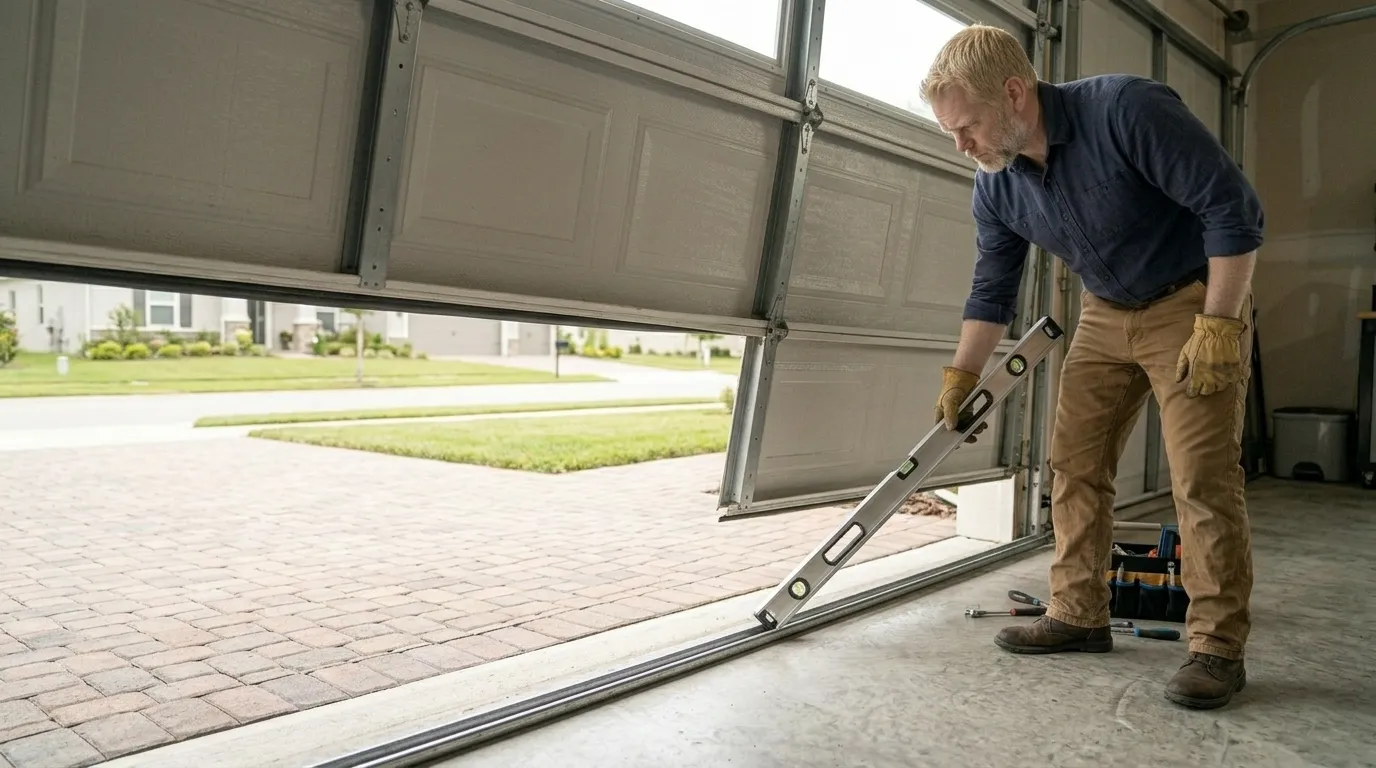
A full door swap is not a weekend project, and Columbus adds a wrinkle a lot of newer subdivisions don't have: openings built around 1959 were framed for door sizes and headroom clearances that current sectional doors don't always match without shimming or track modification. If your house here still has its original opening dimensions, a stock door off a big-box shelf may not drop in clean. You need to measure headroom, backroom, and sideroom before you order anything, and you need to know whether the jamb is square, because on a house this age it often isn't anymore. Pulling the old door and hanging a new one, wiring an opener, and getting the balance right on new springs is doable with the right tools, but the failure mode is a door that racks in the track or an opener that strains against springs sized wrong for the panel weight. We'll say plainly: if you've done overhead doors before, a straightforward swap on a squared opening is within reach. If you're not sure your opening is square, that's the part that costs people money when they guess.
How It Shows Up
With a median build year of 1959, Columbus is older than most of the towns we cover from Sun Prairie - the wider service area's stock centers closer to 1986. That gap matters for what's behind the door skin. Houses from this era were often built with a single walk-through swing door to the garage and a narrower vehicle opening than what got standard by the 1980s. When a homeowner here calls about installation rather than repair, it's frequently because the original opening can't take a modern insulated door without some carpentry, or because the door that's there now is a decades-old replacement that was never sized to the house. We see single-car openings that owners want widened, and we see openings where the header was never engineered for a heavier insulated panel. Either way, the first visit is about the opening, not the catalog.
The Complications
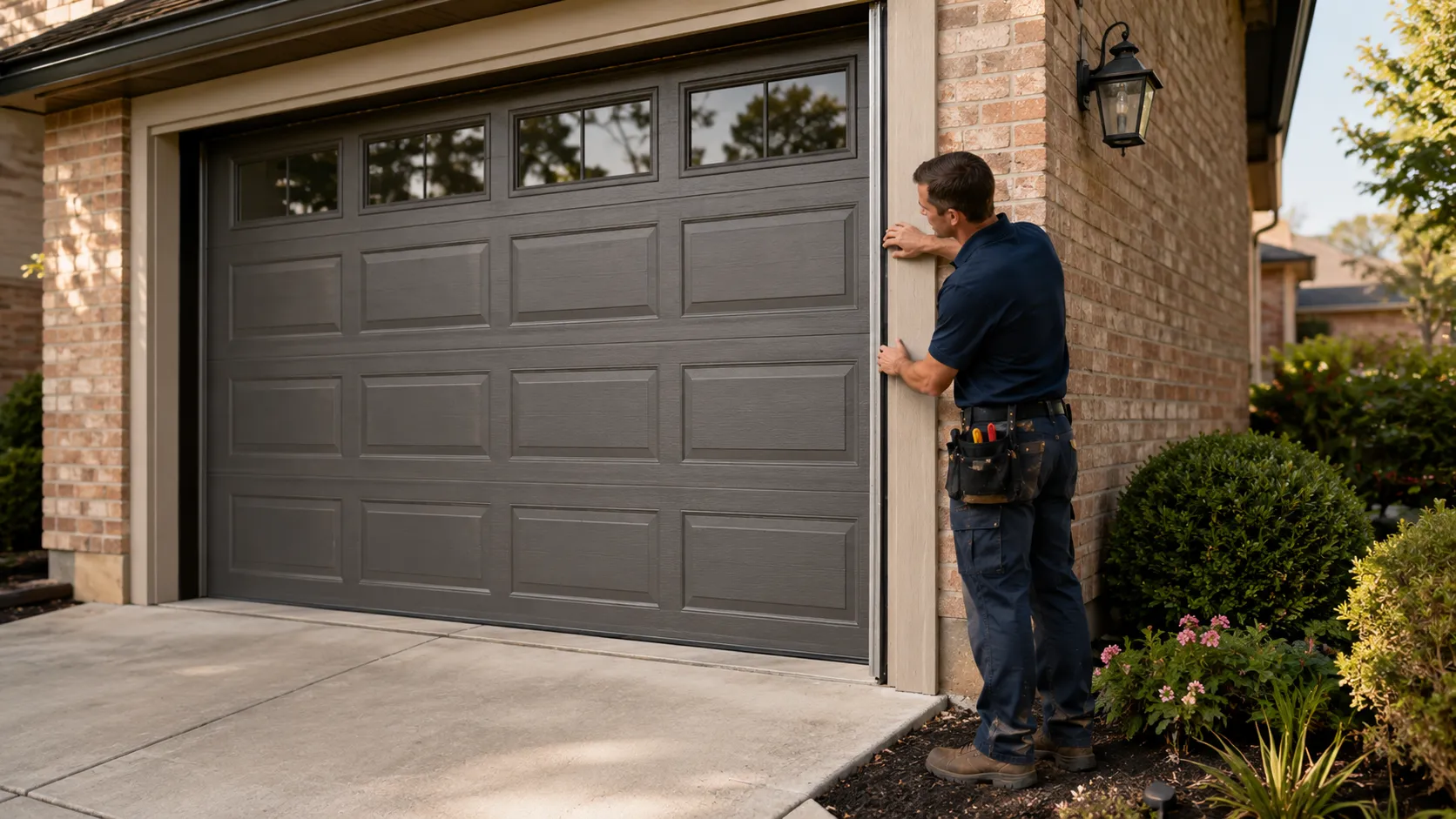
The climate here is the same cold-severe band as the rest of the region we cover, which means insulation value isn't optional if you want the door to hold heat and not sweat condensation onto a slab in January. On a house built in 1959, the complication underneath that is structural: openings from that period sometimes have jambs that have shifted slightly over sixty-plus years, and a new door has to be plumbed to the opening as it actually sits today, not as it was framed. We also run into headers that were sized for a lighter wood door and need a support beam added before we'll hang anything heavier. None of this is unusual for a house this age - it's just work that has to happen before the new door goes up, not after.
Parts We Carry
For installation jobs out this way we carry insulated steel sectional doors in widths that cover both the narrower original openings common on 1959-built houses and the wider two-car openings added or expanded later. We stock torsion springs sized to actual panel weight rather than a generic setting, extension and torsion hardware for older track configurations, and openers rated for the colder side of our climate range. What we don't carry on the truck is custom millwork - if your opening needs a rebuilt header or reframed jamb before a door goes in, that's a carpentry step we coordinate separately, and it can add lead time depending on materials.