Can You Do This Yourself
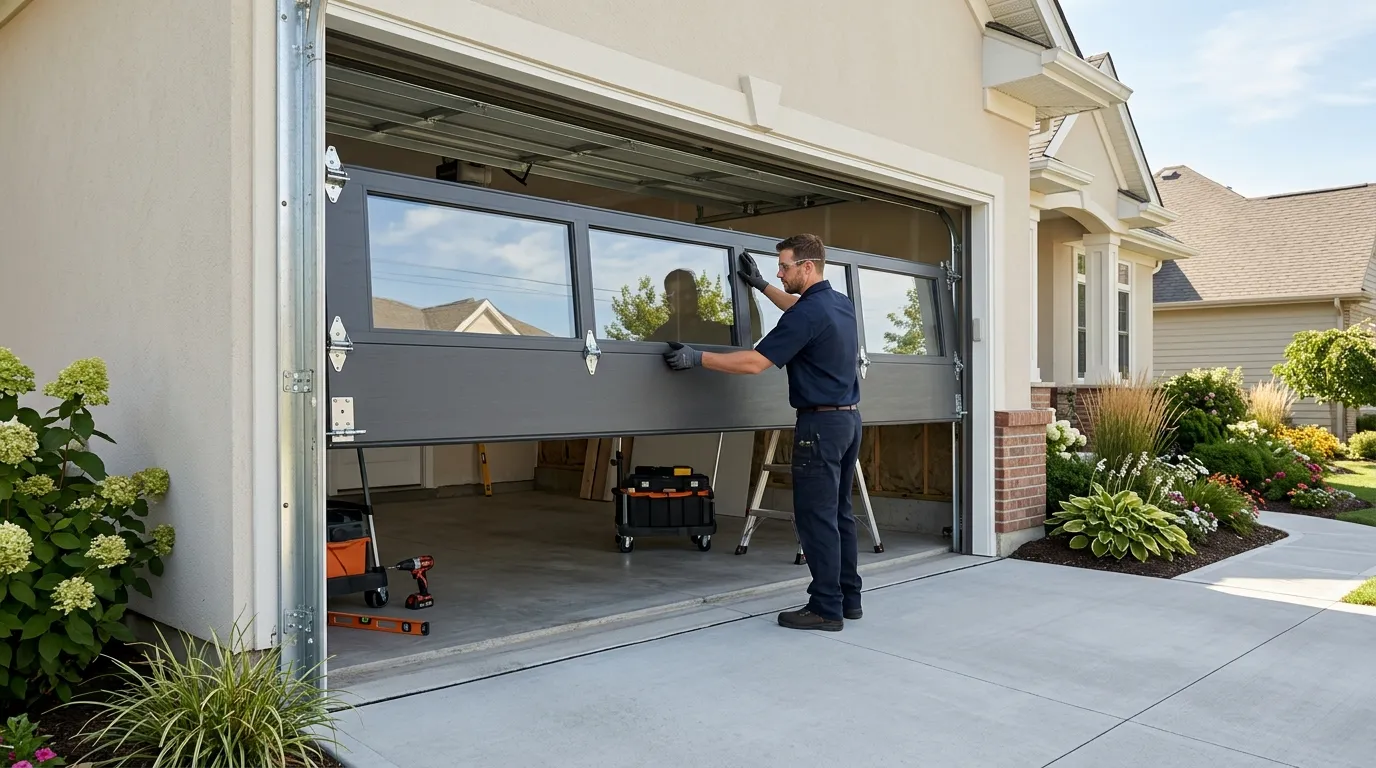
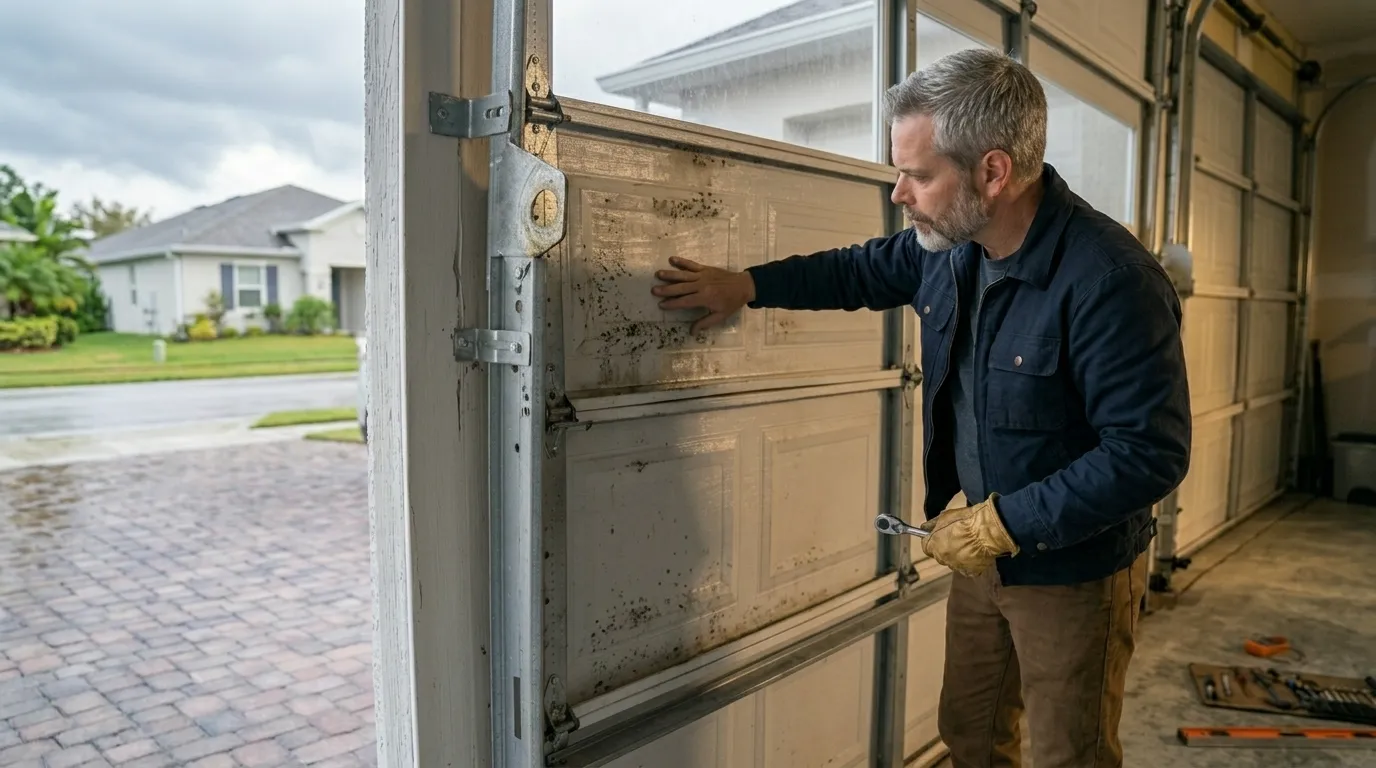
A torsion spring holds enough stored force to break bones or worse, and on a house built around 1959 - which is the median here in Columbus - you're often dealing with hardware nobody has manufactured in decades. Winding cones, drum sizes, and shaft diameters from that era don't always match what's on the shelf at the box store. We're not going to walk you through winding a spring over the phone. If the door won't open, or it opens crooked, or you hear a bang from the garage and now nothing moves, that's a spring failure and it's a call, not a weekend project. The one thing you can safely do yourself: check that the cable drums haven't slipped and that nothing is binding in the track before you assume it's the spring. That costs you nothing and saves a wasted trip if the fix turns out to be simpler.
How It Shows Up
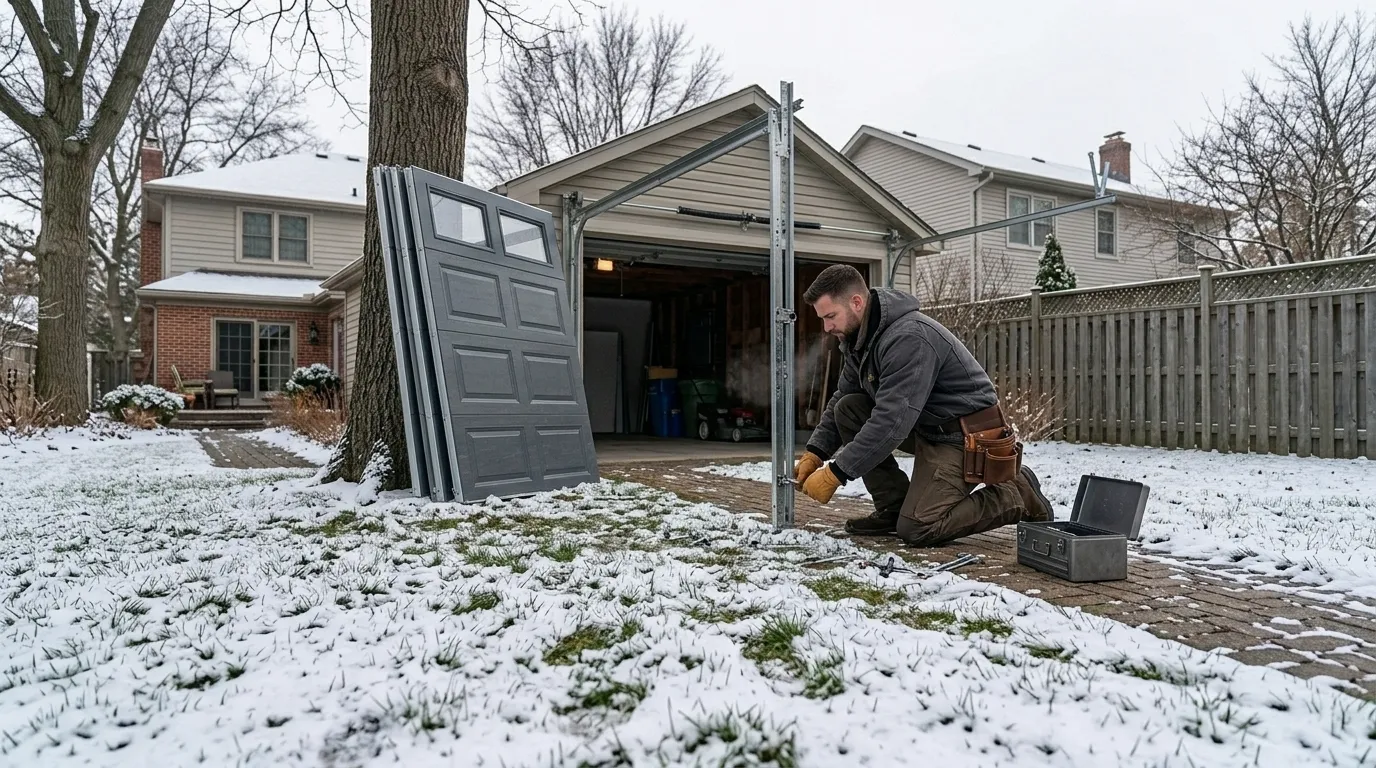
On a house from the late 1950s or early 1960s, spring failure usually looks like a slow give rather than a sudden snap - the door gets heavier to lift by hand over a season or two, then one day it won't budge past a foot off the floor. Original one-piece doors on side-mounted hardware, which is common in housing from this era, put more direct load on a single spring than the double-torsion setups you see on newer double doors. Cold makes it worse. Wisconsin's winters are hard on steel that's already fatigued, and a spring that's been flexing since the Johnson administration has had a lot of freeze-thaw cycles to work through. If your opener strains, reverses, or trips its breaker trying to lift the door, don't keep running it - that's the motor fighting a dead spring, and it will cost you the opener too if you let it keep trying.
The Complications
The complication with older stock isn't the spring itself - it's what's attached to it. A door installed when the house was new may have a stationary cone or a shaft configuration that's been out of production for years, which means the fix sometimes means rebuilding more of the hardware than just the spring. We also see doors here where a previous owner replaced the spring at some point with a mismatched size, which throws off the balance and wears the opener faster. Honest limitation: if the drums, shaft, or track are rusted or bent beyond a clean fit, replacing just the spring is a temporary patch, not a real fix, and we'll tell you that rather than sell you a spring that'll strand the door again in a year. We travel the 15 miles from Sun Prairie for these calls, so we'd rather diagnose it right the first time than come back.
Parts We Carry
Because Columbus's housing skews older than most of the towns we cover - 1959 median build year against a broader-area median of 1986 - we stock a wider range of stationary cones and shaft sizes on the truck than a newer subdivision would need. That includes standard torsion springs sized for both single and double doors, since original one-piece doors on side-mount hardware are still common here. We carry both up-wind and down-wind cones, since we can't always tell in advance which configuration a house from this era will have. What we don't carry on the truck: specialty or oversized commercial-grade springs - those are a special order, and if your door needs one, we'll tell you the lead time up front rather than have you wait around wondering.