Can You Do This Yourself
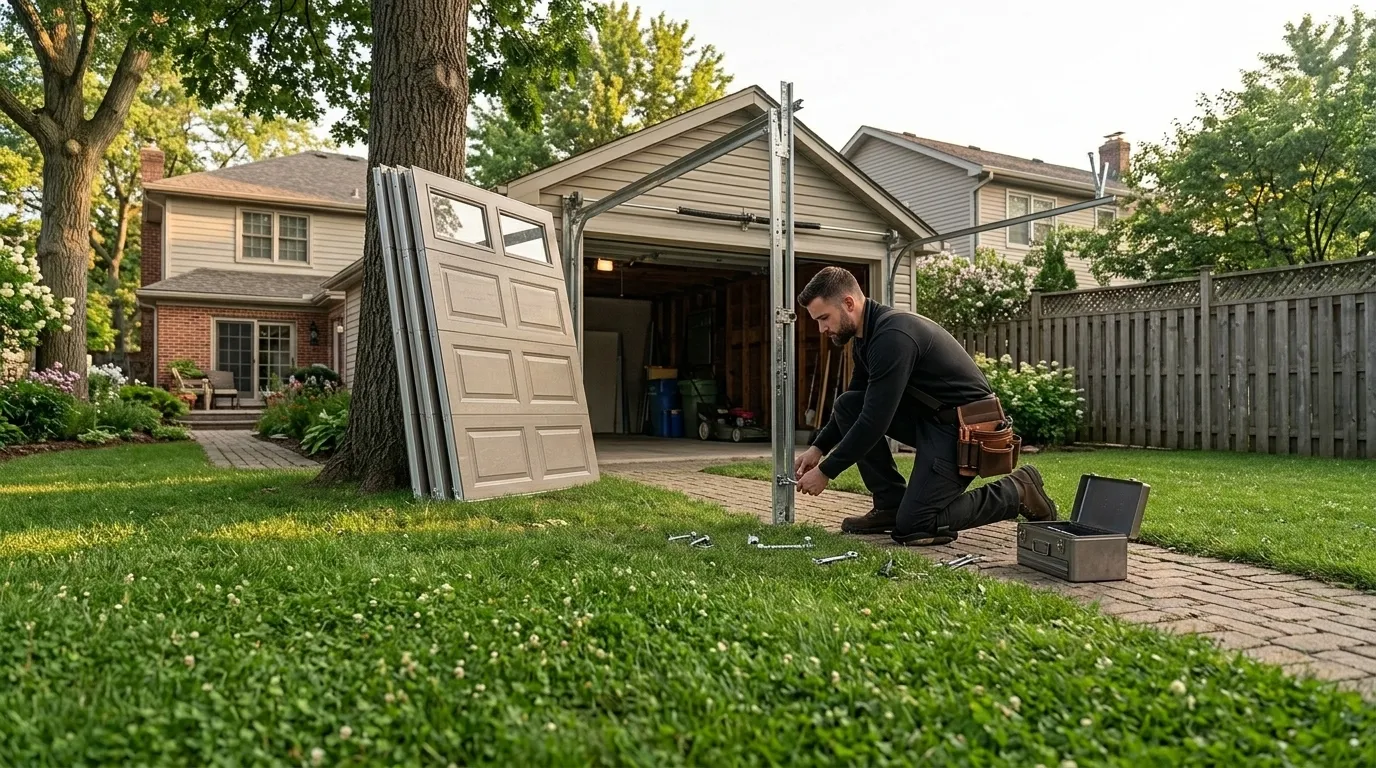
An off-track door is not a DIY fix, and that goes double on the older hardware common in Columbus. The median home here dates to 1959, nearly three decades older than the 1986 median across the rest of the service area we cover from Sun Prairie. That older stock often still runs extension springs mounted along the horizontal track rather than the torsion setups that came later, and a door that's jumped a roller on that kind of rig is under load in ways that aren't obvious until a cable lets go. Loosening the wrong bolt on a door still holding spring tension is how people end up in the ER, not how they end up with a fixed door.
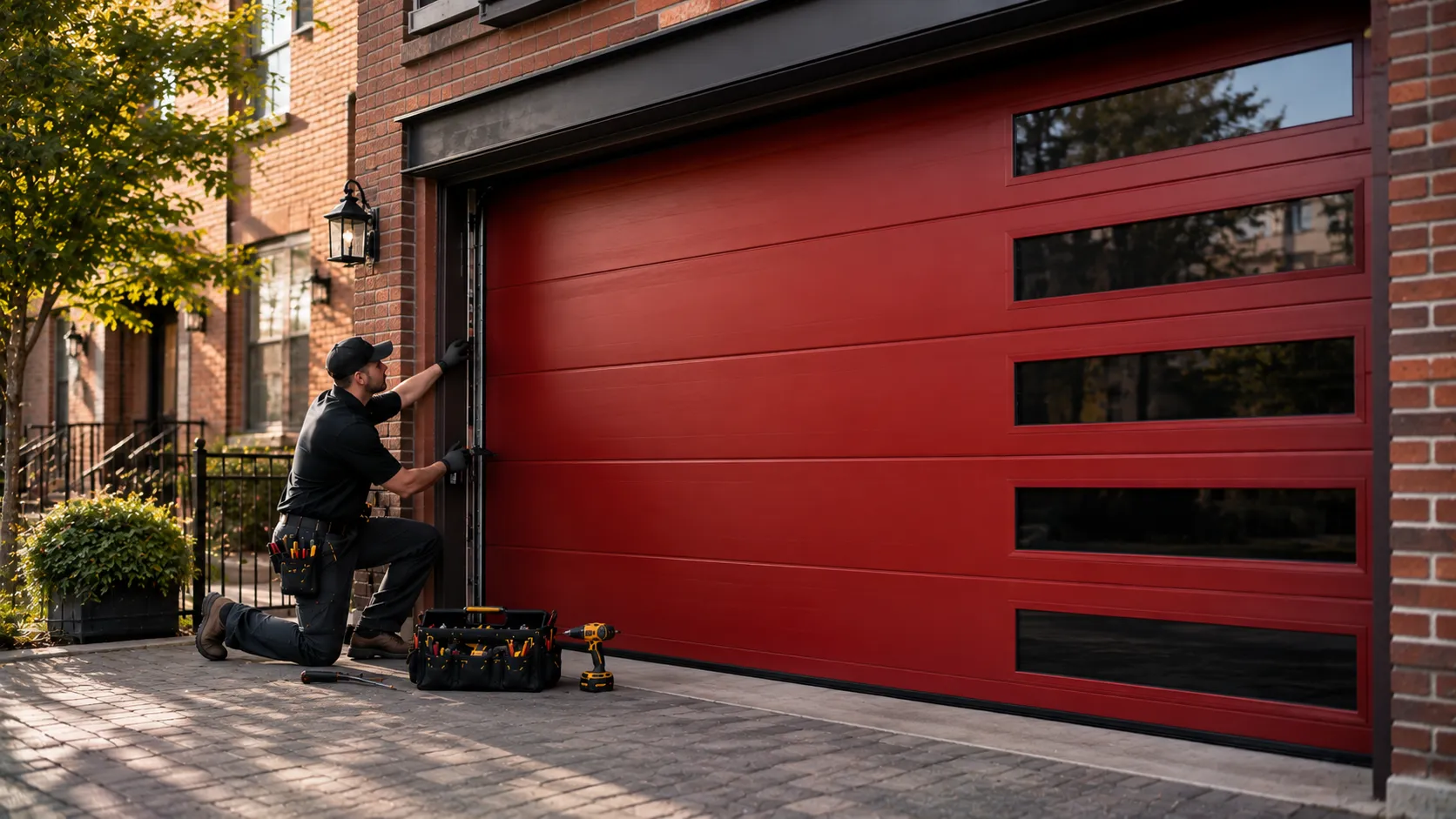
What you can safely do is look. Check whether the door is off the track on one side or both, whether a cable has snapped and is lying loose, and whether the door is resting unevenly on the floor. That tells whoever answers the phone what to bring on the truck for the 15-mile trip out from Sun Prairie, and it means we're not guessing when we pull up.
If the door will still move by hand without binding, leave it where it is and don't force the opener. Forcing a motor against a door that's off track is the fastest way to turn a track repair into a full opener replacement.
How It Shows Up
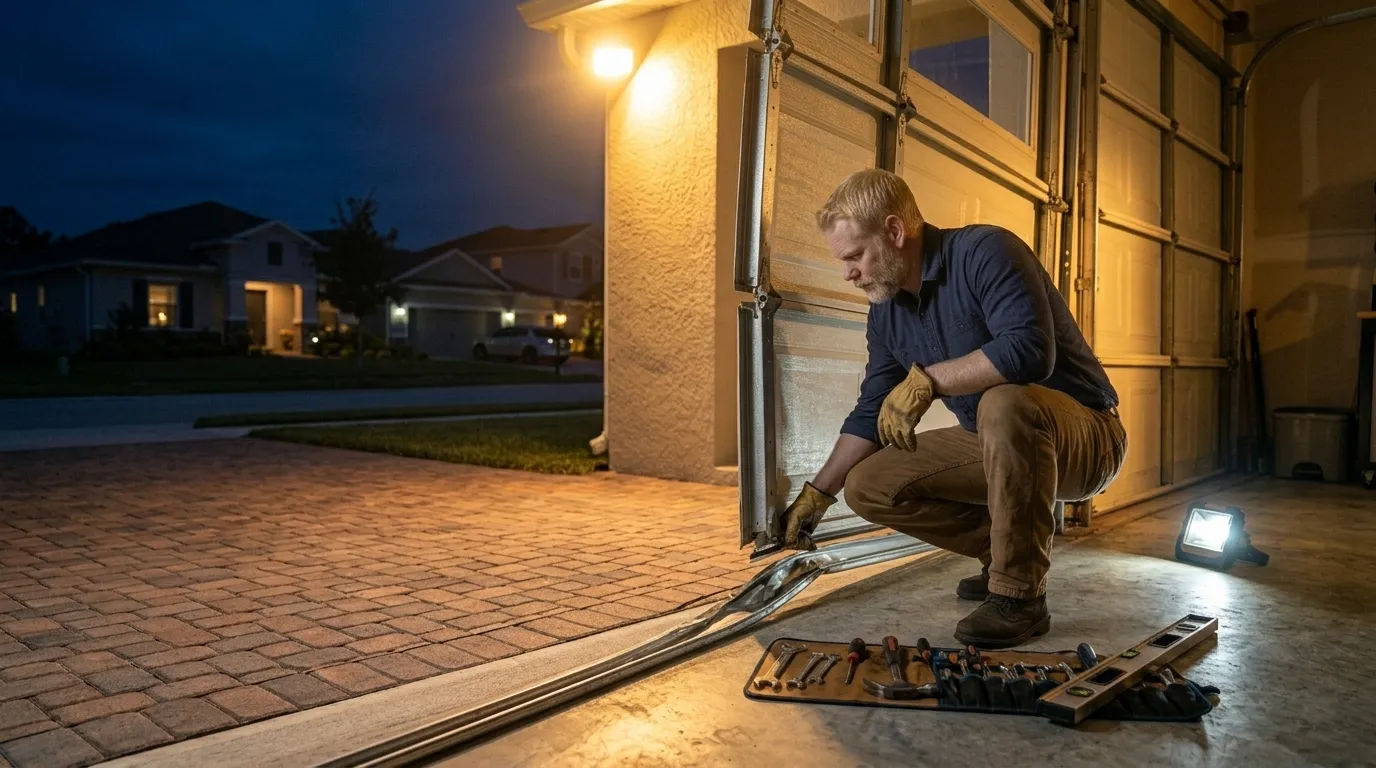
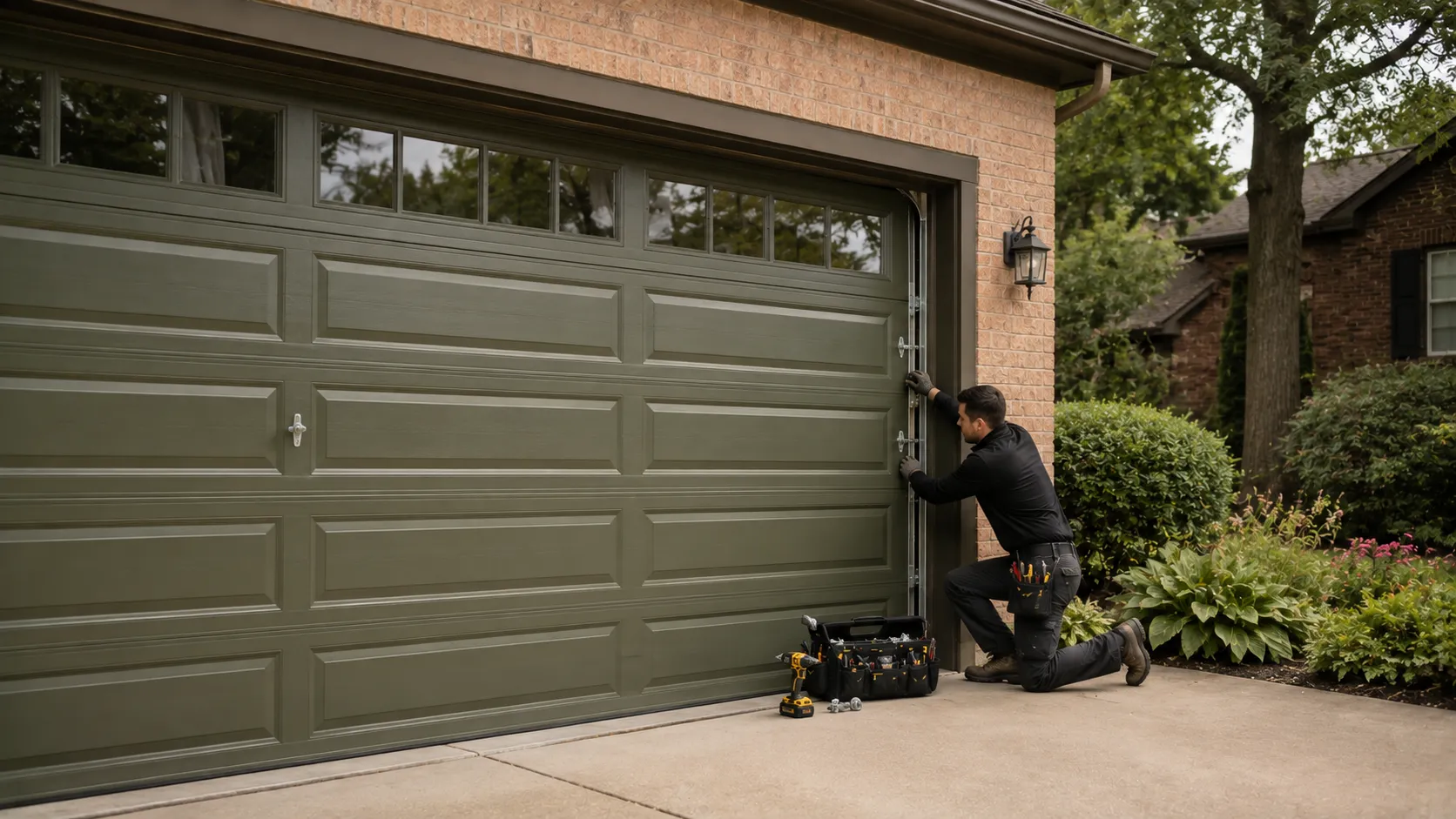
On a door this age, off-track usually starts small: a roller works loose from a track bracket that's been holding the same position since the Eisenhower era, or a hinge pin wears thin enough that a panel corner drifts out of the channel. You'll notice the door running crooked, a scraping sound on the way up, or a gap opening between the door edge and the track on one side.
Severe cold makes it worse. In a winter this region gets, contracting metal and stiffening lubricant on old rollers means a door that was barely tracking straight in October can jump the track entirely on the first hard cold snap. That's not a Columbus-specific event, but it lands harder on hardware that's already 60-plus years into its working life.
Sometimes the door looks fine sitting closed and the trouble only shows on the way up or down, which is why we ask people to describe the motion, not just the resting position, when they call.
The Complications
The main complication on a 1959-median house is parts. Track brackets, hinge sets, and roller styles from that era aren't always what's sitting on the shelf, and matching an odd bracket spacing on an original frame can take longer than the repair itself. We carry common replacements on the truck, but a nonstandard mount sometimes means a return trip.
A second complication is what's underneath the off-track symptom. If a door has been running crooked for a while, the opener may have been straining against resistance it wasn't built for, and that can mean a gear or a limit switch is also on its way out. We'll tell you straight if what looks like a track job is actually two jobs.
We won't pretend every door is worth saving. If the track brackets are pulling loose from wood that's rotted at the fastener points, realigning the door is a short-term patch, and we'll say so instead of billing you twice.
Parts We Carry
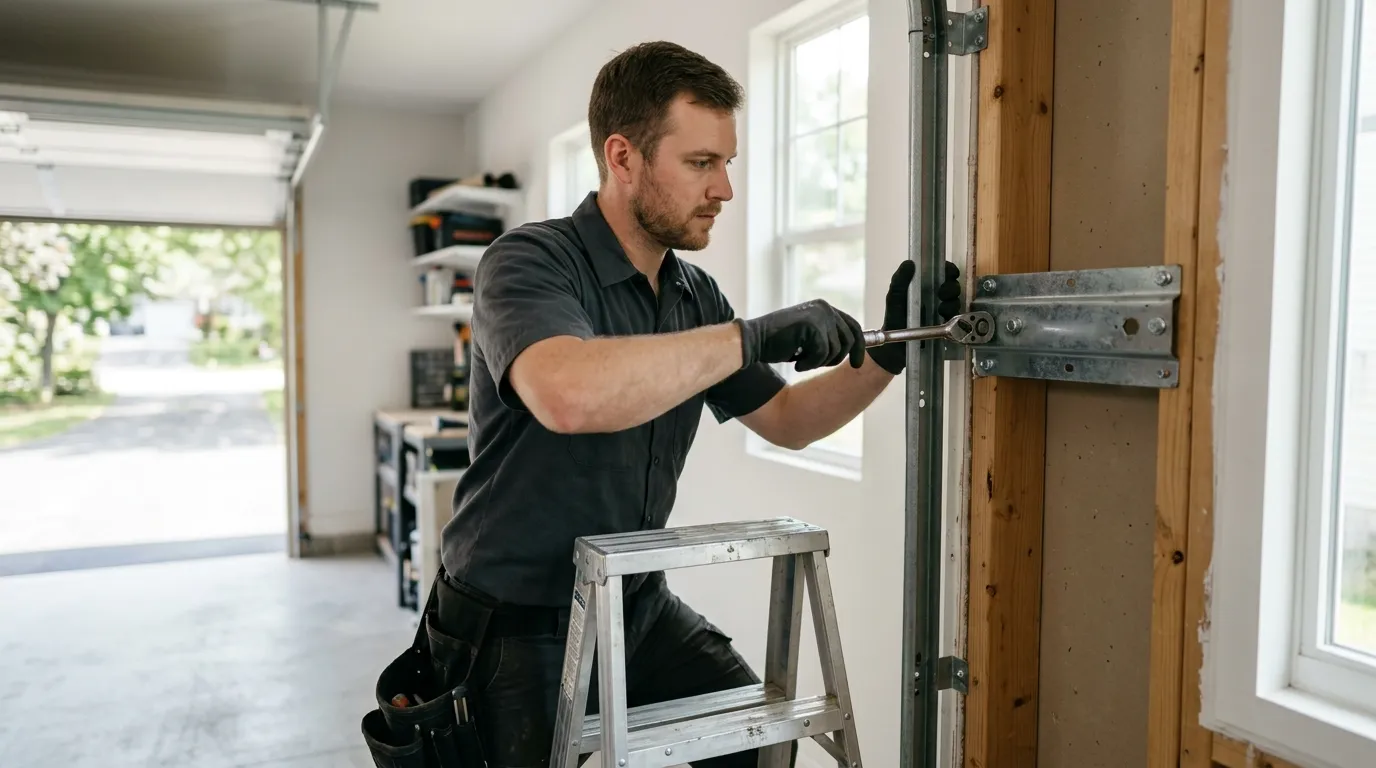
On the truck we keep standard steel rollers, both nylon and steel-wheel, common track sections, and the hinge sets that fit most residential doors from the 1970s through today. We also carry replacement lift cables and the fasteners that hold track to jamb, since a cable failure is often what knocks a door off track in the first place.
What we don't stock is a match for every original 1959-era bracket pattern. Some of the oldest homes in Columbus have hardware spacing that predates current standard sizing, and on those we may need to source or fabricate a bracket rather than pull one off the shelf. We'll tell you on site if that's the case rather than send you a truck twice for the same visit.