The Problem
Walk down almost any street in Sun Prairie and you're looking at a garage door that's older than it looks. Most houses across Sun Prairie went up between 1959 and 2001, with the median sitting around 1986, which means the majority of doors and openers here are pushing forty years old. That's not a guess - it's the age spread of the housing stock itself. A door installed under Reagan-era code wasn't built for the openers, insulation standards, or spring tension homeowners expect today. The steel is thinner, the tracks are narrower, and the springs were sized for a lighter door than what most people have swapped in since. When one of these springs finally goes, it usually goes hard, and it usually goes when the temperature drops, because cold steel loses flex before it loses strength. That combination - old hardware, harsh winters - is why so many calls we get aren't about a door that broke slowly. They're about a door that worked fine yesterday and won't budge today. The problem isn't neglect. It's math: a house built in the mid-'80s has now outlived most of the parts that came with it, and nobody swapped them out just because they still moved.
What Most People Get Wrong
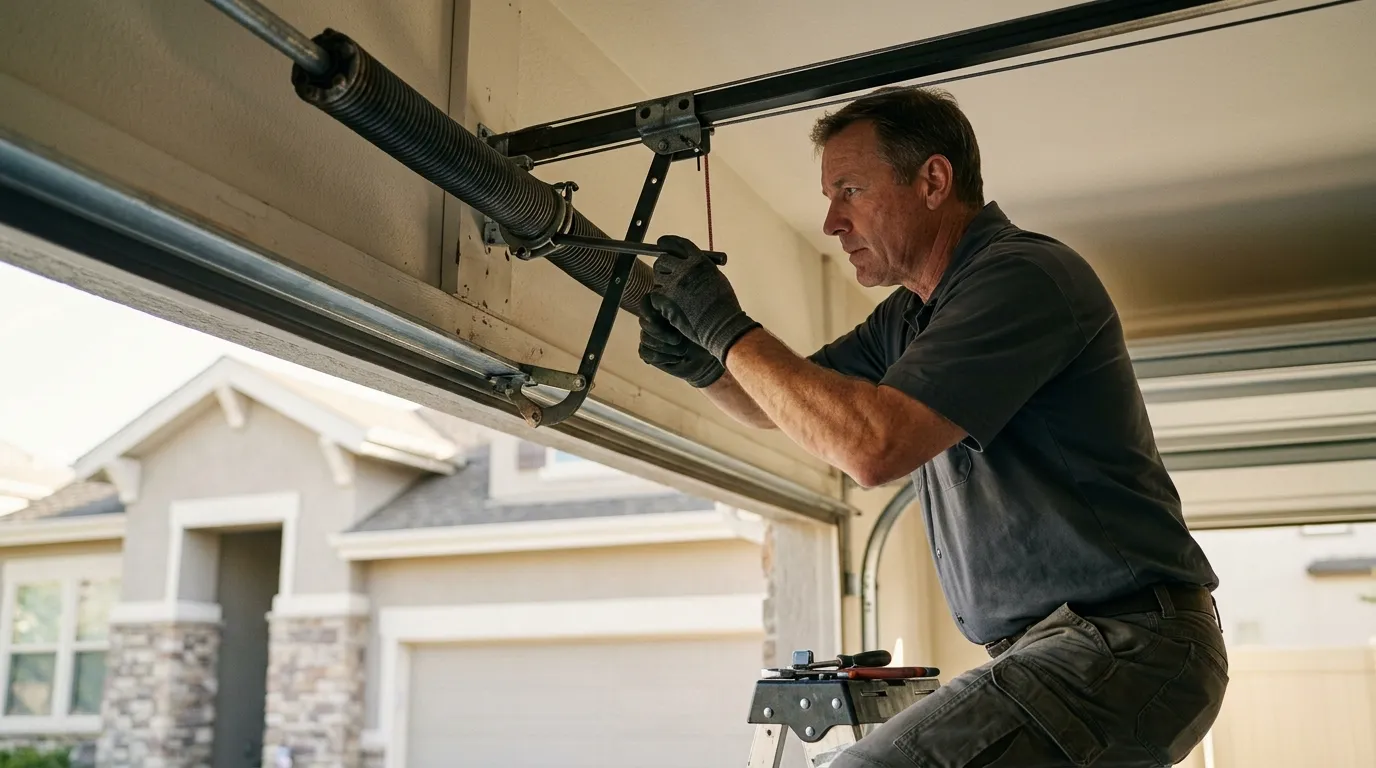
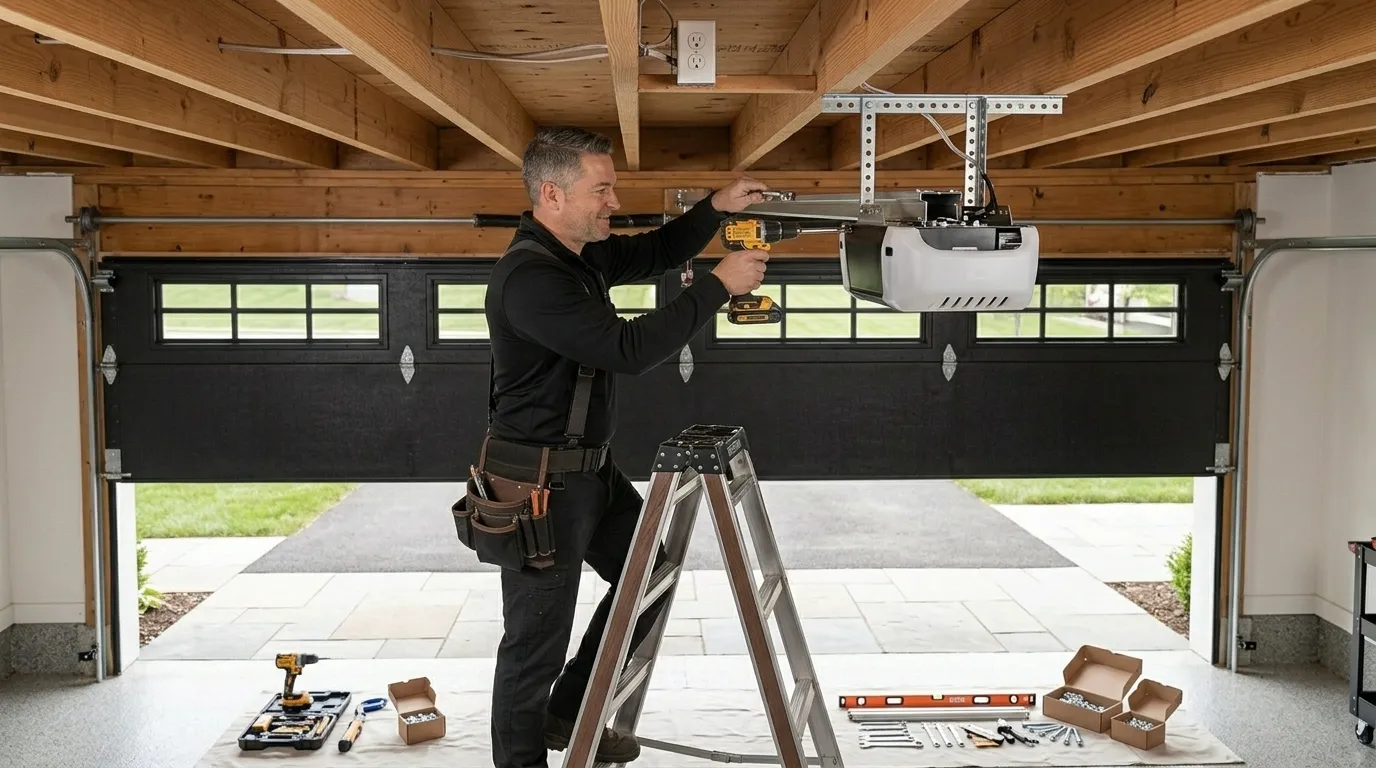
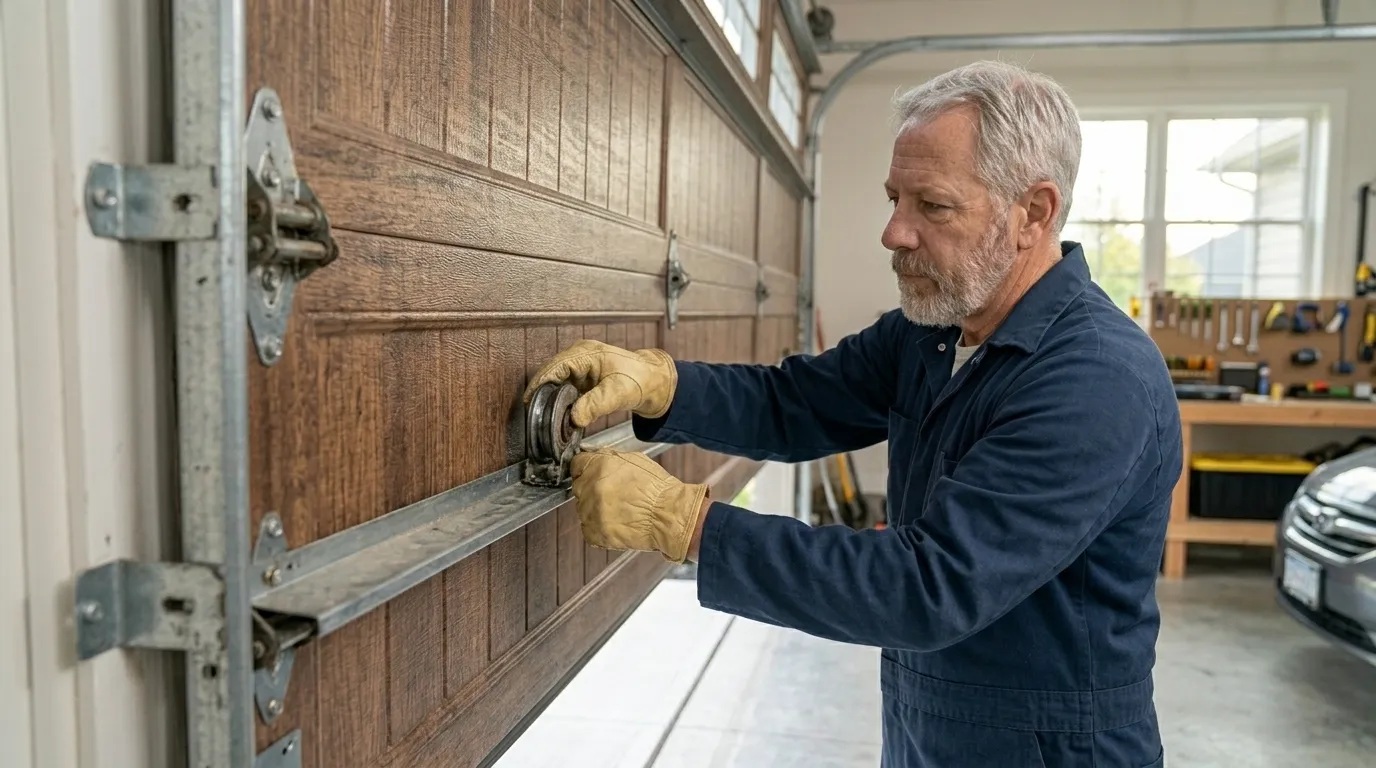
The mistake we see most is assuming the door is newer than it is because it 'still works.' Across the thirty-some named areas that make up this stock, the bulk of construction happened in the 1980s and 90s, so entire blocks share the same era of hardware - which means a neighbor's recent opener swap doesn't tell you anything about the springs, rollers, or cable underneath your own door. People replace the opener and assume that resets the clock on everything else. It doesn't. The opener is the easiest part to see failing - a stutter, a grinding sound - so it gets attention first. The spring, the part actually holding the weight of the door, gets ignored because it's quiet right up until it isn't. We also see people caulk or foam around an old panel to stop a draft, which does nothing for a door that's already lost its seal along the bottom edge or warped slightly with age. Sealing a symptom doesn't fix a door built for a different decade's standards. If your house falls in that mid-'80s to '90s build window, the honest move is to have the spring and rollers checked on their own timeline, not whenever the opener finally complains.
How Local Conditions Play In
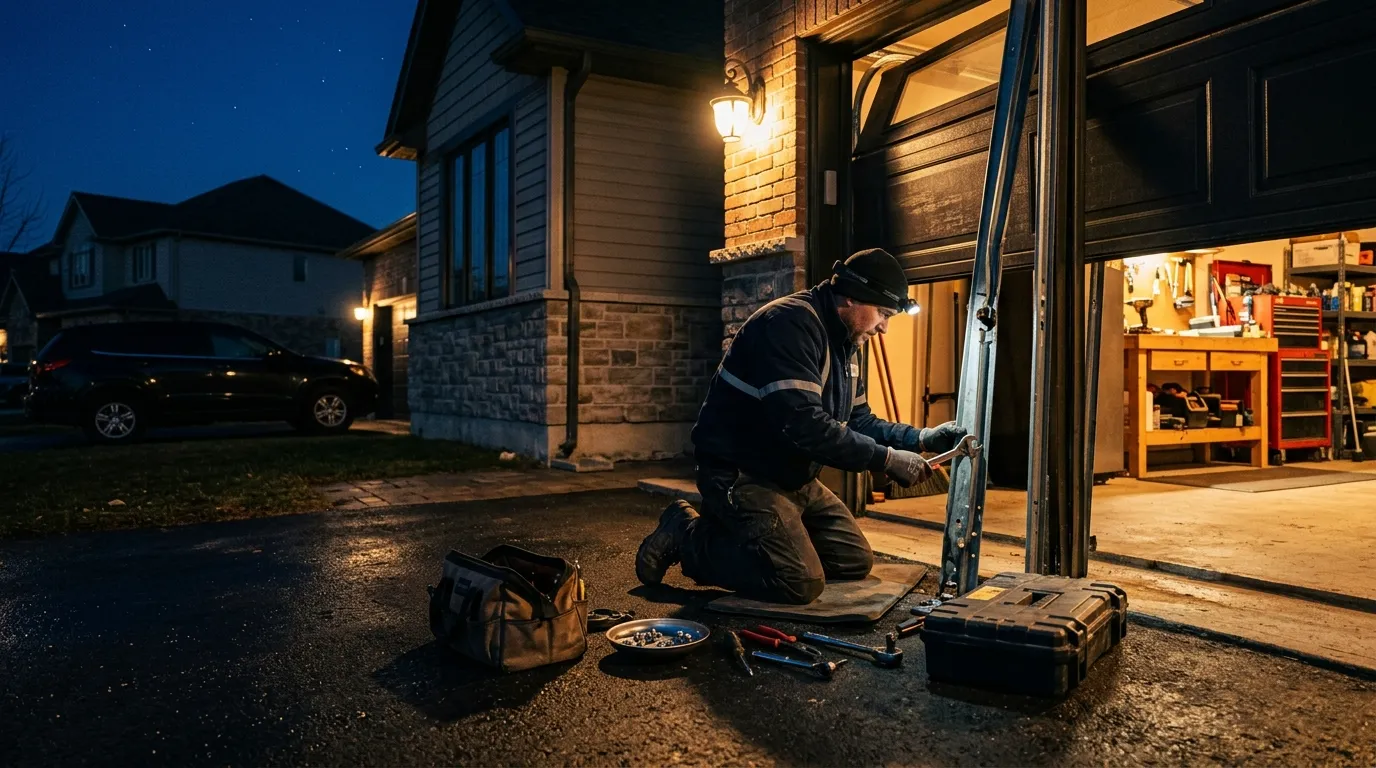
Sun Prairie sits in a climate zone classified as cold and severe, the kind of cold that turns a stiff torsion spring brittle overnight. Steel that flexed fine in October can snap in January, especially once it's already thirty-plus years into a tension rating it was never rated to hold forever. Cold doesn't create the wear - age does that - but cold is what turns worn-out into broken, usually on the exact morning you need the door to open. With 34,734 owner-occupied houses in the service area, a huge share of this town's garage doors were installed under the same building codes and the same rough decade, so when a hard cold snap comes through, we don't get one or two calls. We get a run of them, all from houses built in that same twenty-year window. At a median household income of $98,943, most owners here can afford a proper spring replacement instead of a patch job, but plenty still put it off until the door won't move. If your door is original to a house built before the early 2000s, the smart time to have the spring checked is before the first hard freeze, not after it's already sitting stuck in the cold.