The Problem
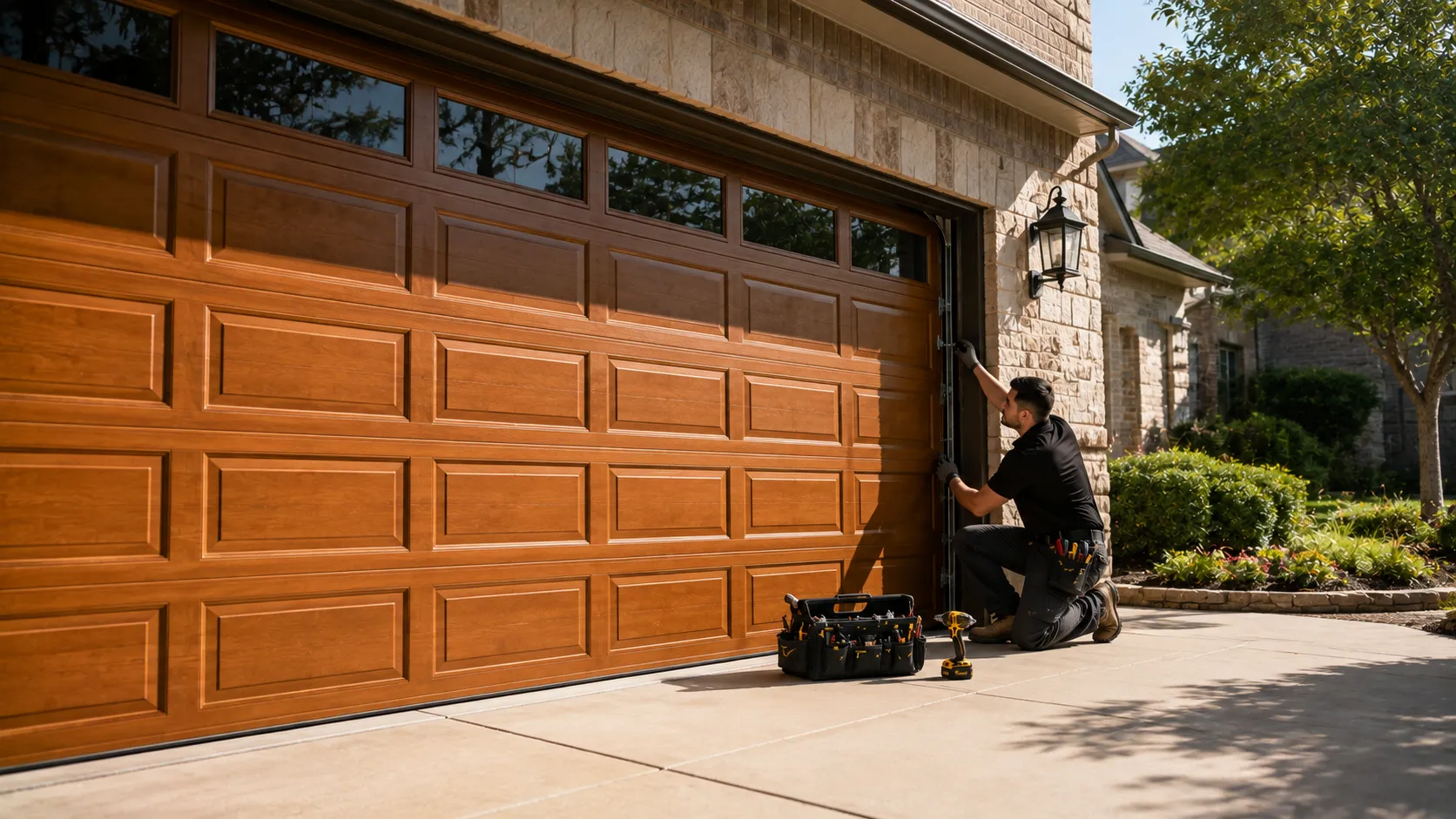
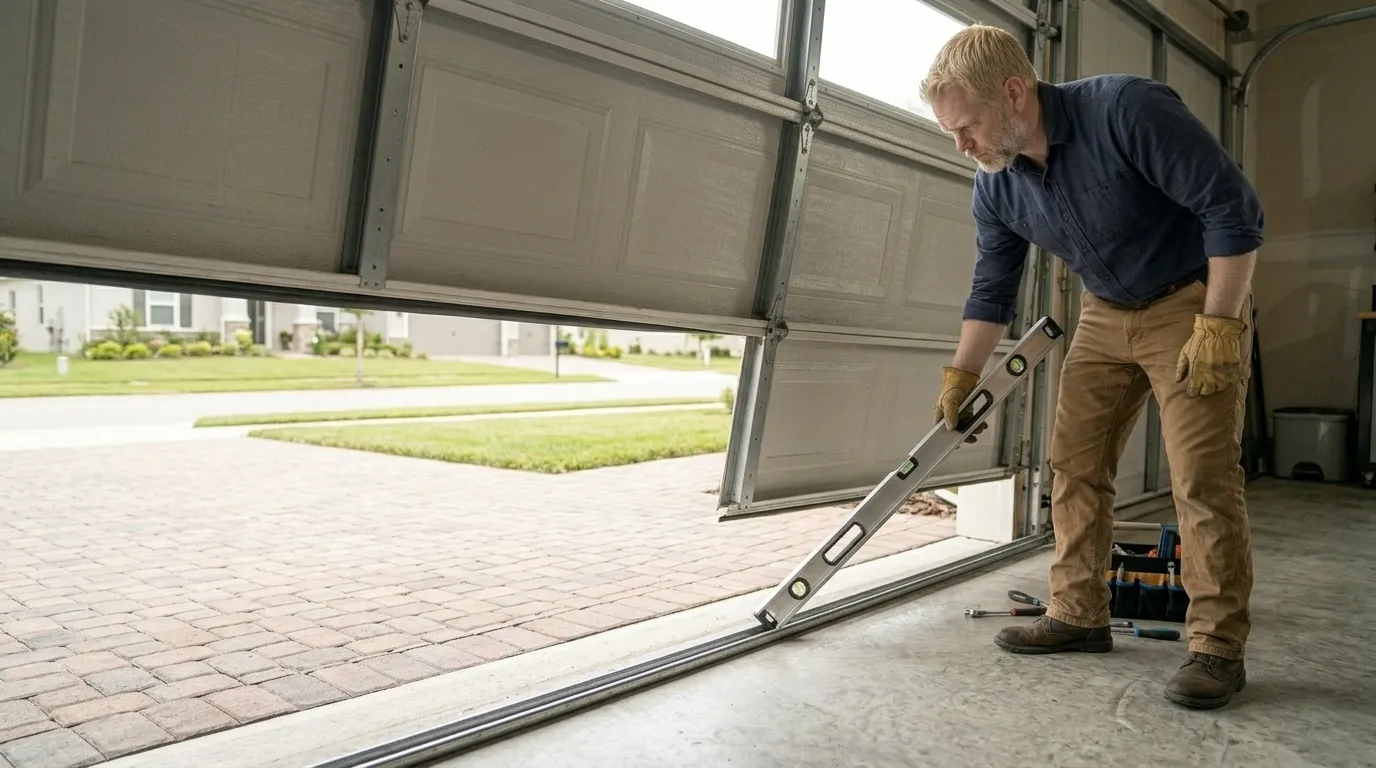
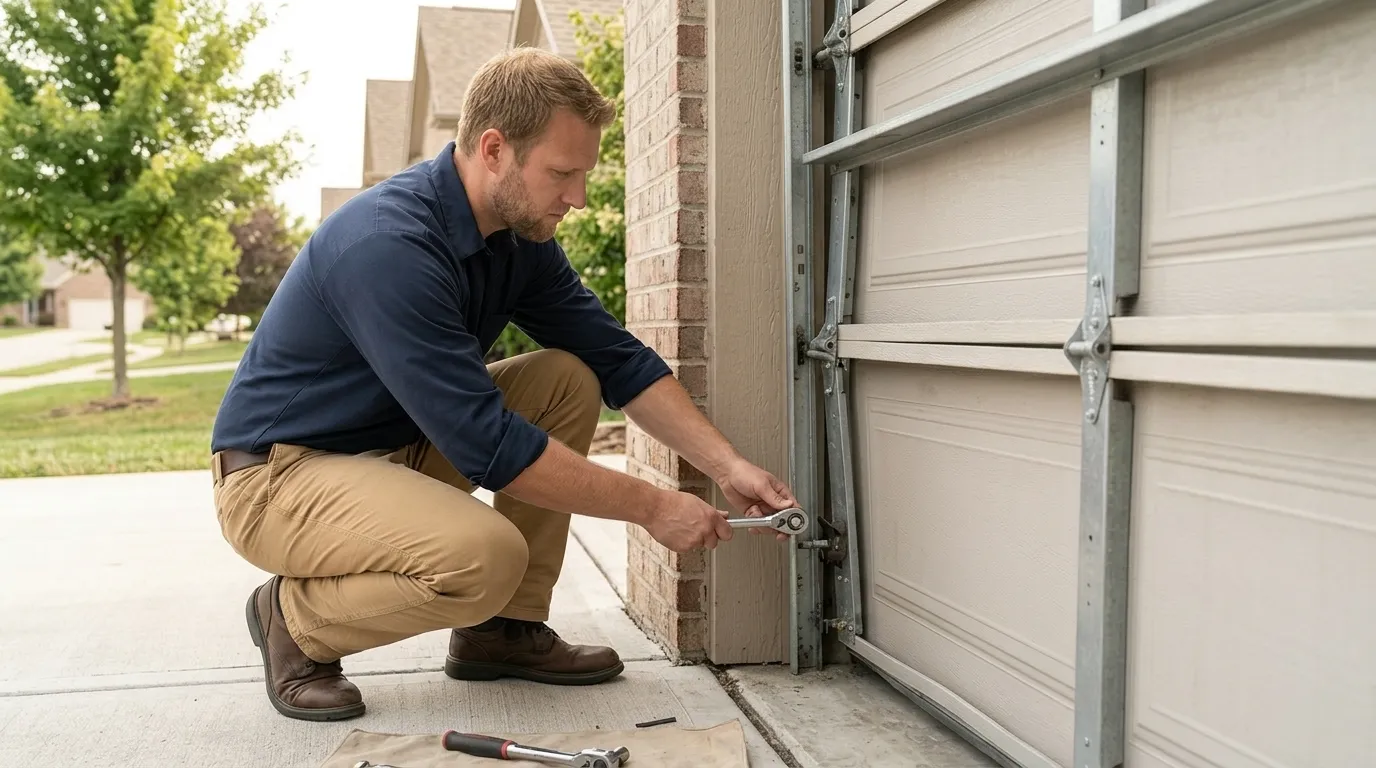
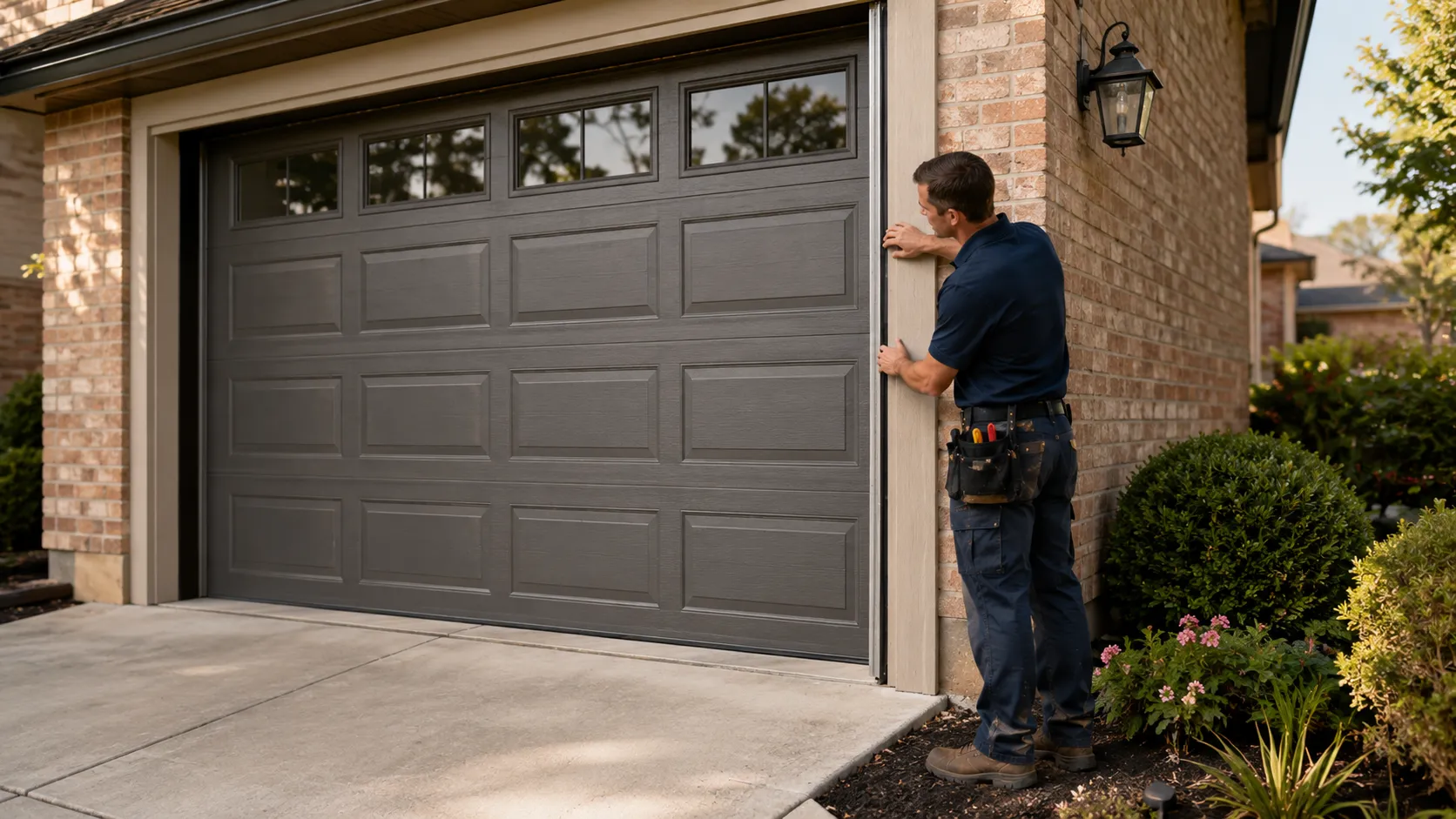
A door off track doesn't happen because one thing breaks. It happens because a few small things line up at once, and in Sun Prairie the housing stock makes that lineup more likely than in a newer subdivision somewhere else. Most homes here went up between 1959 and 2001, with the bulk of that stock dating to the 1980s and 90s. That's a door and track assembly that's had thirty to forty winters to work its rollers loose, let its track brackets drift a few millimeters out of plumb, and let the original hardware outlive its factory tolerances. When a roller finally rides up over the lip of the track instead of through it, the door doesn't fail gracefully - it binds, jerks, or comes free from one side while staying seated on the other. That asymmetric hang is the giveaway. It's rarely the opener. It's almost always a track that's no longer where it was installed, on a house old enough that nobody's touched it since.
What Most People Get Wrong
The instinct is to blame the opener, since that's the part making noise and the part with a keypad you can see failing. But on a house from this era, the opener is often the newest component in the system - homeowners replace openers more readily than they replace track and rollers, so you get a 2015 opener bolted to 1986 track brackets. People also assume a bent track is a track problem, full stop, when the actual cause is usually a loose bracket where the track meets the framing. Wood framing from this build period shrinks and settles over decades, and lag screws that were snug in 1986 can be a sixteenth of an inch loose by now. That's enough play for the track to walk sideways under the door's weight, cycle after cycle, until one day it walks far enough that a roller pops free. Tightening the opener won't touch any of that.
How Local Conditions Play In
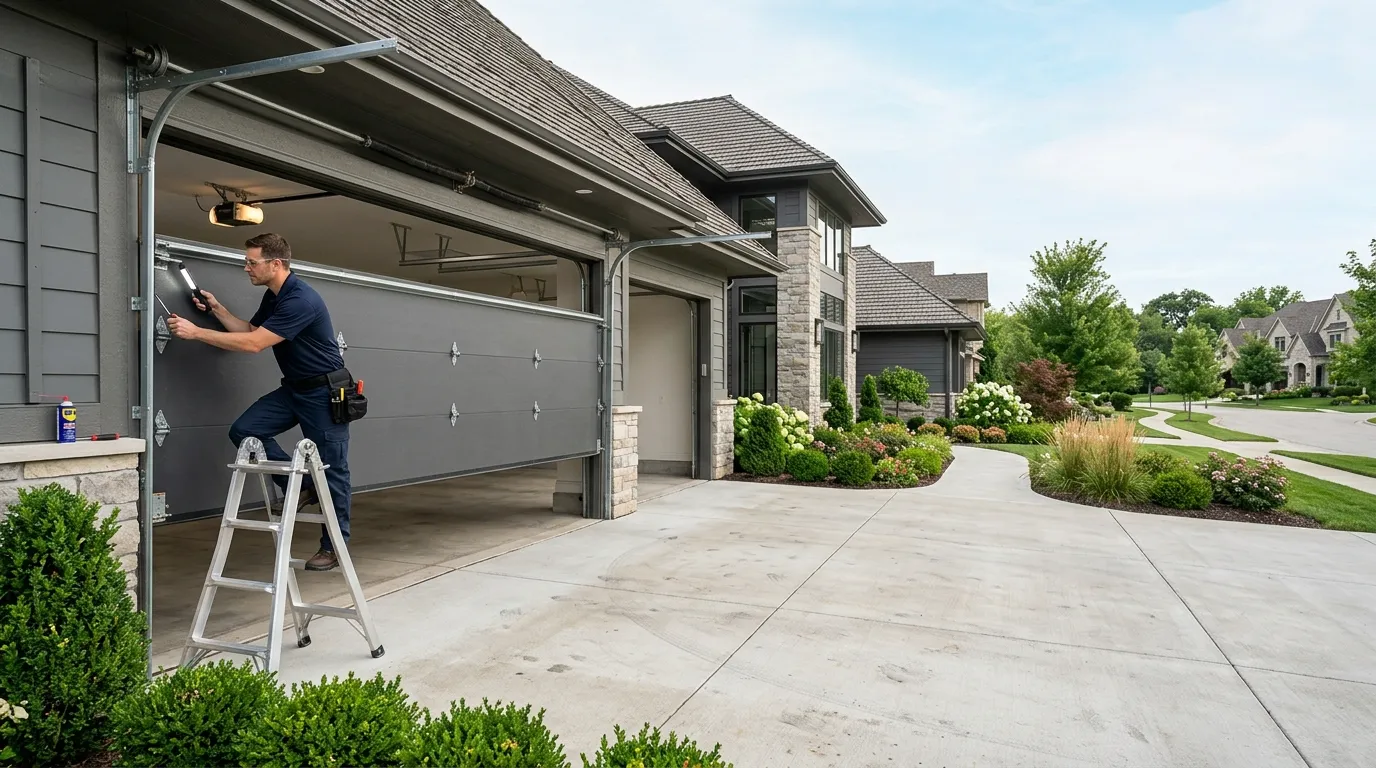
Sun Prairie sits in a cold-severe climate band, and that matters here in a specific way: metal contracts in cold, and a track bracket that's marginal in July can be measurably looser in January. Grease that lubricates rollers in warm weather also stiffens up in sustained cold, so a roller that was riding smoothly in the track in September can start catching by December - and a catching roller is what starts the walk toward off-track. This isn't a once-a-decade weather event; it's the ordinary seasonal swing this area gets every year, and it's harder on 30-to-40-year-old track hardware than on anything newer. If your door started acting up right as temperatures dropped, that timing isn't a coincidence - it's the cold finding the weak point that summer let you ignore.