Getting Here
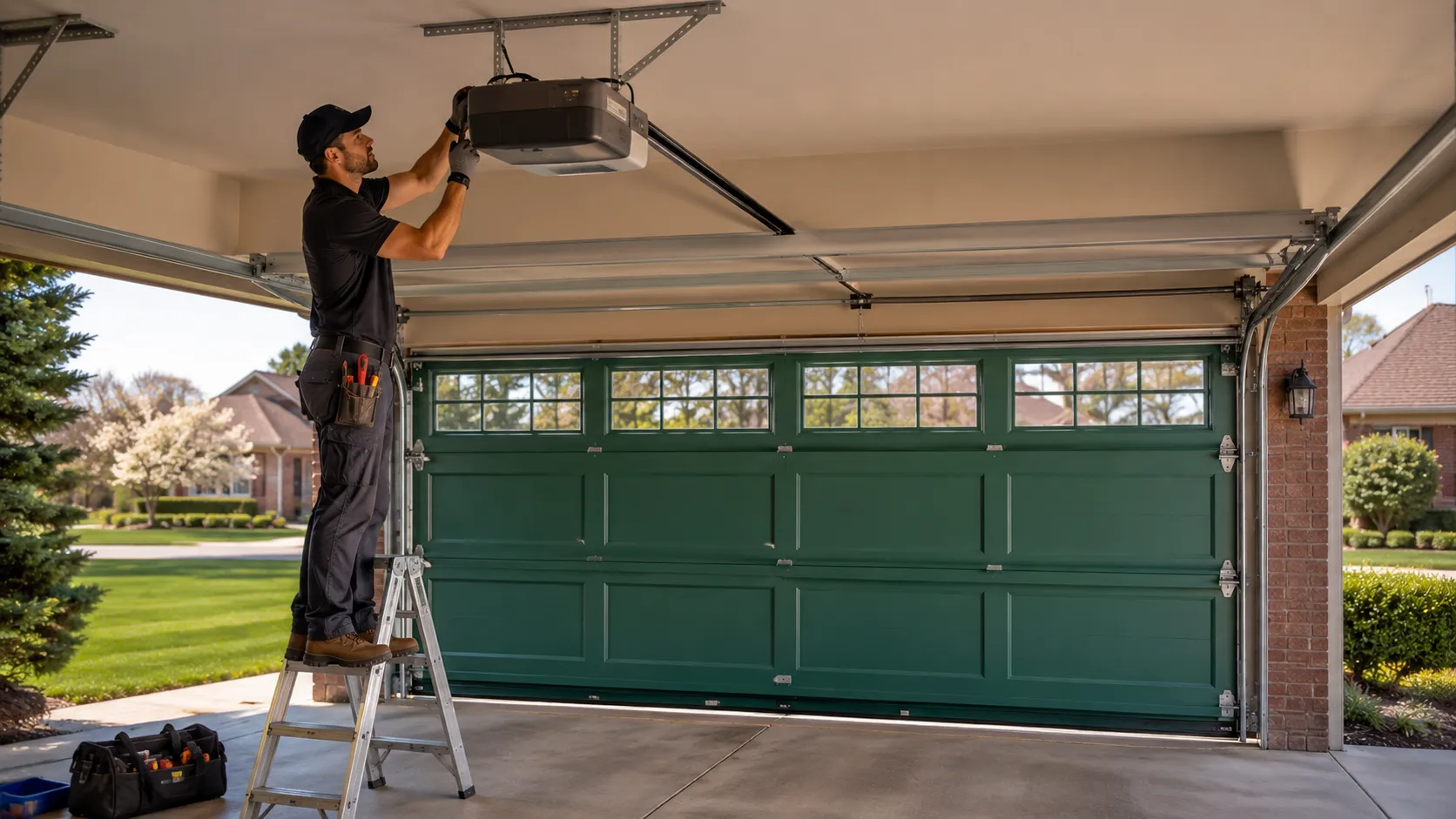
Dekorra sits about 20 miles from our shop in Sun Prairie, which puts it on the far edge of the ground we cover. We don't keep a depot out here and we're not going to pretend otherwise - every job means a truck making that drive. What that means for you is we plan the trip, load the parts we expect to need before we leave, and don't treat a Dekorra call the same way we'd treat one five minutes from the shop. It's a longer haul than Windsor or Bristol, both closer in at 5 miles, so we ask a few more questions on the phone before we come out: what the door is doing, what year the house went up, whether the opener is original. That lets us bring the right spring size and the right roller stock the first time instead of driving back for it.
How That Shows Up in the Door
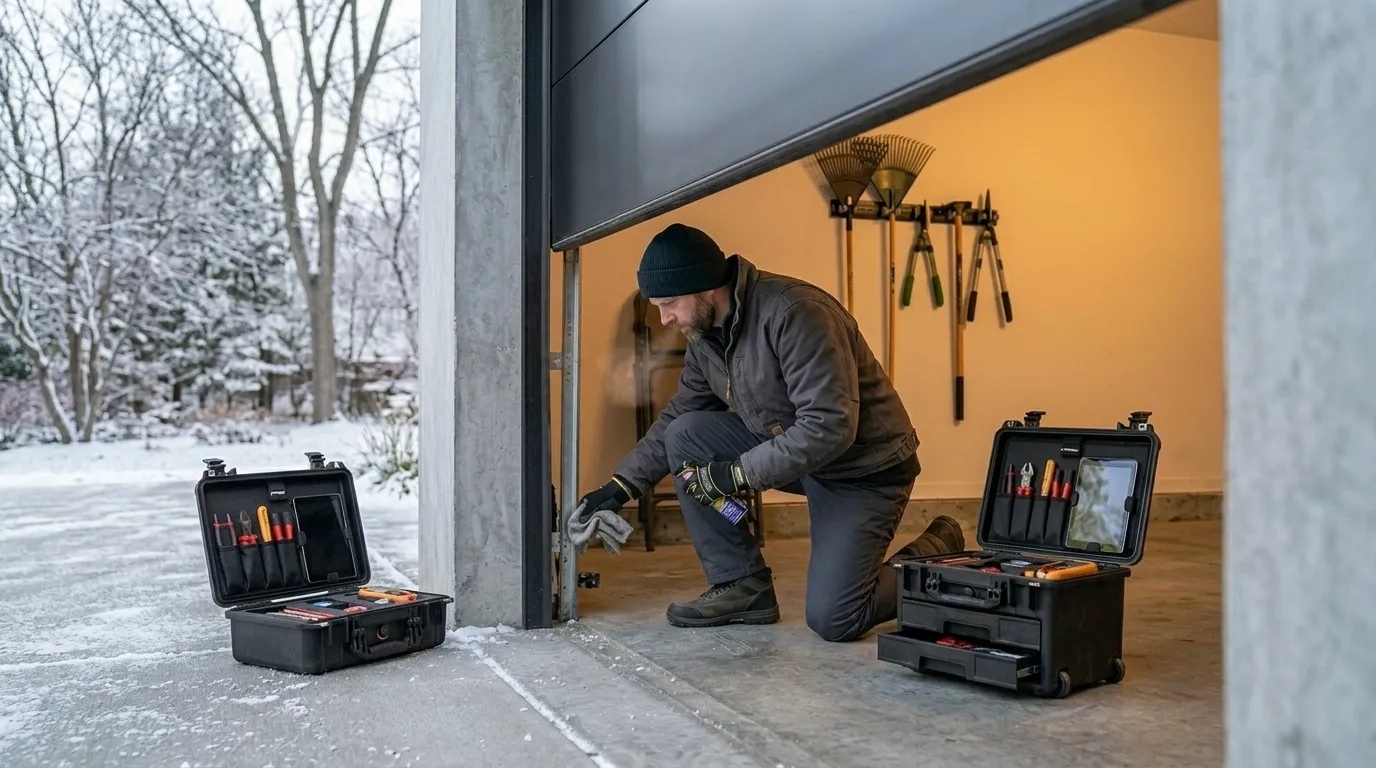
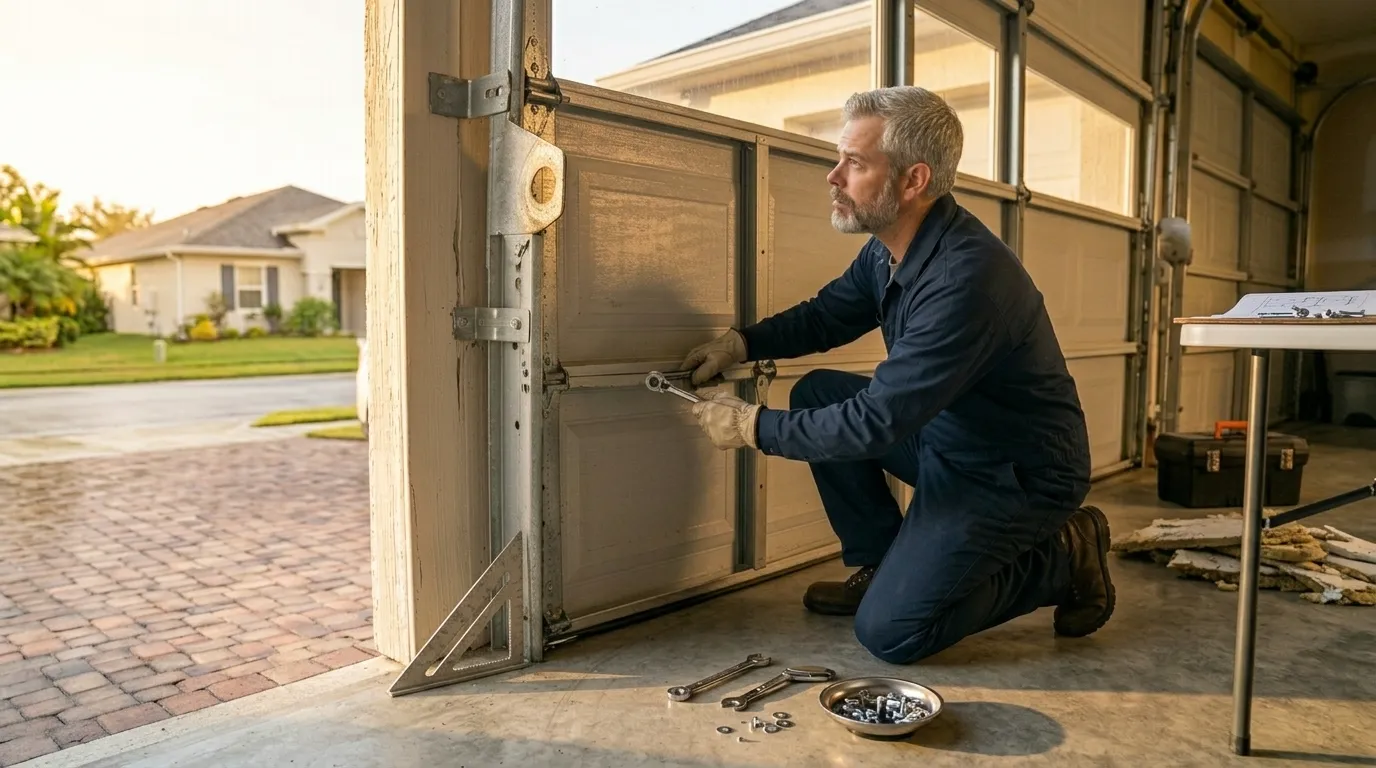
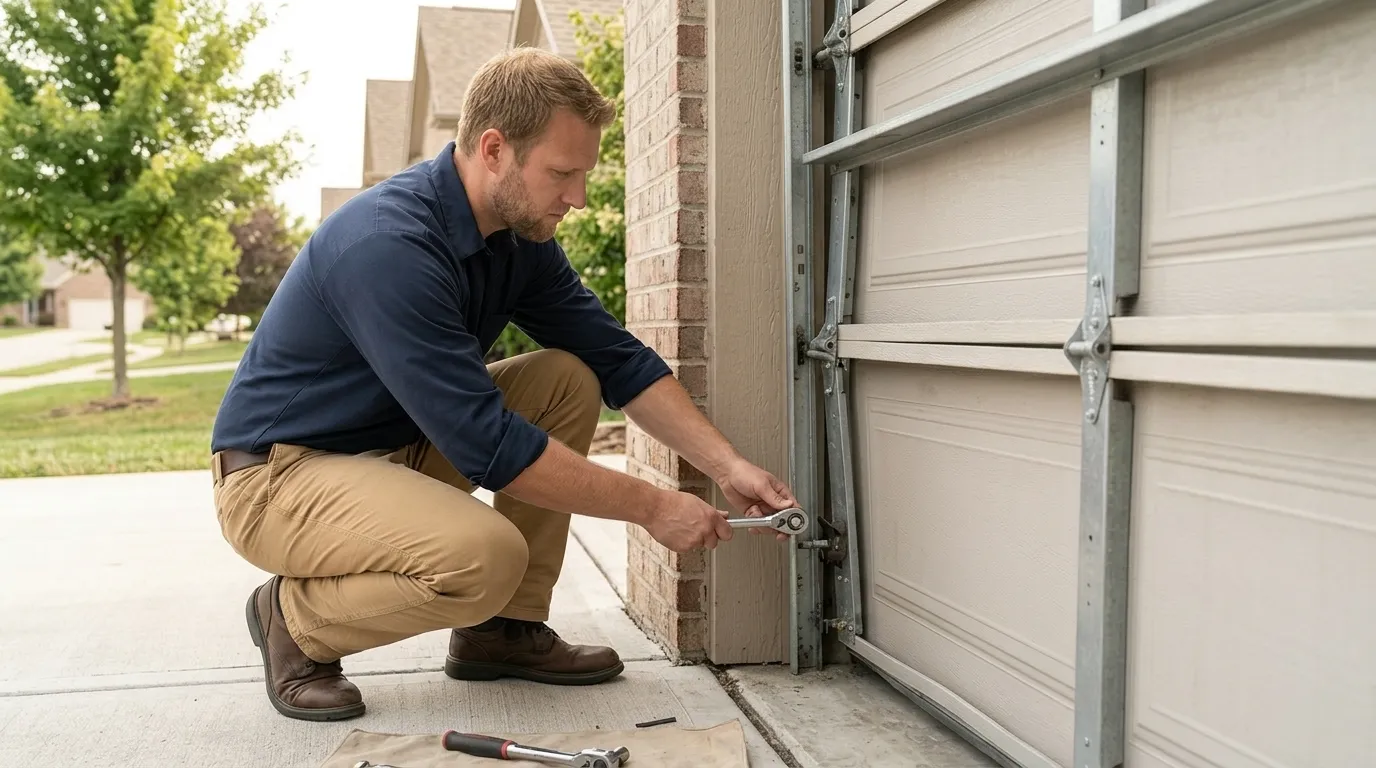
The service area as a whole runs a median build year of 1986, but Dekorra's own housing is older, with a median year built of 1969. That gap matters more than it sounds like it should. A door and track system installed in the late 1960s was built to a different spec than the double-thick, taller doors that went in during the 80s and 90s boom across the rest of the territory. You're more likely to find narrower door openings, single-layer steel panels without foam backing, and older extension-spring setups rather than the torsion systems that became standard later. Combine that with our winters - this is a cold-climate area with real severe-weather stretches - and you get hardware that's had 55-plus years of freeze-thaw cycling on it. Extension springs lose tension faster than torsion springs once they've been through that many winters, and the track alignment on older single-layer doors tends to drift as the wood jambs around it settle.
This Area's Housing
Dekorra is a smaller pocket within our coverage - about 1,023 households, with a median income of $120,341, well above the broader area's $98,943 median. That income level tends to show up in the calls as a preference for doing the job right the first time: full spring and cable replacement rather than a patch, or a full door swap when the existing one is past the point of matching parts. But the housing age is the bigger driver of what actually breaks. A 1969-built garage wasn't engineered for the taller SUVs and trucks that are common today, and we sometimes find headroom or clearance issues when a homeowner wants a new opener with a higher lift. We size around what's actually there rather than assuming a newer-build layout, since that assumption is exactly what causes wasted trips this far from the shop.