The Problem
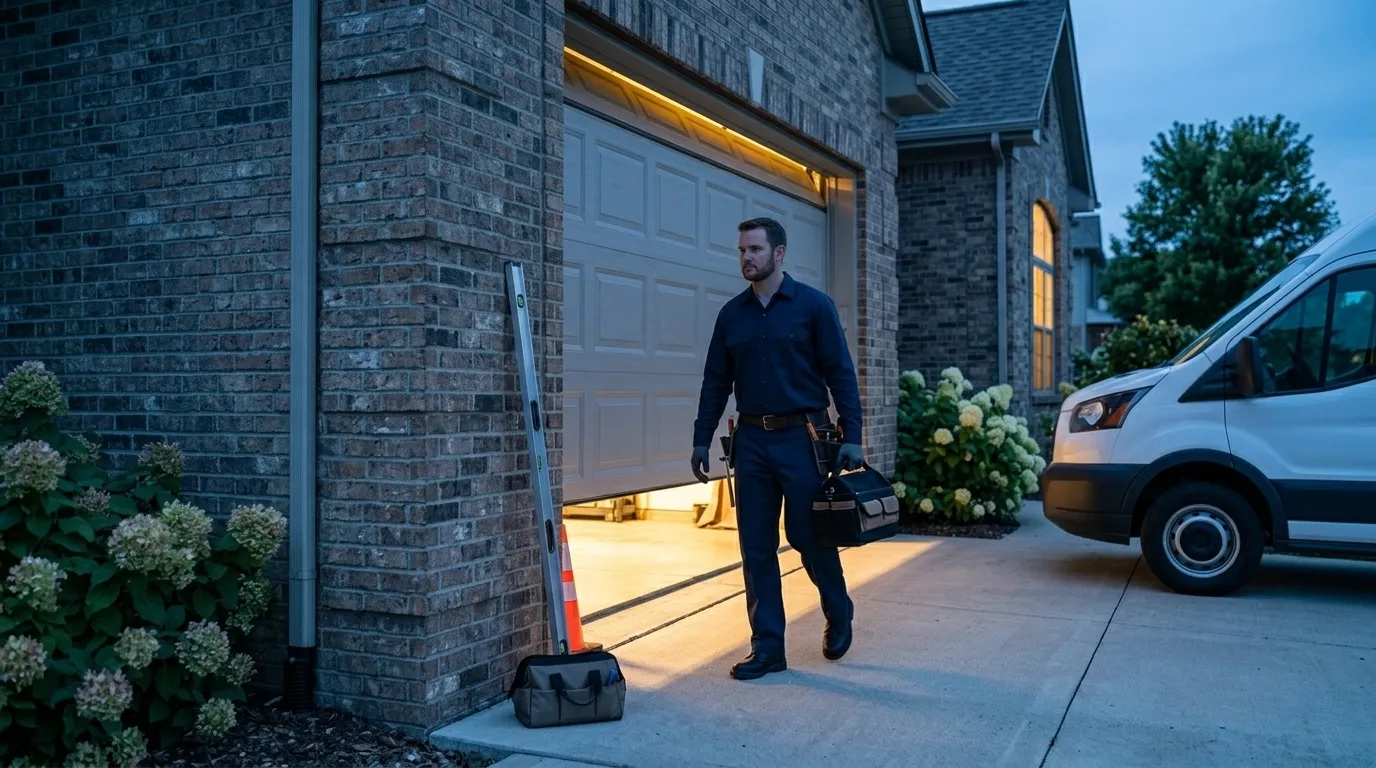
Most calls we get start the same way: a door that used to work fine now grinds, sticks, or won't close all the way. Homeowners think it's one thing - the opener, usually - and half the time it's not. A service call exists to find the actual cause before anyone touches a wrench to a spring or swaps a part that didn't need swapping.
Around here that matters more than it sounds. Housing in this area went up mostly between 1959 and 2001, with the median build year sitting around 1986, and that spans a lot of different hardware generations. A door installed in 1987 doesn't share parts with one installed in 1998, and neither matches what a big-box store sells today. A tech who doesn't check the actual year and setup of your door before quoting a fix is guessing. That's the problem a real service call solves: it tells you what you have, not what's common everywhere else.
What Most People Get Wrong
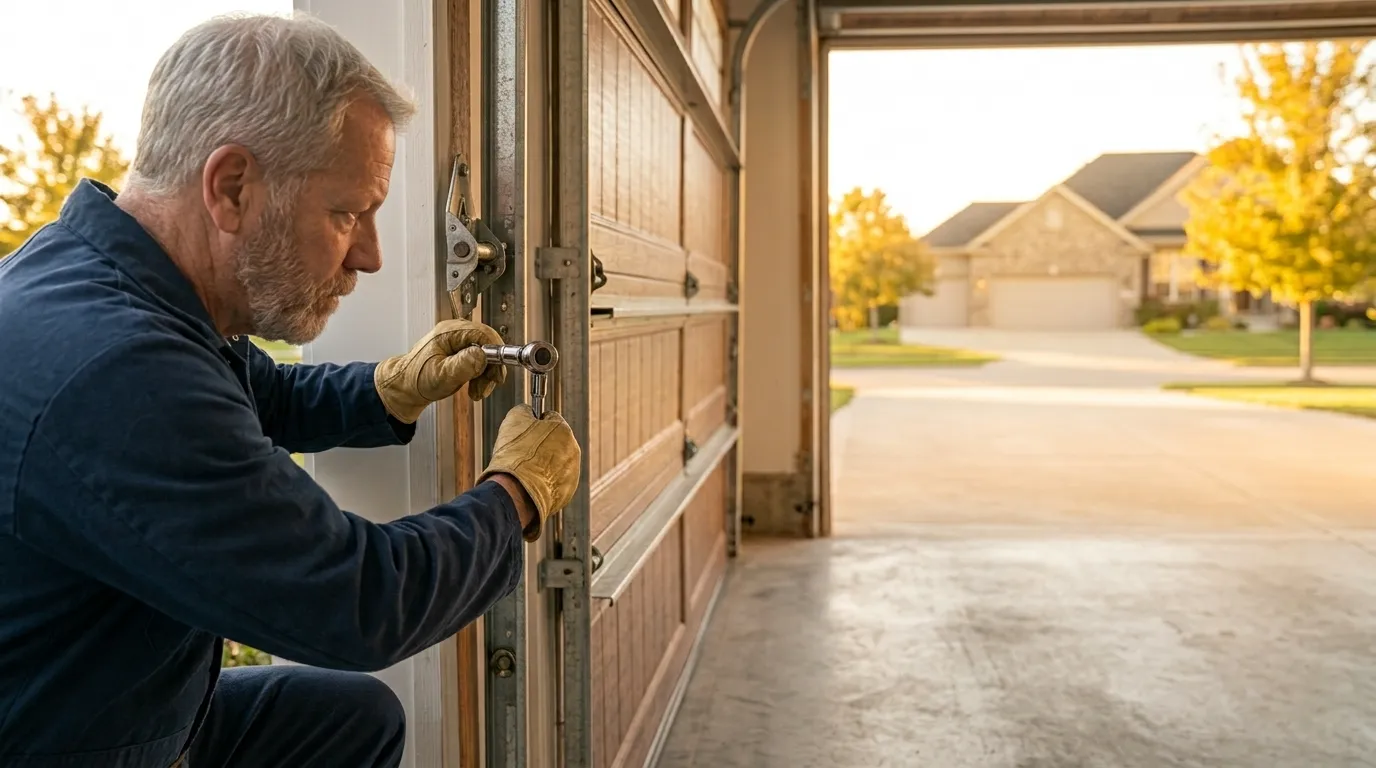
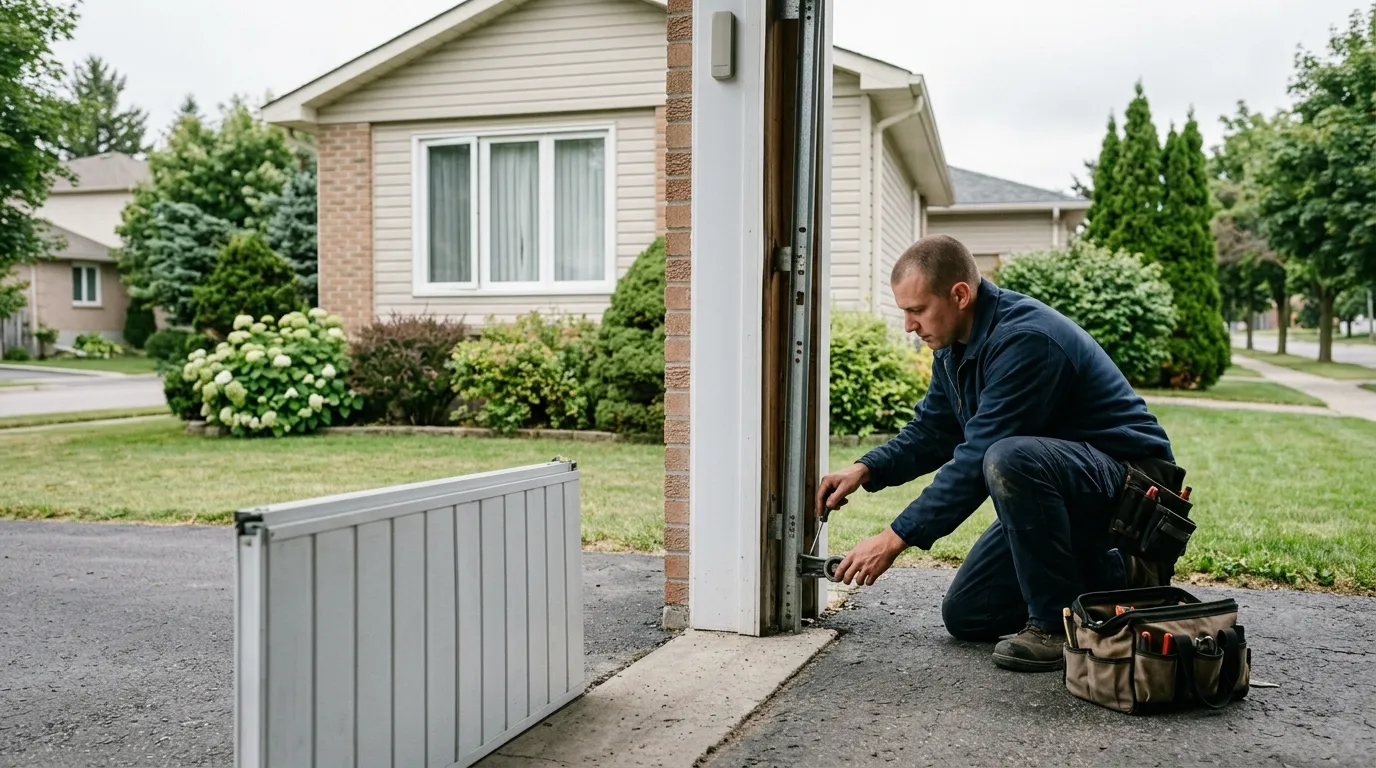
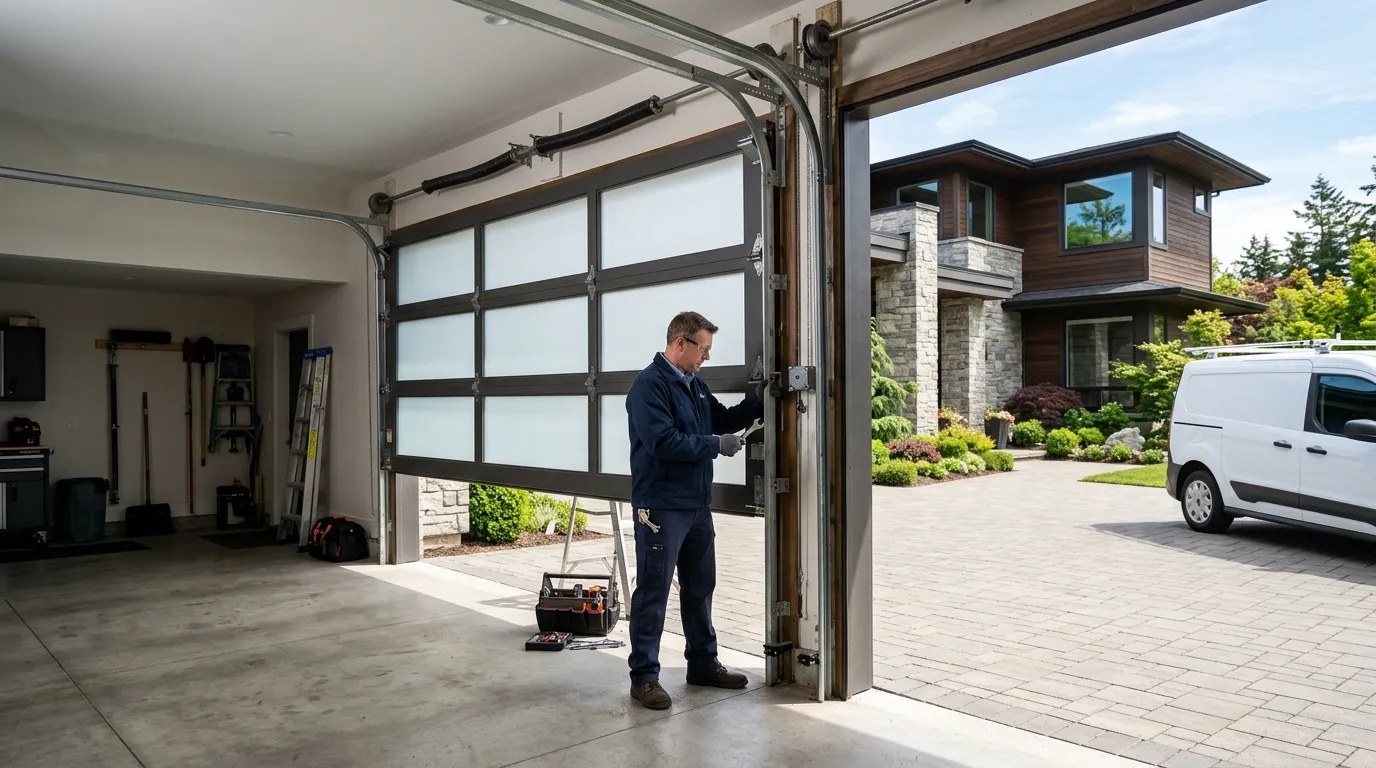
The biggest mistake is assuming a noisy or slow door means the opener is dying. In a lot of the 1980s and 90s builds common through this area, the opener is fine - it's the springs, rollers, or track alignment that have aged out, because that hardware wears on a schedule the opener doesn't follow. A service call checks spring tension, track plumb, cable wear, and hinge condition separately from the opener, because in an 80s-built house those systems age at different rates.
The second mistake is skipping the balance test. On a door from this era, the panel weight and spring sizing were matched to specs from decades back. If a spring's been replaced once already with a mismatched one - which happens more than people expect on older stock - the door can look like it's working while it's actually straining the opener every single cycle. A proper call includes a manual balance check: disconnect the opener, lift the door by hand, see where it holds. That fifteen-second test catches problems an opener-only inspection misses entirely.
How Local Conditions Play In
With a severe cold climate here, a service call has to look at things a mild-climate visit wouldn't bother with: weatherstripping condition, whether the bottom seal has hardened and cracked, and whether the track has enough clearance built in for the way steel contracts in deep cold. On homes built in the 60s through 90s, insulation standards for garage doors were lower than what's installed today, so an uninsulated original door on a house from that era loses more heat through the garage than most owners realize.
Across the towns and townships in this service area - including closer-in ones like Windsor, about five miles WNW - housing patterns run similar: same building era, same winter exposure, same hardware questions. A call here isn't just