24/7 Emergency Service Open 7 days · 7am–8pm Serving Sun Prairie, WI & nearby
(608) 534-3640
Sun Prairie, WI

What Actually Happens When a Torsion Spring Fails in Cold Weather

Sun Prairie homes built between 1959 and 2001 face torsion springs stressed by severe cold winters. Here's why they fail and what to do when one lets go.

What Actually Happens When a Torsion Spring Fails in Cold Weather

The Problem

Most houses on this side of town went up somewhere between 1959 and 2001, with the bulk of the stock dating to the 1980s and 90s. That matters more than people think, because a torsion spring has a rated cycle life, and a spring installed when a house was framed in 1986 is now well past due even if nobody's touched it. Add a climate that sits in the severe-cold band and you get steel that loses flex exactly when the door gets used the most - short cold days, more trips in and out, more weight on hardware that's already tired. The spring doesn't care that it's been quiet for thirty years. Cold makes brittle metal do what brittle metal does, and it usually happens on the coldest morning of the stretch, not the mildest. If your house falls in that 1959-2001 build window and nobody's replaced the springs since it was built, you're not looking at an if, you're looking at a when.

What Most People Get Wrong

The common mistake is treating a loud bang or a door that won't lift as an opener problem. People replace the opener, or the circuit board, or call about a remote that stopped working, when the actual failure is a spring that let go overnight. In a house from the 1980s or 90s stock that's common across this area, the springs are original or a first-generation replacement, and they were sized for that era's door weight, not necessarily today's heavier insulated panels if the door's been swapped since. The second mistake is spraying general lubricant on a spring that's already fatigued and expecting it to hold. Lubricant helps a spring that's still sound move quieter. It does nothing for one that's cycled past its rated life in cold weather - it just delays the bang by a week or two.

Leaving It Alone

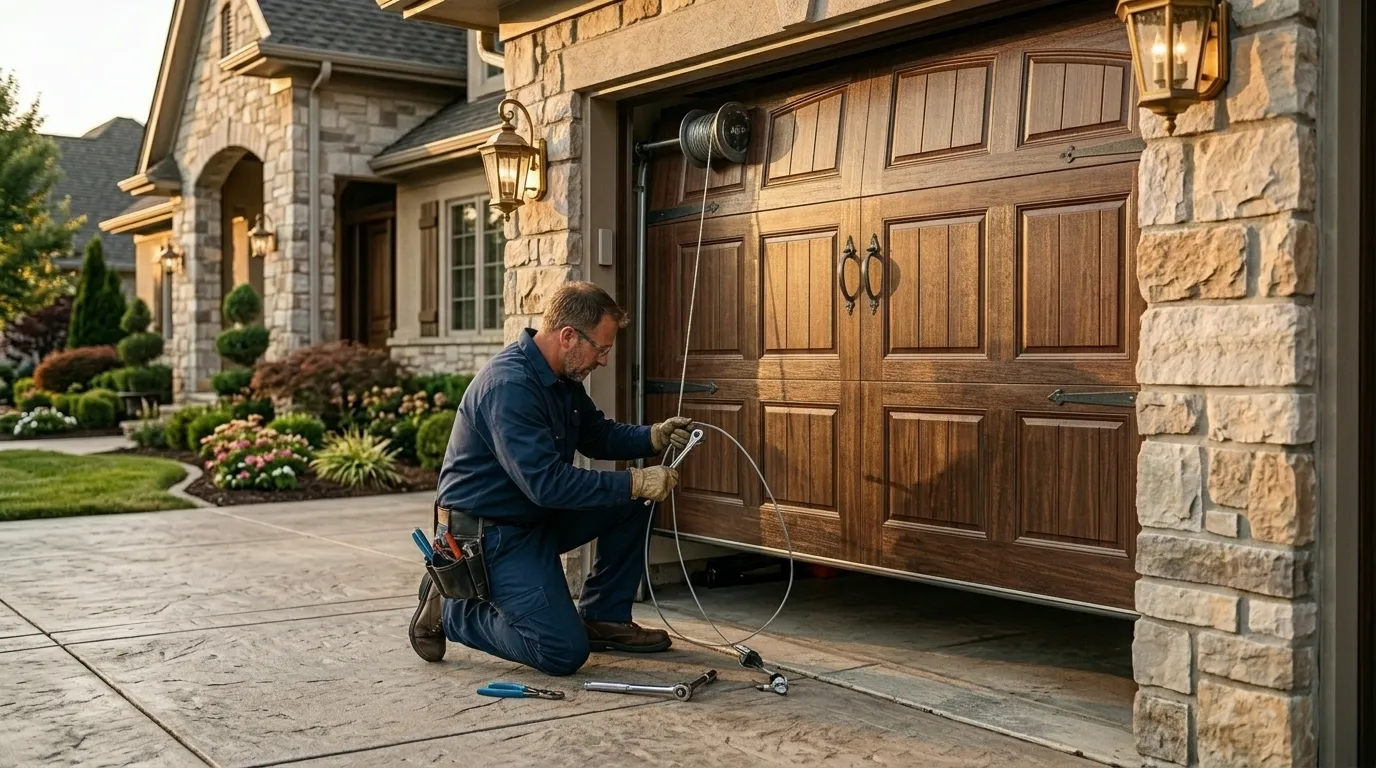
A torsion spring under tension that snaps doesn't fail politely. The bar can spin hard enough to hurt someone standing near it, and a door with no working spring is heavy enough that the opener's plastic gear will strip trying to force it, which turns a spring job into an opener job too. In cold weather especially, a half-broken spring doesn't always announce itself - it just gets weaker each cycle until the day it lets go completely, often with a car halfway in or out of the garage. We don't recommend DIY spring replacement; the tension involved is not forgiving, and it's one of the few jobs in this trade where we'd rather lose the labor than have someone hurt themselves saving it. If the opener gear is already stripped from someone forcing a dead spring, that's a second repair on top of the spring, not included in it.

How Local Conditions Play In

Steel contracts in the cold, and a torsion spring that's been coiled the same way for two or three decades loses some of its give right when the temperature drops into the range this area sees through a normal winter. That's the severe-cold pattern at work - it's not a one-off freeze, it's a season's worth of mornings where the metal starts stiff before it's cycled a few times. Combine that with a housing stock that skews 1980s-90s original hardware and you get a predictable pattern: more spring calls in the coldest stretch of the year than any other time, concentrated in houses that haven't had the springs touched since the builder installed them. Grease also thickens in cold, which slows the rollers and cable drum just enough to add extra load right as the spring is at its weakest point in its life cycle. None of this is dramatic. It's just steel, age, and cold, doing what they do together.
How it works

From “it’s stuck” to “it’s fixed”

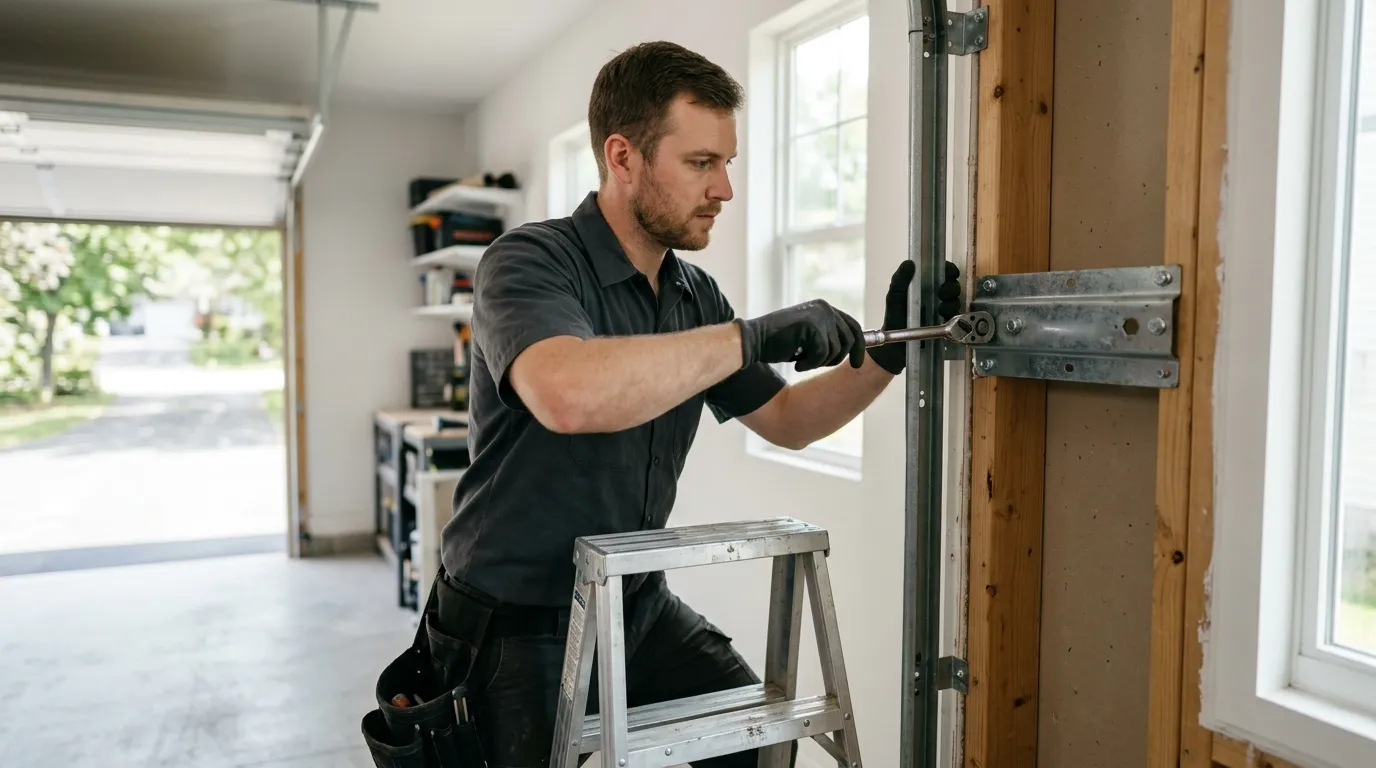
Tell us what’s wrong - Sun Prairie garage door service

Tell us what’s wrong

Describe the symptom - won’t open, loud bang, opener runs but the door won’t move.

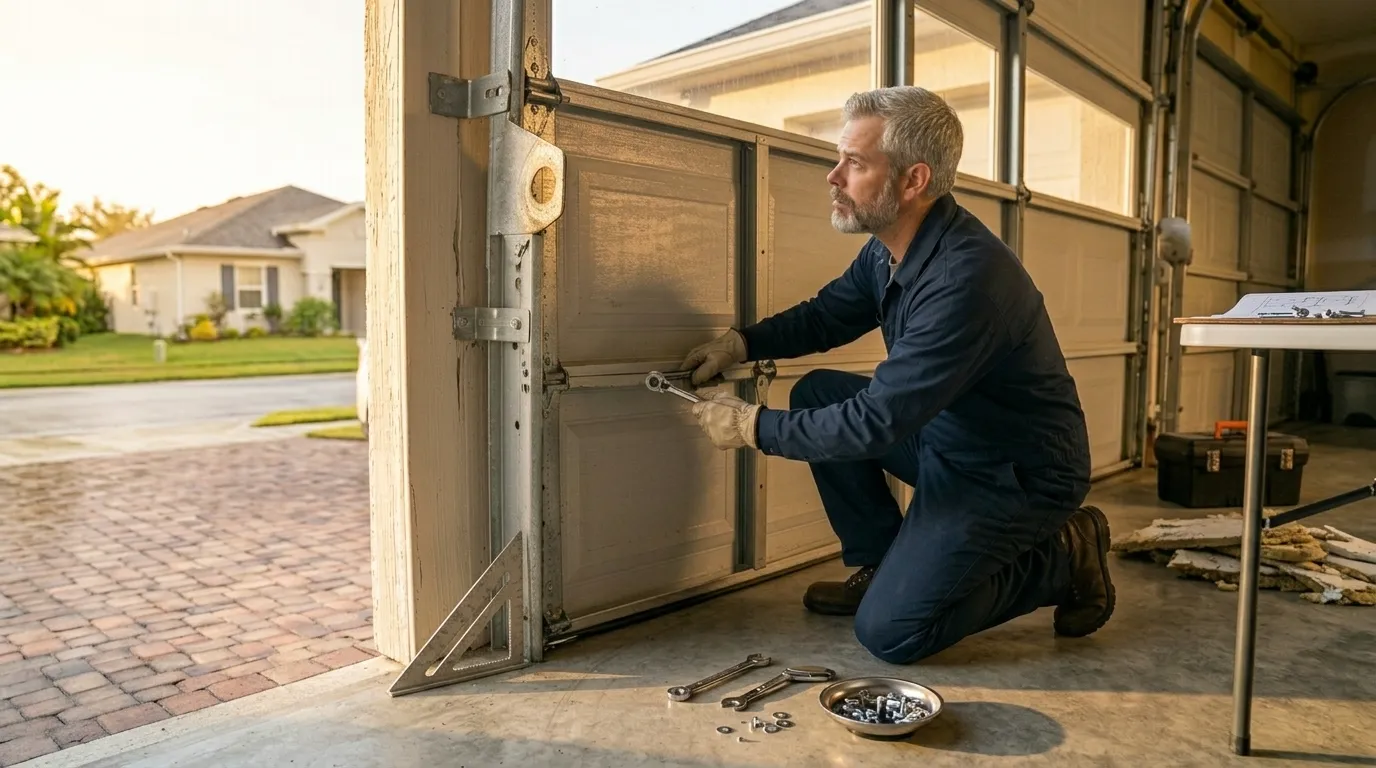
On-site diagnosis - Sun Prairie garage door service

On-site diagnosis

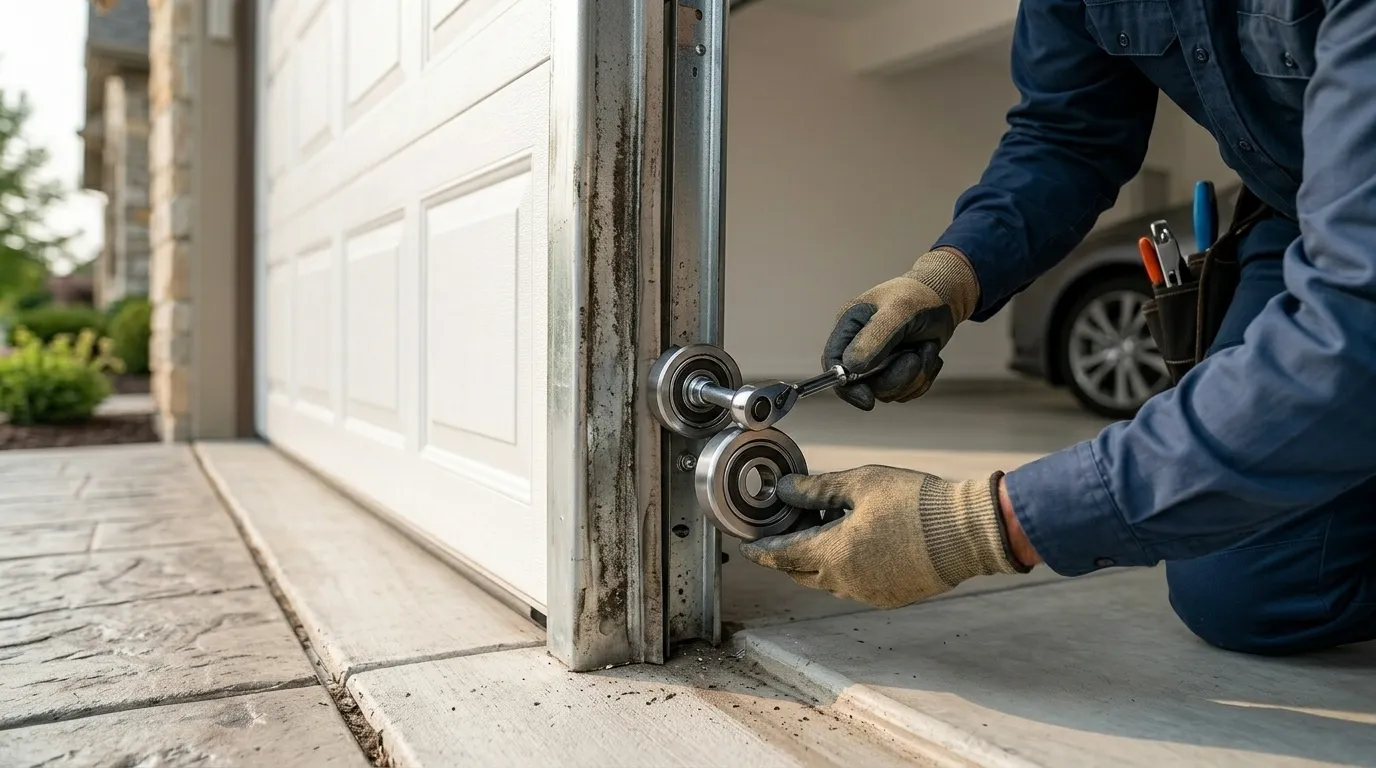
A technician tests the door under power and by hand and finds what actually failed.

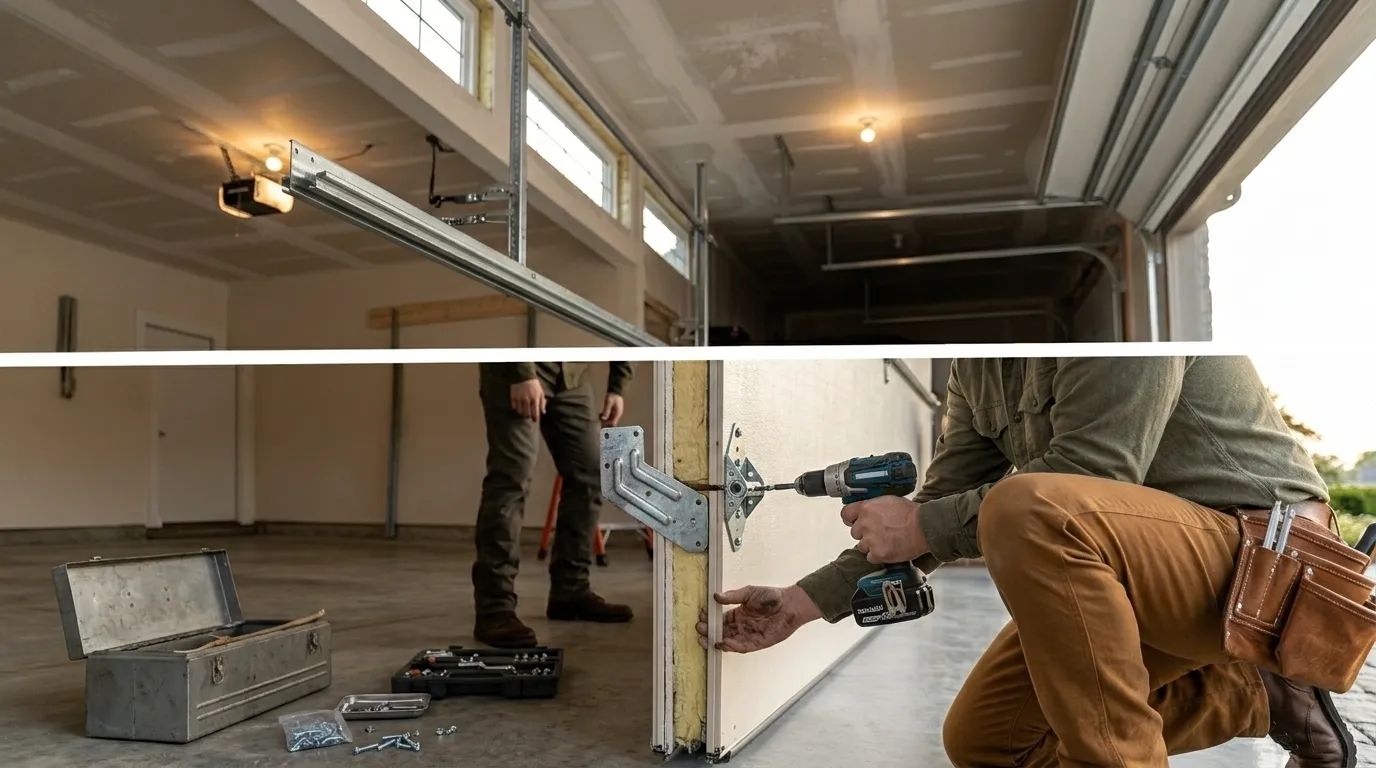
Clear, up-front plan - Sun Prairie garage door service

Clear, up-front plan

You get the fix that’s needed and what drives the cost - before any work starts.

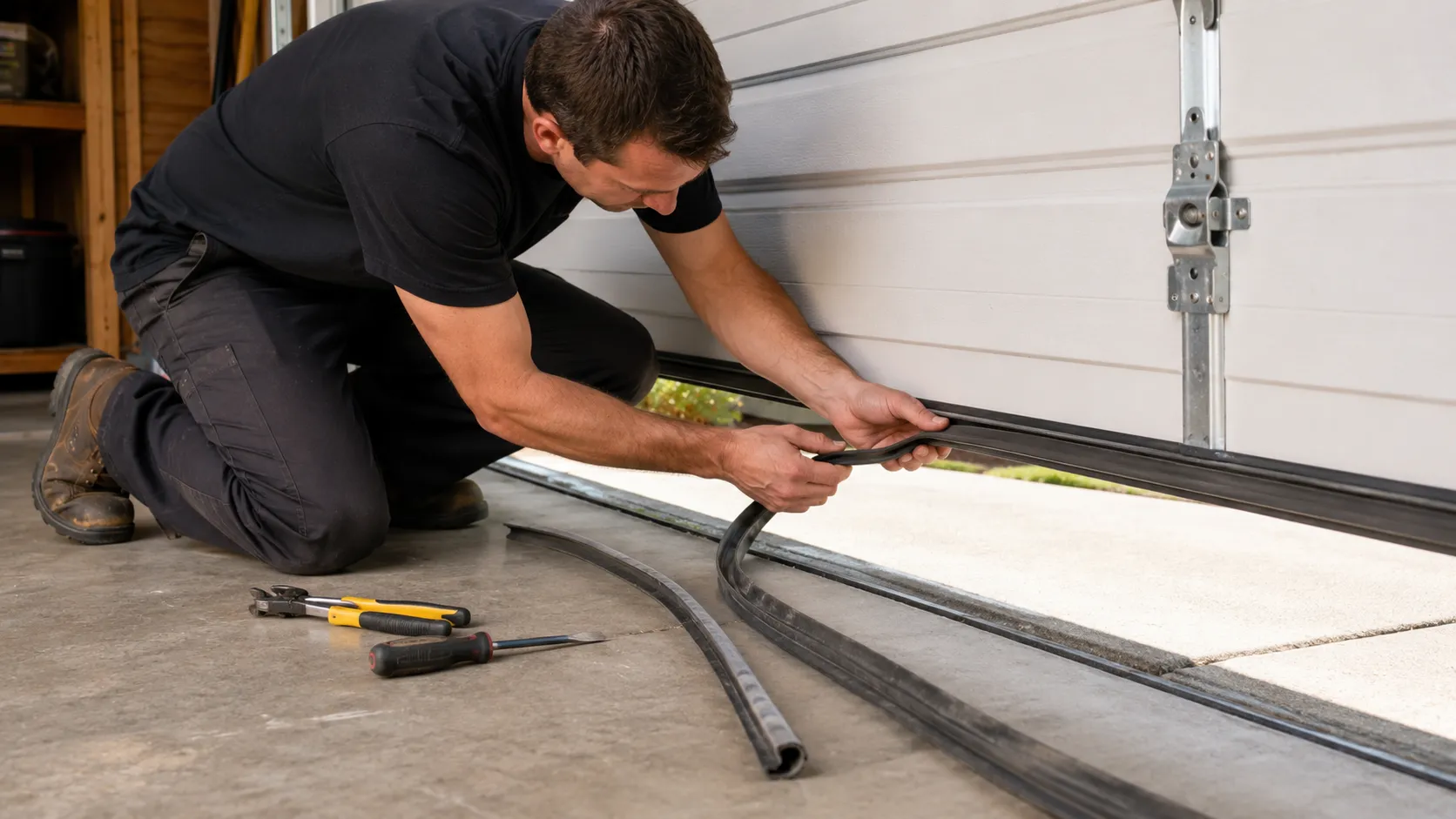
Repaired & tested - Sun Prairie garage door service

Repaired & tested

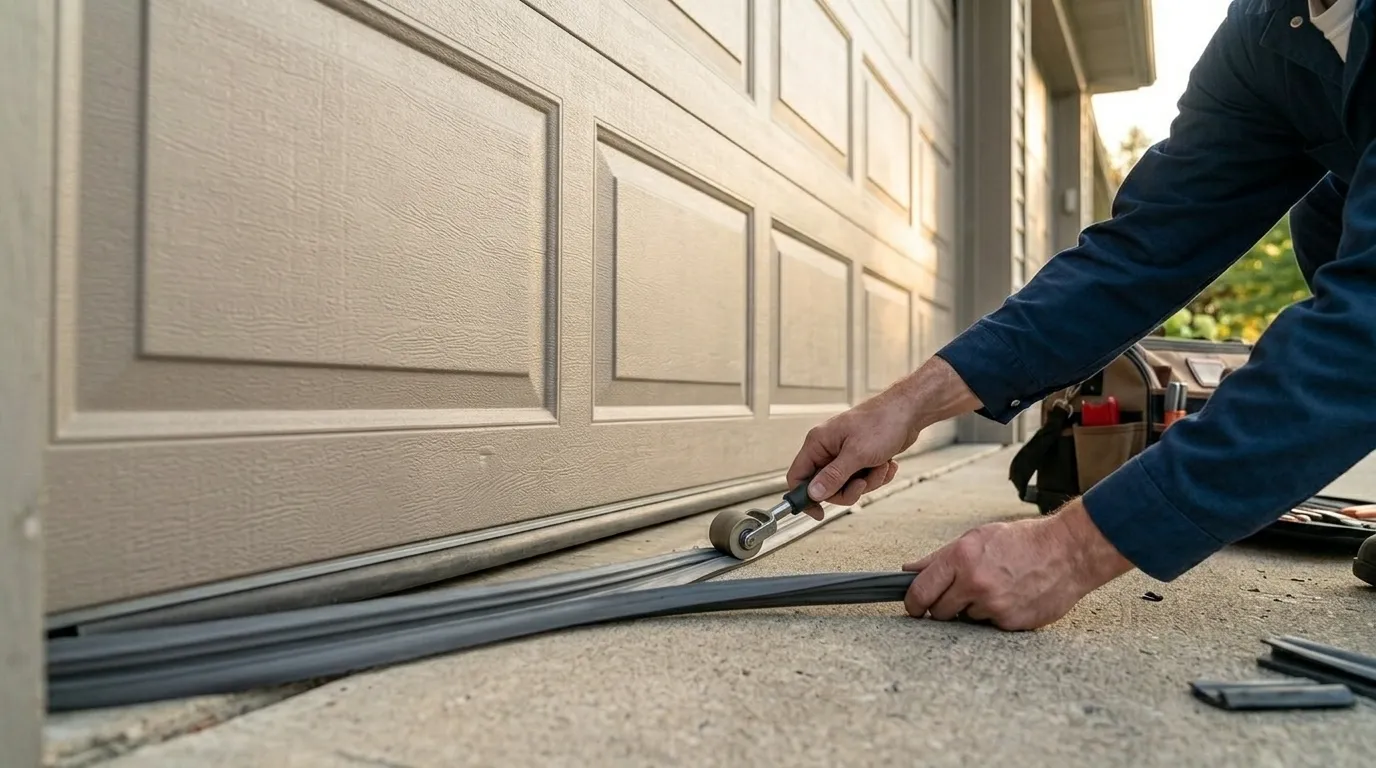
The repair is done, the door is set true and tested, and the work area left clean.

Next step

Serving Sun Prairie, WI - tell us what your door’s doing and we’ll take it from there.

How we work

What to expect

Diagnosis first

Every visit starts by finding what actually failed - not a pre-written parts list.

The right part for the door

Springs and openers matched to the door’s weight and age, so the fix holds up.

Straight answers

When a repair makes more sense than a replacement - or the reverse - you hear it plainly.

Clean, careful work

Tension released safely, hardware set true, the door tested under power before we leave.

Questions

Frequently asked

Straight answers about garage door repair in Sun Prairie. Still unsure? Ask us directly.

Why did my garage door spring break on such a cold morning?

Cold steel loses flex, and a torsion spring that's already near the end of its rated cycle life - common in houses from the 1959-2001 stock around here - is the part most likely to give out when the temperature drops. It's rarely random; it's age plus cold meeting at the same moment.

Can I just replace the opener instead of the spring?

If the spring is what failed, a new opener won't fix it - the opener will just strip trying to lift a door with no spring tension. We'd check the spring first, since replacing an opener on top of a dead spring means paying for two repairs instead of one.

Is it worth replacing both springs if only one broke?

On a door with two springs from the same install, if one has failed from age and cold, the other is usually close behind. We don't push replacing a spring that's still sound, but on original hardware from the 80s or 90s, doing both at once often means one visit instead of two.

Why does it seem like more doors break in winter?

It's not your imagination. Severe cold stiffens the steel in a torsion spring right as thickened grease adds extra drag on rollers and cables, so a spring that's near the end of its life is more likely to snap in the cold months than in summer.

Ready to get your garage door sorted?

Tell us what it’s doing and where you are in Sun Prairie - we’ll take it from there.

Request a QuoteCall