The Problem
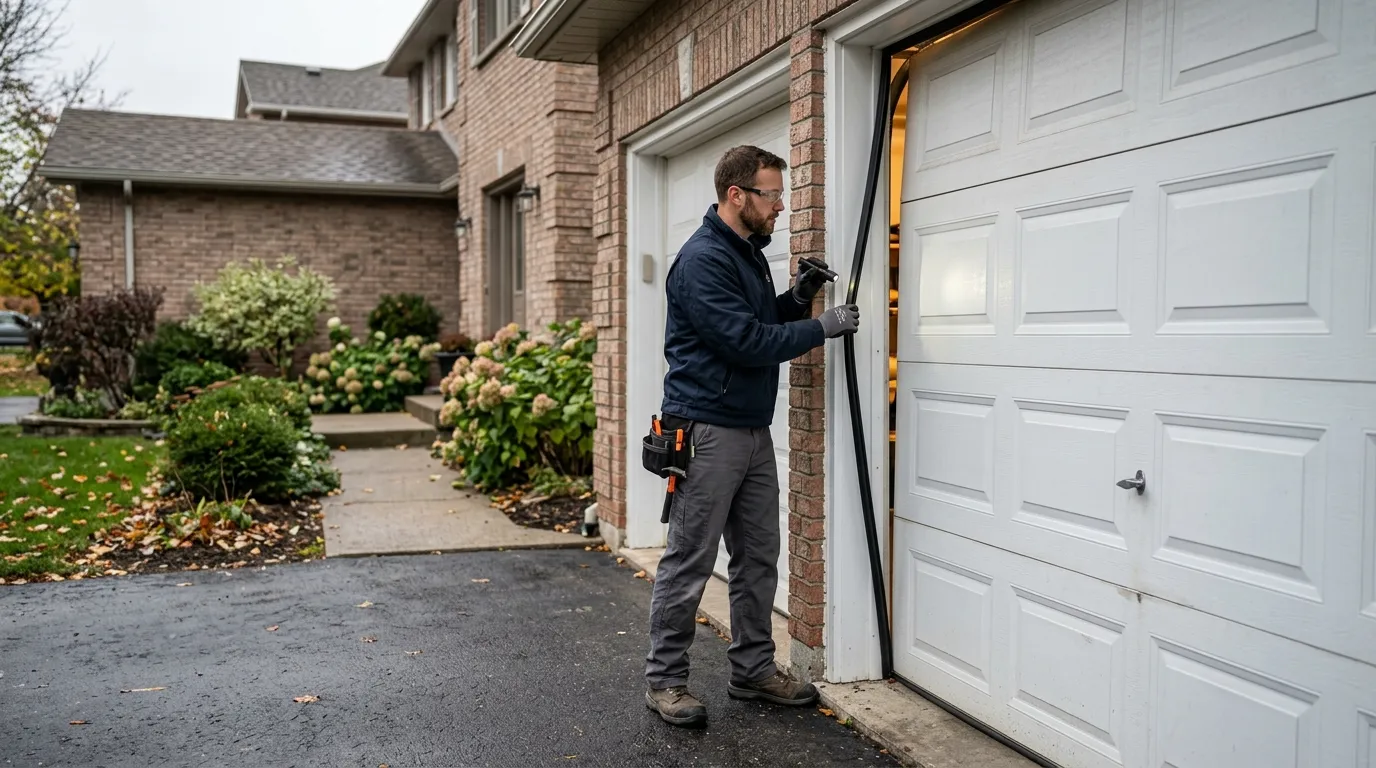
Most houses in Sun Prairie went up between 1959 and 2001, with the median build year sitting around 1986. That means a big share of the doors we get called on are original or close to it - steel sectional doors from the 1980s and 90s, with torsion springs and rollers that have never been swapped. A door that age has usually seen thirty-plus winters of temperature swings, and steel contracts in cold the same way it does anywhere else, but the age of the stock here is what makes this a real question rather than a hypothetical one. We're not fixing doors installed last decade. We're fixing doors that were hung when Reagan was in office, on tracks and jambs that have settled with the house. That changes what "repair" even means: sometimes the spring is fine and the track has just worked loose from thirty years of the house shifting. Sometimes the whole assembly is past matching parts. The call we get is rarely simple, because the door itself carries three decades of history before we ever touch it.
What Most People Get Wrong
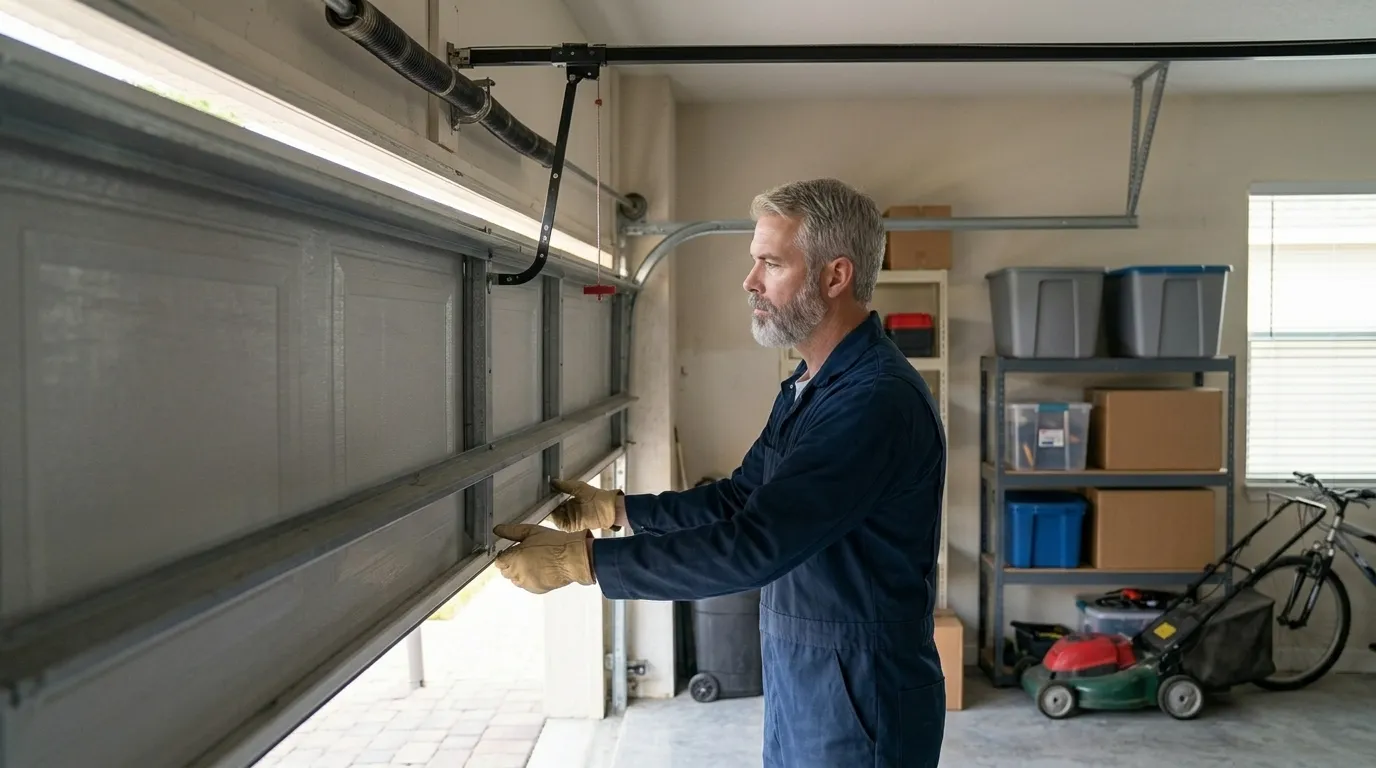
The mistake we see most is treating a stuck or noisy door as one problem when it's usually two or three stacked up. On a door from the 1980s or 90s stock that makes up most of this area, a slow opener and a hard-to-lift panel often trace back to the same worn torsion spring - the opener is straining to do a job the spring used to help with. People replace the opener first because that's the part that beeps and has a light on it, and the door is no better afterward because the spring was the actual failure. The other thing owners get wrong is assuming original hardware is cheap to match. Track brackets, spring cones, and drums from an early build era don't always line up with what's stocked today, so a repair on a door this old sometimes runs closer to a full spring-and-hardware job than a fifteen-minute swap. That's not us upselling - it's what happens when a part has been out of production a long time. Knowing the door's rough age before you call, even just the decade the house was built, helps us bring the right stock in the truck instead of guessing.
How Local Conditions Play In
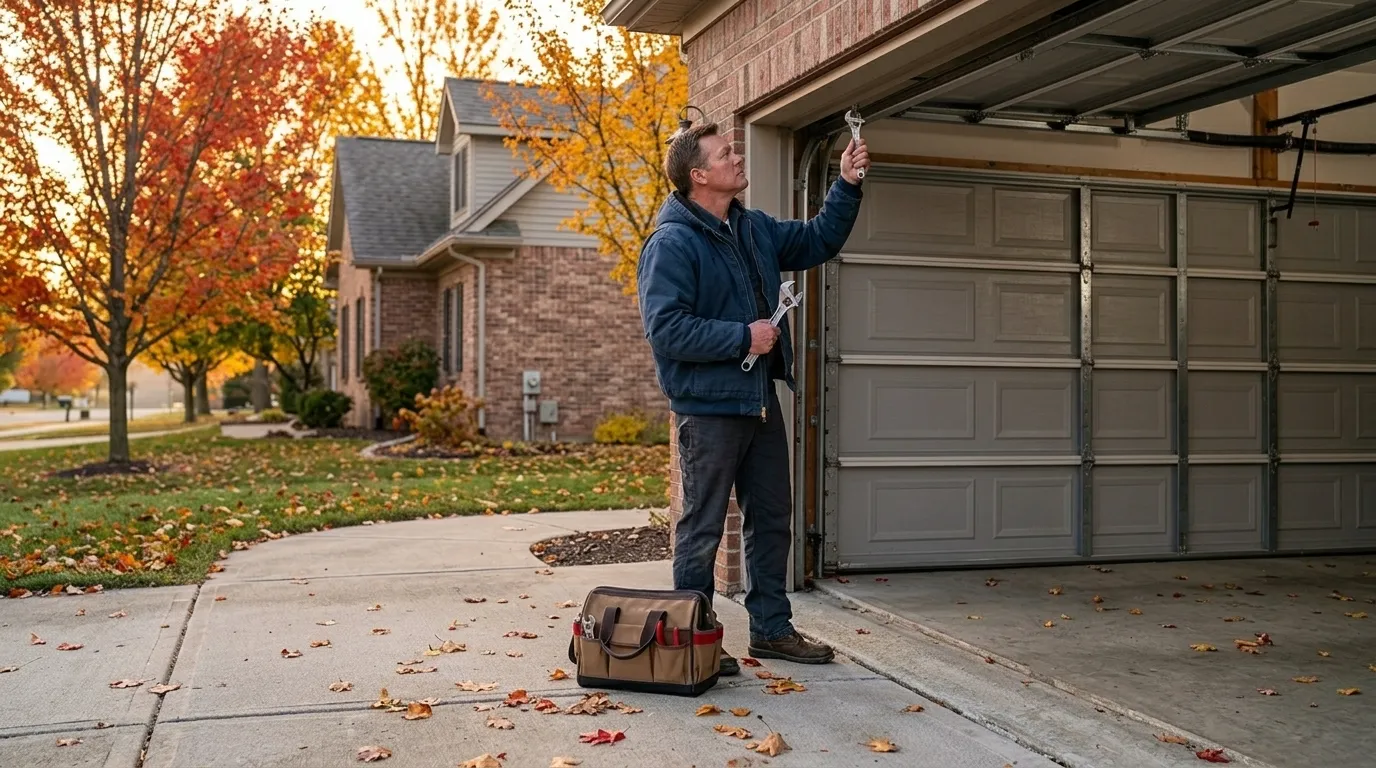
Sun Prairie sits in a cold-climate zone with severe winter conditions, and that matters more for an older door than a newer one. Steel contracts as temperatures drop, and on a torsion spring that's already fatigued from thirty-plus years of cycling, a hard cold snap is often what pushes it from "noisy" to "broken" - the metal has less give left to absorb the shrink. Weatherstripping on doors from the 1980s and 90s build era was rarely insulated to the standard used now, so an older door in this climate band tends to run stiffer and lift heavier on the coldest mornings, which owners often mistake for a spring problem when it's really the seal and hardware fighting the temperature together. If your door binds hard specifically on the coldest days and runs fine in warmer weather, that's a strong sign the hardware is marginal and the cold is just exposing it, not causing it outright.