Getting Here
Deerfield sits about 12 miles from Sun Prairie, which is the drive our truck makes for every call out this way. We don't keep a depot in Deerfield and won't pretend otherwise - this is a coverage town, not a home base, and the honest version of that is a drive time, not an on-call promise we can't back up. What we can say is that the trip is a known one, not a special trip: it's part of the regular route through this stretch of the county, alongside the other towns we cover at similar distances. If you're calling about a spring that let go on a Tuesday morning, that 12 miles is the number that matters, not a made-up response window. Plan on the drive being part of the job, and we'll give you a real window when you call, not before.
With only 975 households in Deerfield, this isn't a town where we're doing dozens of calls a week - it's a smaller, steadier stream of work, mostly repeat stuff on doors we've already seen once. That matters for parts: we bring what's common for the era of house here, not a random assortment, because we know roughly what we're walking into before the truck leaves Sun Prairie.
How That Shows Up in the Door
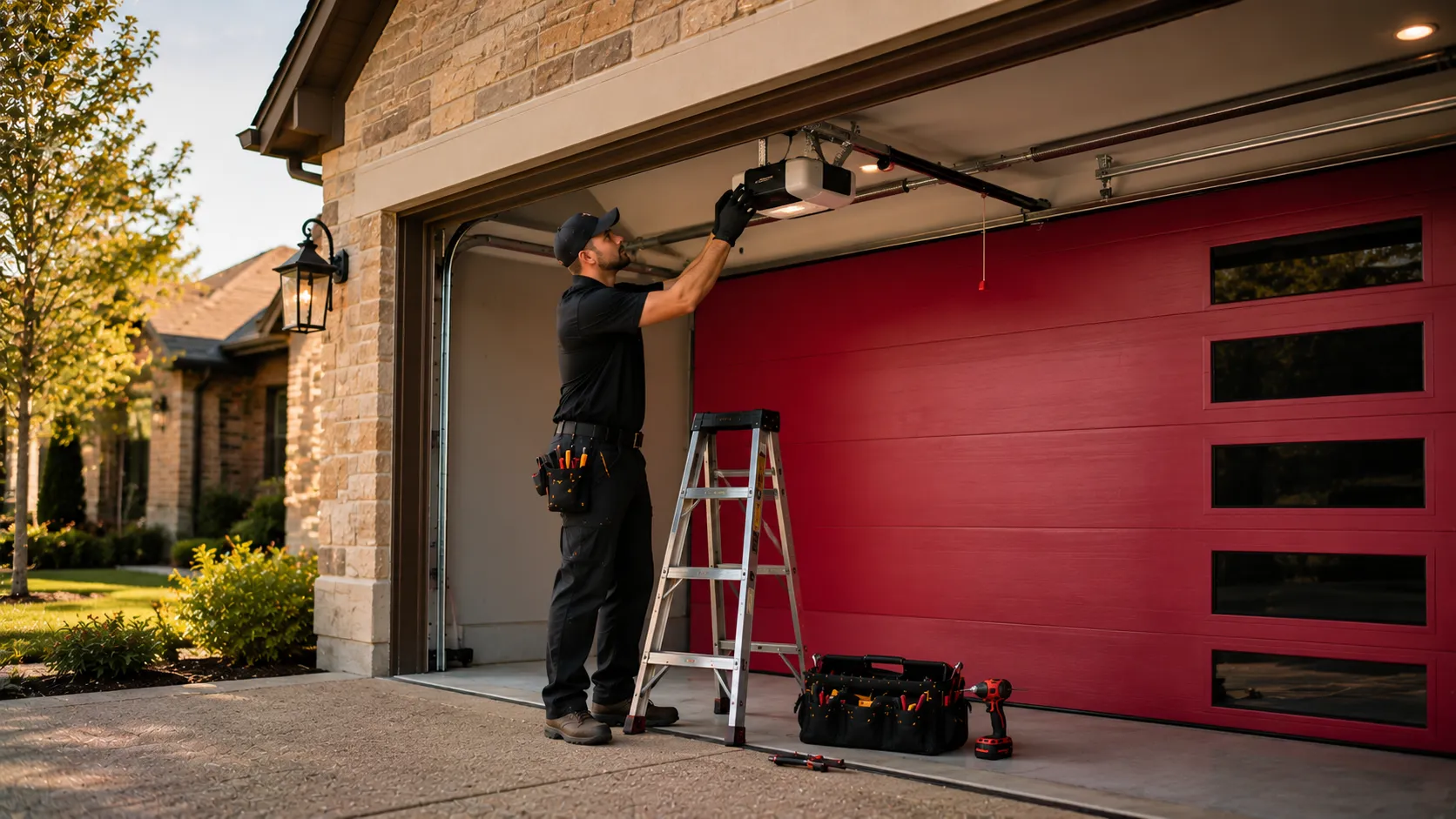
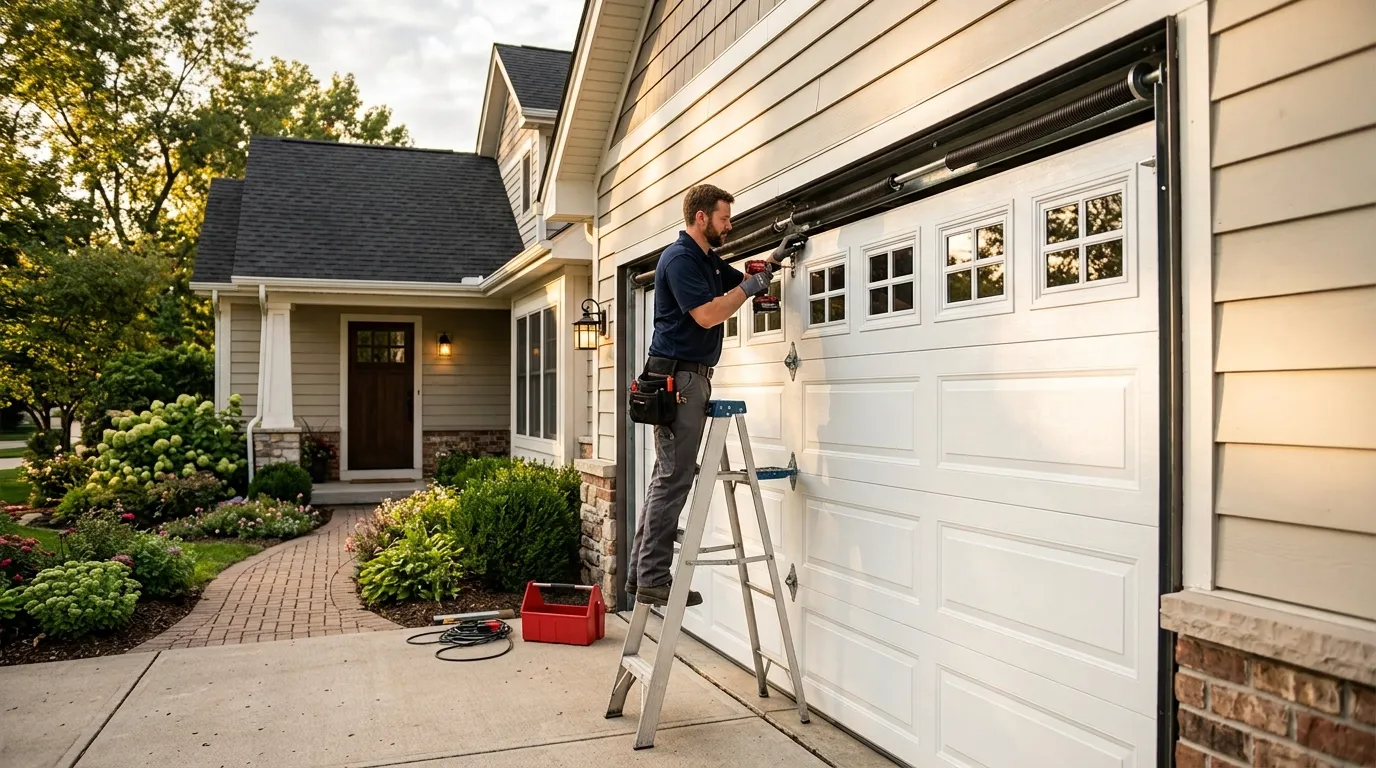
The median house in Deerfield went up in 1986, and that number does a lot of work when you're diagnosing a door. A house built in the mid-80s almost always shipped with a torsion spring system sized for a lighter, thinner steel door than what gets installed today, and an opener from that era - if it's still the original - is a chain-drive unit with a mechanical limit switch, not the digital force-sensing kind that's standard now. That combination is what fails predictably: the spring goes first, usually around the 15 to 20 year mark past whatever the last replacement was, and the opener's limit switch drifts out of adjustment so the door either doesn't fully close or slams the last few inches.
Because the area's median build year and the wider region's median (1986) line up almost exactly, Deerfield isn't an outlier here - it's a clean example of the pattern. That's useful, honestly: it means when we quote a repair, we're not guessing at what's behind the panel, we're working from what the era usually holds. Where it gets less predictable is additions and remodels - a garage converted or extended after the original build can have hardware from a completely different decade bolted onto original framing, and that's the case where we have to actually open the door up before quoting anything with confidence.
This Area's Housing
Deerfield's housing sits right in line with the broader area's build pattern: mostly homes from the 1980s and 90s, median year 1986, put up during a stretch when garage doors were framed for a specific standard track and spring configuration that's changed more than once since. If a door here hasn't been touched, there's a decent chance the hardware behind the panel is original or close to it - meaning parts that were common when they were installed but aren't always the first thing a big-box store stocks now.
At 975 households, Deerfield is a smaller town within the wider service area's total of 69,753 households and 34,734 owner-occupied houses, but the housing itself isn't unusual - it's a clear match for the surrounding stock, just a smaller sample of it. That consistency actually simplifies the job: we're not walking in blind on unfamiliar hardware, we're working with the same era and same rough spec we see across the rest of the coverage area. The honest limitation is that if a door has had aftermarket parts added over the decades, that pattern breaks down fast, and we won't quote a fix over the phone until we've seen it.